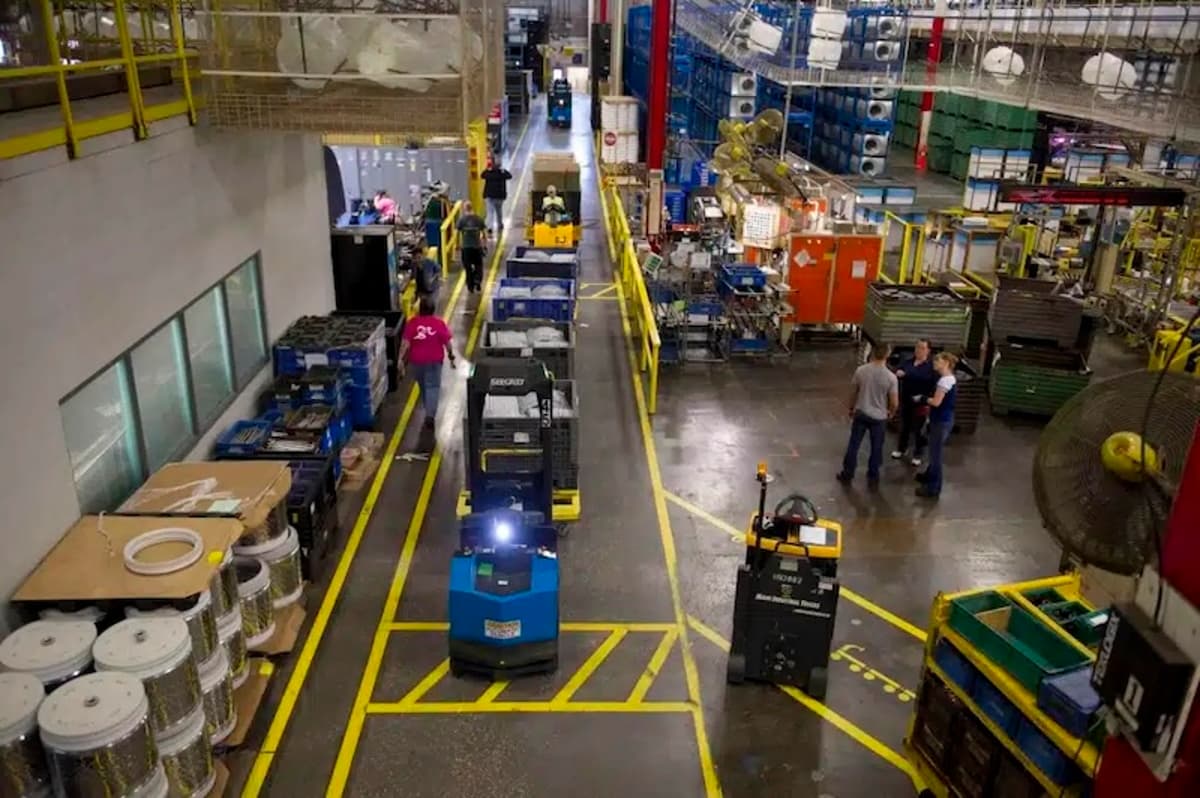
Seegrid Surpasses 20 Million Autonomous Miles in Industrial Facilities
Companies Mentioned
Why It Matters
The achievement shows AMRs can operate safely at scale, easing labor shortages and boosting efficiency for manufacturers and warehouses. It signals broader adoption of autonomous material‑handling as a core component of North American supply‑chain automation.
Key Takeaways
- •20 million autonomous miles logged across live industrial sites
- •Milestone achieved without a single recordable safety incident
- •Vision‑based navigation plus LiDAR and SLAM powers dynamic operations
- •Data from miles trains physical AI for smarter robot behavior
- •Supports reshoring efforts by offsetting workforce shortages
Pulse Analysis
Autonomous mobile robots (AMRs) are moving from pilot projects to core production assets, and Seegrid’s recent announcement underscores that shift. By surpassing 20 million miles of operation inside active factories, warehouses, and logistics hubs, the company demonstrates that its fleet can sustain continuous, high‑throughput work without the controlled conditions of a test lab. The mileage, equivalent to more than 800 trips around the globe, provides a tangible benchmark for reliability that investors and potential customers can reference when evaluating automation investments.
The mileage figure is not just a vanity metric; it reflects Seegrid’s proprietary blend of vision‑based navigation, LiDAR sensing, and simultaneous localization and mapping (SLAM) that enables robots to adapt to ever‑changing floor layouts and human traffic. Each mile generates rich sensor data, feeding a growing physical‑AI model that improves obstacle prediction, path planning, and energy efficiency. Crucially, the company reports zero recordable safety incidents across those miles, a claim that addresses one of the biggest barriers to wider AMR adoption—worker safety concerns in shared spaces.
From a strategic standpoint, the milestone arrives as North American manufacturers grapple with chronic labor shortages and pressure to reshore production. By offering a domestically engineered, support‑backed solution, Seegrid positions itself as a key enabler of automated material handling that can offset workforce gaps while boosting throughput. Competitors such as Boston Dynamics and Locus Robotics are also scaling, but Seegrid’s extensive mileage record provides a competitive edge in proving long‑term operational stability. As more firms prioritize data‑driven automation, the company’s growing AI‑trained fleet could become a cornerstone of next‑generation supply‑chain resilience.
Seegrid surpasses 20 million autonomous miles in industrial facilities
Comments
Want to join the conversation?
Loading comments...