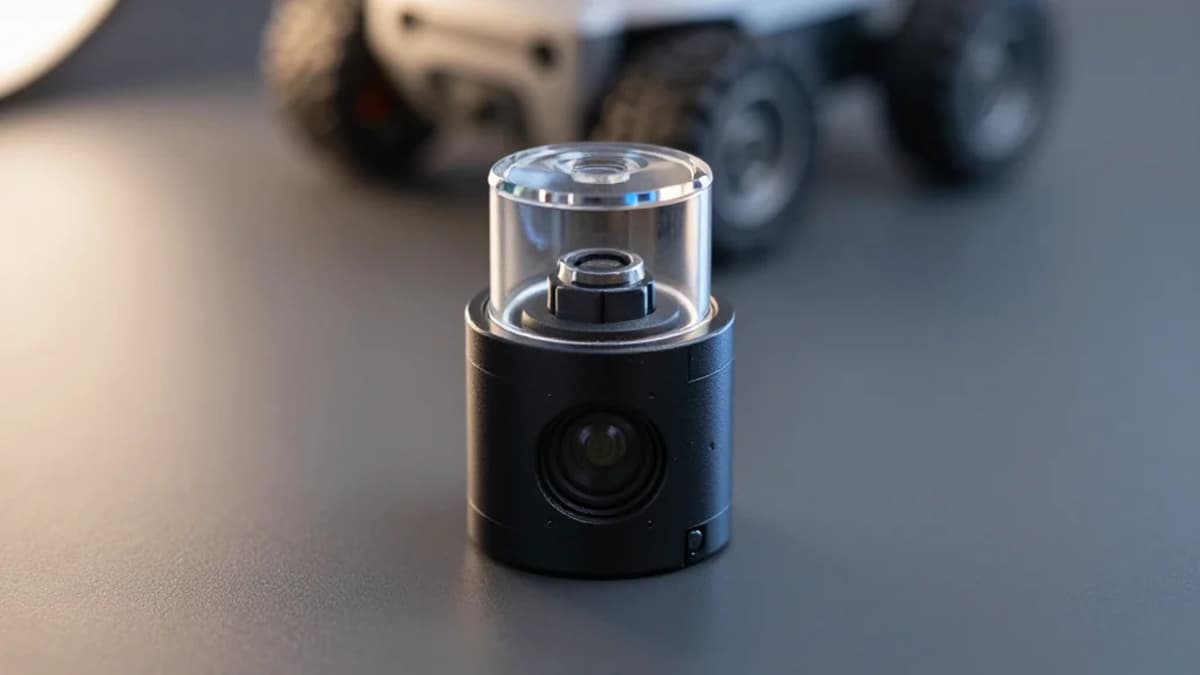
Seyond to Showcase Complete End-to-End LiDAR Portfolio and Mass-Production-Ready Solid-State LiDAR at CES 2026
•December 31, 2025
0
Why It Matters
Mass‑production solid‑state LiDAR removes a key barrier to large‑scale autonomous vehicle deployment, while a single‑source portfolio cuts integration risk and accelerates time‑to‑market for OEMs and robotics firms.
Key Takeaways
- •Hummingbird D1 is first mass‑production solid‑state LiDAR
- •Secured world‑first OEM design win for automotive
- •Portfolio spans ultra‑long to short‑range sensing
- •U.S. production meets BABA compliance for secure markets
- •Live demos show logistics robot and long‑range LiDAR
Pulse Analysis
The LiDAR market is at a tipping point as automakers and robotics companies demand higher reliability and lower cost. Solid‑state designs, which eliminate moving parts, promise the durability required for real‑world deployment, but scaling production has been a persistent hurdle. Seyond’s announcement of a mass‑production‑ready Hummingbird D1 signals that the industry is moving from low‑volume prototypes to volume‑ready components, a shift that could compress the cost curve and speed up adoption across vehicle platforms.
Seyond’s strategy of offering an end‑to‑end portfolio—from the ultra‑long‑range Falcon K to the compact Hummingbird series—addresses a common pain point: the need to integrate multiple sensor vendors. By providing a unified validation framework and flexible supply options, Seyond enables customers to streamline design cycles, reduce integration overhead, and maintain consistent performance across the perception stack. The U.S.‑based production lines that satisfy BABA compliance further differentiate the company for customers operating in regulated environments, ensuring supply chain security and traceability.
For automotive OEMs, the availability of a production‑grade solid‑state LiDAR like Hummingbird D1 could unlock higher levels of autonomy without the reliability concerns of mechanical scanners. Robotics and smart‑city applications also stand to benefit from the broader portfolio, as demonstrated by live demos of autonomous delivery vehicles and long‑range LiDAR for smart infrastructure. As competitors race to commercialize similar technologies, Seyond’s comprehensive, scalable offering positions it as a pivotal supplier in the next wave of autonomous systems.
Seyond to Showcase Complete End-to-End LiDAR Portfolio and Mass-Production-Ready Solid-State LiDAR at CES 2026
0
Comments
Want to join the conversation?
Loading comments...