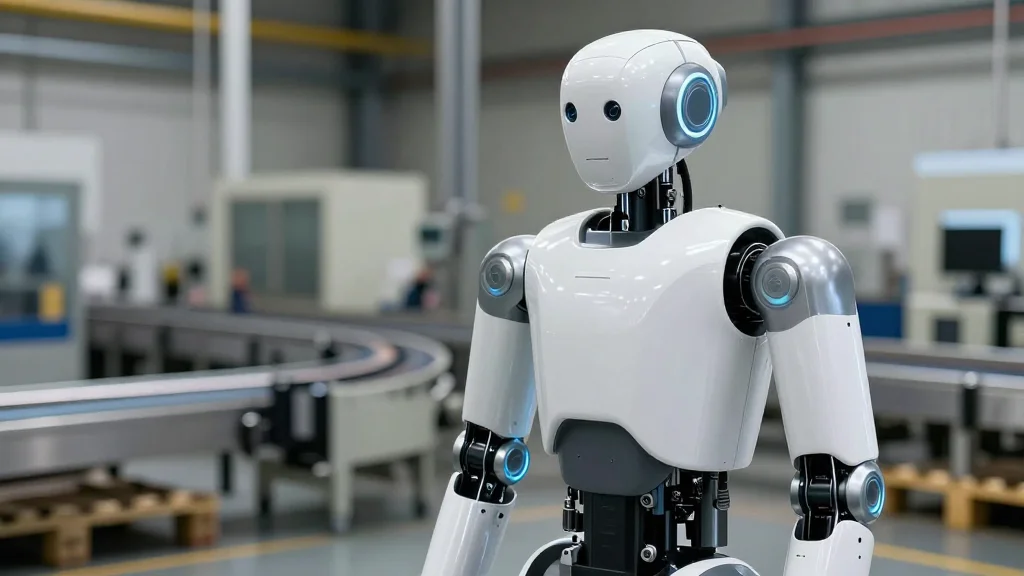
Siemens Launches AI‑Powered Humanoid Robots at Erlangen Electronics Plant

Companies Mentioned
Why It Matters
The Erlangen deployment is a litmus test for the broader adoption of adaptive robotics in Europe. Success could validate a new business model where factories rely on flexible, AI‑enabled machines to handle variable workloads, reducing dependence on scarce skilled labor. Conversely, any operational setbacks may reinforce skepticism about the readiness of physical AI for mass production, potentially slowing investment in the sector. Beyond Siemens, the rollout may influence policy decisions around AI funding, data sharing and standards for safety certification. As European firms seek to close the gap with Chinese and American competitors, demonstrable use cases like this could shape the next wave of public‑private partnerships and drive the continent’s strategic positioning in the global robotics market.
Key Takeaways
- •Siemens installed AI‑powered HMND 01 Alpha humanoid robots at its Erlangen electronics plant.
- •Robots were co‑developed with UK firm Humanoid and run on Nvidia’s AI stack.
- •The deployment shifts Siemens from fixed‑arm automation to flexible, autonomous machines.
- •58 % of German industrial firms see humanoid robots as a solution to skilled‑labour shortages.
- •Chancellor Friedrich Merz advocates embedding AI across key industrial sectors to protect jobs.
Pulse Analysis
Siemens’ Erlangen rollout is more than a pilot; it is a strategic signal that the company is betting on a new class of robotics that can operate in human‑centric environments. Historically, German manufacturing has excelled at precision engineering but lagged in deploying AI‑driven hardware at scale. By marrying Nvidia’s compute platform with Humanoid’s bipedal expertise, Siemens is attempting to leapfrog that gap. The move also reflects a broader industry trend where the cost of labor, especially in high‑skill roles, is rising faster than productivity gains from traditional automation.
If the robots meet performance targets, Siemens could set a template for other Tier‑1 suppliers and OEMs, prompting a cascade of investments in edge AI, digital twins and sensor‑rich factories. The competitive pressure from Chinese firms—who have already demonstrated high‑visibility, albeit novelty‑focused, humanoids—adds urgency. German policymakers, led by Chancellor Merz, are already framing AI adoption as a national priority, which could translate into subsidies or regulatory sandboxes that accelerate deployment.
However, the path forward is fraught with challenges. Integration complexity, safety certification, and the need for robust fallback procedures in case of AI mis‑classification remain unresolved. Siemens will need to prove that the total cost of ownership—hardware, software licences, maintenance and training—outweighs the incremental productivity. The outcome of this experiment will likely influence not only Siemens’ internal roadmap but also the European Union’s broader industrial AI strategy, shaping where capital flows in the next five years.
Siemens Launches AI‑Powered Humanoid Robots at Erlangen Electronics Plant
Comments
Want to join the conversation?
Loading comments...