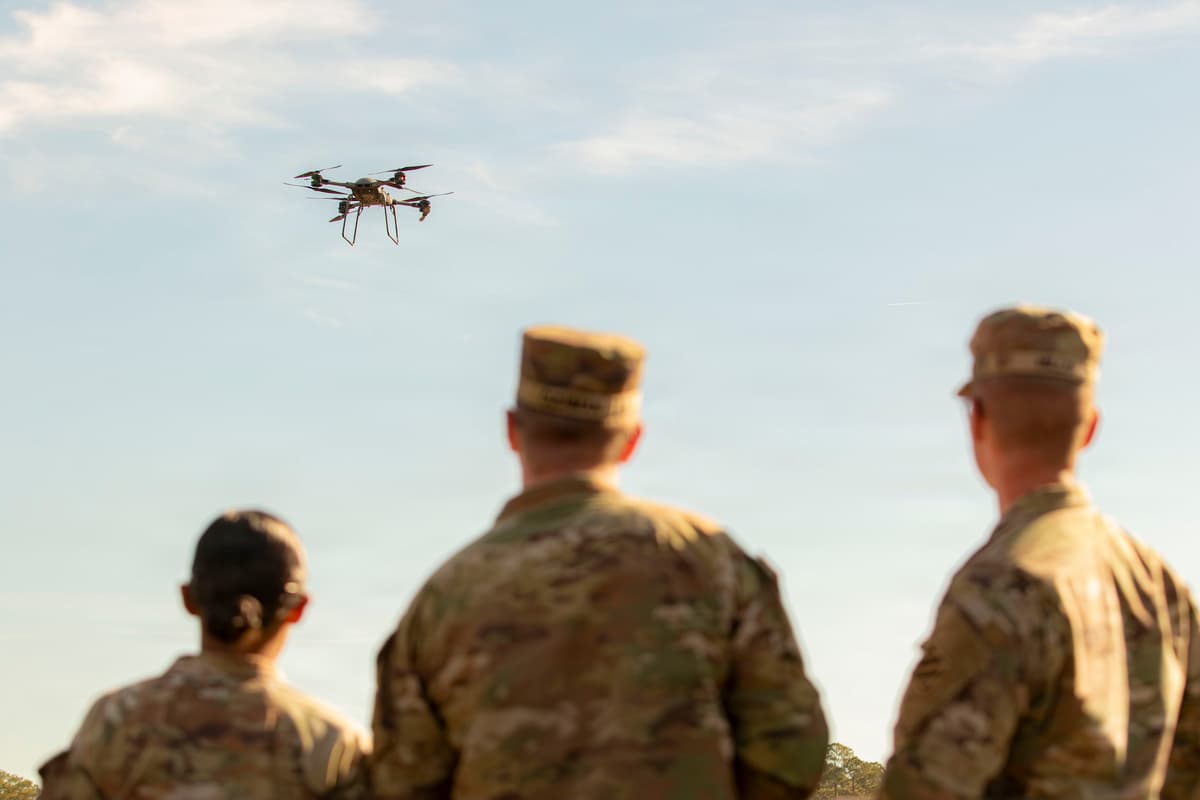
SOCOM on the Hunt for ‘Acoustic Rainbow’ Tech for Silencing Drones
•February 26, 2026
0
Why It Matters
Reducing drone noise dramatically improves survivability and stealth, reshaping special‑operations tactics and counter‑sensor warfare.
Key Takeaways
- •SOCOM SBIR targets 50% drone noise reduction.
- •Emitters must weigh ≤1 kg (Group 1) or ≤3 kg (Group 2).
- •Phase I focuses on TRL‑3 feasibility study.
- •Prior 3D‑printed emitter shows passive, electricity‑free operation.
- •Silent drones enhance covert strike capabilities.
Pulse Analysis
Acoustic rainbow technology, once a niche physics concept, is gaining traction as a practical solution for battlefield acoustics. By spatially decomposing sound frequencies, these structures can redirect and attenuate noise without active power, mimicking natural echolocation strategies found in bats and humans. Recent breakthroughs from Danish and Spanish labs demonstrated a 3‑D printed emitter that passively scatters broadband sound, offering a low‑cost, electricity‑free platform that could be adapted for a range of military applications.
SOCOM’s solicitation reflects a strategic pivot toward acoustic stealth for unmanned systems. Current tactical drones are vulnerable because their propeller noise alerts adversaries and triggers acoustic sensors increasingly deployed on the modern battlefield. The requested acoustic rainbow emitters must achieve at least a 50% reduction in ground‑level sound, fit within strict weight limits (≤1 kg for sub‑20‑lb UAVs, ≤3 kg for sub‑55‑lb platforms), and retain a minimal visual signature. Phase I’s TRL‑3 study will validate the concept’s feasibility, while Phase II will push toward a flight‑ready prototype, signaling SOCOM’s commitment to integrating advanced physics into operational capability.
If successful, the technology could spill over into commercial drone markets, where noise pollution and privacy concerns are growing. Silent UAVs would enable urban delivery, wildlife monitoring, and film production without disturbing environments. However, challenges remain in scaling the passive structures for varied drone sizes, ensuring durability under combat conditions, and meeting stringent weight constraints. Continued investment and cross‑disciplinary collaboration will be essential to translate acoustic rainbow emitters from laboratory curiosities into field‑proven assets.
SOCOM on the hunt for ‘acoustic rainbow’ tech for silencing drones
0
Comments
Want to join the conversation?
Loading comments...