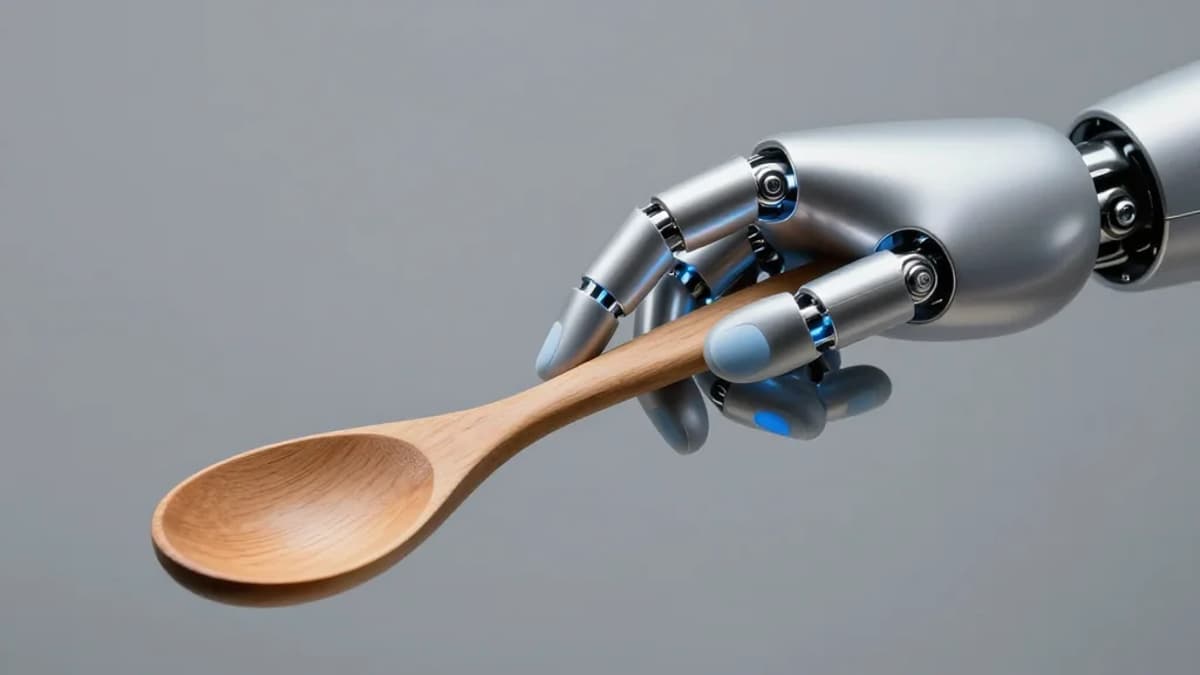
Soft Robotic Hand 'Sees' Around Corners to Achieve Human-Like Touch
•January 17, 2026
0
Why It Matters
FlexiRay bridges the gap between compliance and high‑resolution sensing, expanding the practical use of robots in fragile‑object handling and collaborative environments. Its multimodal perception could accelerate automation across industries that require delicate touch.
Key Takeaways
- •FlexiRay uses multi-mirror optics to see around bends
- •Achieves >90% sensing coverage during large deformations
- •Provides force, texture, temperature, location, proprioception sensing
- •Soft design improves safety for human‑robot collaboration
- •Future work targets multi‑finger hands and imitation‑learning integration
Pulse Analysis
The quest for human‑like touch in robotics has long been hampered by the trade‑off between compliance and sensing fidelity. Conventional visual‑tactile grippers embed rigid cameras, limiting their ability to wrap around irregular objects without obscuring the field of view. Zhejiang University’s FlexiRay sidesteps this dilemma by marrying a bio‑inspired Fin Ray structure with a multi‑mirror optical pathway, allowing a single internal camera to maintain an unobstructed line of sight even as the finger bends sharply. This mechanical‑optical synergy transforms deformation from a liability into a sensing advantage.
FlexiRay’s deformation‑driven mirrors redirect light toward the camera, effectively ‘looking around’ corners while the soft pad conforms to the target surface. The captured images are fed into a deep‑learning model trained to decode force magnitude, contact location, texture patterns, temperature gradients, and proprioceptive shape information. In laboratory trials the system reported over 90 % effective sensing coverage during extreme bends, matching or exceeding the resolution of stiff visual‑tactile sensors while preserving the compliance needed for delicate handling.
The ability to gather multimodal haptic data from a pliable gripper opens new avenues for automation in sectors such as food processing, e‑commerce fulfillment, and assistive manufacturing, where objects are often fragile or irregularly shaped. By reducing the hardware footprint and improving safety, FlexiRay could accelerate the adoption of collaborative robots on production lines. The research team’s roadmap includes scaling the design to multi‑finger hands and coupling it with imitation‑learning frameworks, promising robots that not only feel like humans but also learn dexterity directly from human demonstrations.
Soft robotic hand 'sees' around corners to achieve human-like touch
0
Comments
Want to join the conversation?
Loading comments...