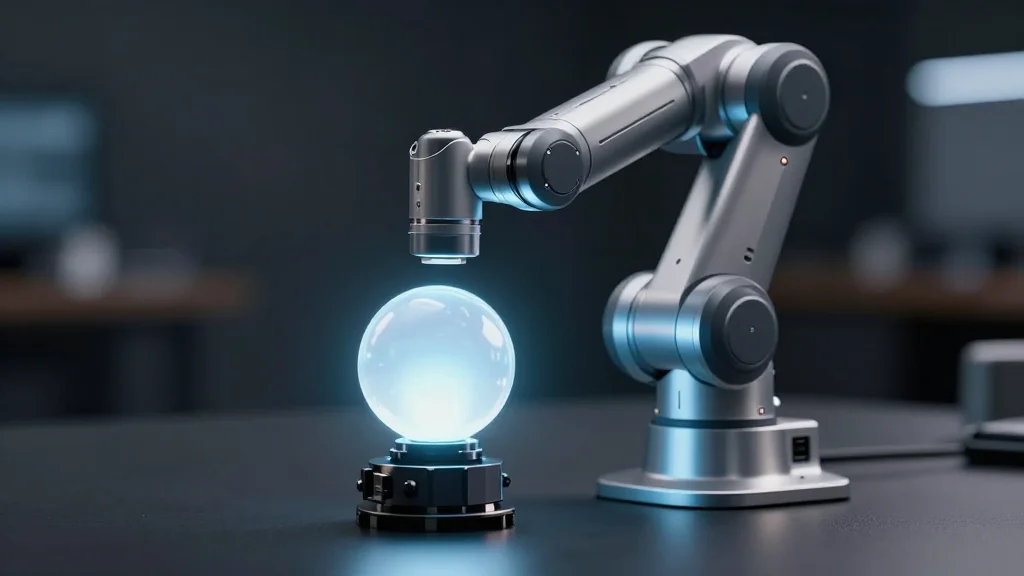
Sony, Honda, SoftBank, NEC Unveil Trillion‑Parameter ‘Physical AI’ for Factory Robots

Companies Mentioned
Why It Matters
The Physical AI initiative represents a strategic pivot for Japan, targeting the integration of massive AI models with physical automation—a capability that could redefine productivity in manufacturing and logistics worldwide. By combining AI’s decision‑making power with Japan’s legacy in precision robotics, the alliance aims to address chronic labor shortages, boost export competitiveness, and set a new benchmark for safe, adaptable industrial AI. Globally, the project signals a shift in AI competition toward embodied intelligence, where success is measured not just by conversational fluency but by the ability to manipulate the physical world. If the trillion‑parameter model proves viable, it could accelerate adoption of autonomous factories, reshape supply‑chain dynamics, and force rivals in the United States and China to invest more heavily in hardware‑centric AI research.
Key Takeaways
- •Sony, Honda, SoftBank and NEC form a joint venture to develop a trillion‑parameter AI model for robot control.
- •The model, dubbed ‘Physical AI’, will serve as the intelligence layer for factories, logistics and autonomous systems.
- •Japanese government pledges significant fiscal support as part of its broader AI and robotics revitalization plan.
- •Project targets to showcase a prototype at the International Robot Exhibition in Tokyo later this year.
- •Success could shift global AI competition toward embodied intelligence, challenging U.S. and Chinese dominance.
Pulse Analysis
Japan’s Physical AI alliance is a calculated response to two converging pressures: a demographic crunch that erodes the domestic labor pool, and a global AI arms race that has so far prioritized software over hardware. By anchoring a trillion‑parameter model in the country’s deep robotics heritage, the consortium hopes to create a defensible moat that leverages both scale and specialization. The partnership’s composition is telling—Sony brings vision sensors and edge‑AI chips, Honda contributes decades of industrial robot engineering, SoftBank offers capital and AI platform experience, while NEC supplies the high‑performance computing infrastructure needed for training. This cross‑industry synergy could shorten development cycles that traditionally plague large‑scale AI projects.
Historically, Japan’s strength has been in precision manufacturing rather than cloud‑centric AI services. The Physical AI effort flips that script, positioning Japanese firms to compete in a market where the next frontier is not just predicting text but physically executing tasks. If the prototype demonstrates reliable, low‑latency decision‑making on the shop floor, it could unlock a wave of robotics‑as‑a‑service offerings, allowing smaller manufacturers to lease AI‑enhanced robots without massive upfront capital. Such a model would democratize advanced automation and potentially revive Japan’s export of high‑value manufacturing solutions.
Nevertheless, the venture must navigate steep technical and economic challenges. Training a trillion‑parameter model demands exascale compute resources, which are currently concentrated in a few cloud providers. Securing affordable, sustainable compute power will be critical, as will ensuring the AI’s safety and explainability in safety‑critical environments. Moreover, the cost of embedding such intelligence into robots must be competitive with existing automation solutions. The alliance’s ability to marshal government subsidies, attract talent, and deliver a commercially viable product will determine whether Physical AI becomes a catalyst for a new industrial renaissance or remains a high‑profile research endeavor.
Sony, Honda, SoftBank, NEC Unveil Trillion‑Parameter ‘Physical AI’ for Factory Robots
Comments
Want to join the conversation?
Loading comments...