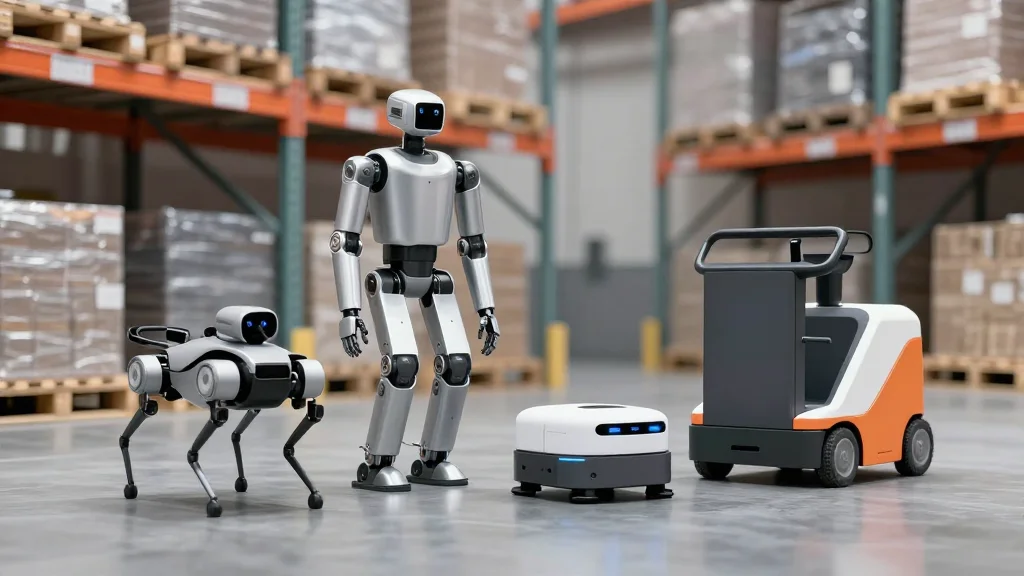
South Korea Demo Shows Humanoids, ‘Robot Dogs’ Teaming Up in a Warehouse

Companies Mentioned
Why It Matters
The platform promises faster, cheaper robot fleet roll‑outs, addressing labor shortages and boosting efficiency in logistics and manufacturing worldwide.
Key Takeaways
- •PhysicalWorks Baton cuts robot deployment to 1‑2 months
- •Projected 15% productivity boost for 100‑robot operations
- •Up to 18% operating cost reduction via better coordination
- •Robots autonomously reassign tasks during emergency alerts
- •Platform already piloted in electronics, chemical, shipbuilding sectors
Pulse Analysis
The rise of collaborative robotics is reshaping supply‑chain automation, yet most enterprises still wrestle with fragmented control systems. LG CNS’s PhysicalWorks Baton unifies disparate robot types—humanoids, quadruped "dog" robots, autonomous mobile units and guided vehicles—under a single management layer. By leveraging a Robot Foundation Model, the platform enables real‑time perception, task allocation and conflict resolution, allowing machines to act as a cohesive workforce rather than isolated tools. This integration mirrors a broader industry shift toward heterogeneous robot fleets that can adapt to dynamic warehouse environments.
From an operational standpoint, the Baton system promises dramatic efficiency gains. LG CNS estimates deployment timelines can shrink from several months to just one or two, accelerating time‑to‑value for capital‑intensive automation projects. In a simulated 100‑robot setting, the platform delivered more than 15% higher throughput while slashing operating expenses by up to 18%, primarily by reducing traffic congestion and idle time. The autonomous emergency‑response drill—where a quadruped robot switched to patrol and a Carti‑100 took over transport—demonstrates built‑in resilience, a critical factor for high‑availability logistics hubs.
The strategic implications extend beyond a single demo. With pilots underway across South Korea’s electronics, chemical, and shipbuilding sectors, and active deployment in Busan’s Smart City initiative, the technology is poised to address chronic labor shortages and elevate Korea’s manufacturing competitiveness. Global firms watching the rollout may see a template for integrating multi‑vendor robot ecosystems without bespoke middleware, potentially accelerating worldwide adoption of fully autonomous, cross‑functional warehouse solutions.
South Korea Demo Shows Humanoids, ‘Robot Dogs’ Teaming Up in a Warehouse
Comments
Want to join the conversation?
Loading comments...