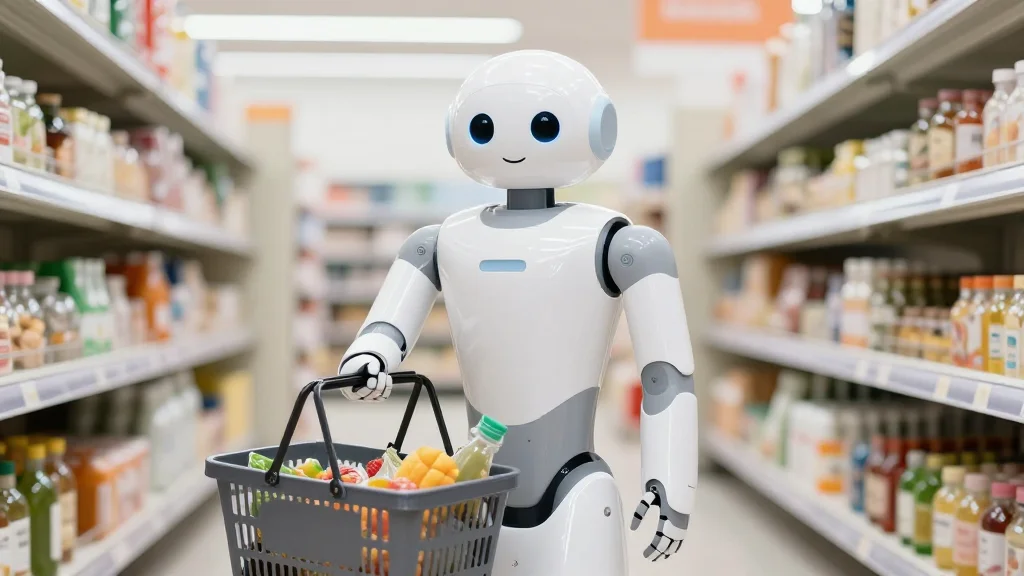
South Korean Retailers Deploy Service Robots to Revamp In‑Store Shopping

Why It Matters
The deployment of service robots by Lotte Shopping and Electro Mart signals a turning point for consumer‑facing automation in South Korea. By moving robotics from factories into everyday retail spaces, these companies are normalizing human‑robot interaction, potentially expanding the market for assistive wearables and in‑store service bots. The initiatives also highlight how AI can be leveraged to create differentiated shopping experiences, a critical advantage as brick‑and‑mortar stores compete with e‑commerce giants. If the pilot programs succeed, they could catalyze a wave of similar investments across Asia, prompting hardware manufacturers to prioritize consumer‑grade designs and retailers to re‑imagine store layouts around robotic workflows. This shift may also accelerate regulatory discussions around safety standards for public‑use robots, shaping the future of the robotics ecosystem beyond industrial applications.
Key Takeaways
- •Lotte Shopping launched the HyperShell wearable robot on its Lotte On platform, weighing 1.8 kg and capable of 30 km per charge.
- •VD Robotics developed the HyperShell, tested by employees climbing a stairwell equivalent to 123 floors.
- •Electro Mart opened a robot experience zone at its Yongsan flagship, featuring humanoid, quadruped, AI barista, and delivery robots.
- •Both retailers aim to boost customer engagement and differentiate physical stores through interactive robotics.
- •Analysts expect the pilots to accelerate consumer adoption of service robots and influence broader retail strategies.
Pulse Analysis
South Korea’s retail robotics push reflects a convergence of three trends: AI maturity, consumer demand for convenience, and the need for physical retailers to reinvent the in‑store experience. Historically, robotics in the region has been dominated by manufacturing and logistics; the shift to consumer‑facing applications marks a strategic diversification for both hardware makers and retailers.
Lotte’s HyperShell is noteworthy because it blurs the line between assistive medical devices and lifestyle accessories. By selling it through an e‑commerce platform, Lotte bypasses traditional medical distribution channels, potentially reaching a broader demographic that values mobility assistance for everyday activities rather than clinical settings. This could spur a new segment of “personal robotics” that competes with wearables and fitness trackers, leveraging AI for real‑time gait analysis and health monitoring.
Electro Mart’s experience zone, meanwhile, serves as a live laboratory for retail automation. By showcasing a full robot‑to‑customer workflow—from order taking by an AI barista to autonomous delivery within the store—Electro Mart is testing operational efficiencies and consumer acceptance simultaneously. If shoppers respond positively, the model could be scaled to mid‑size retailers seeking to differentiate without massive capital outlays.
The broader implication is a potential redefinition of the retail value chain. Robots could handle repetitive tasks such as inventory checks, shelf restocking, and even personalized product recommendations, freeing human staff for higher‑value interactions. However, the success of these pilots hinges on reliability, safety, and cost‑effectiveness. As the technology matures, we may see a rapid rollout of service robots across Asian malls, prompting global retailers to reassess their own automation roadmaps.
In the near term, the key variables will be consumer adoption rates, the durability of the robots in high‑traffic environments, and the regulatory framework governing public‑use robotics. Should these factors align, South Korea could become a showcase market for consumer robotics, influencing design standards and business models worldwide.
South Korean Retailers Deploy Service Robots to Revamp In‑Store Shopping
Comments
Want to join the conversation?
Loading comments...