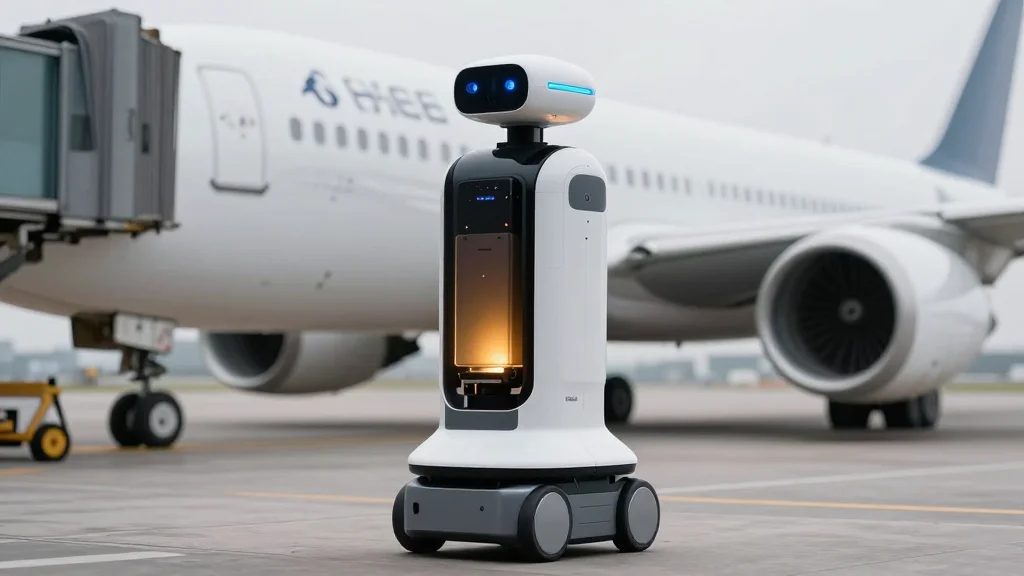
Southwest Delays Flight Over 4‑Foot Robot’s Oversized Battery

Companies Mentioned
Why It Matters
The Southwest incident illustrates the first large‑scale clash between commercial aviation safety standards and the burgeoning market for mobile service robots. As companies like Elite Event Robotics rent out autonomous units for brand activations, the logistics of transporting them on passenger aircraft will test existing regulations on battery safety and cabin space. A failure to address these issues could lead to more frequent delays, passenger dissatisfaction, and potential liability disputes. Beyond immediate operational headaches, the case signals a broader shift: robotics is moving from controlled venues into public spaces, including transportation networks. How airlines, the FAA, and robot manufacturers negotiate standards will shape the viability of robot‑as‑a‑service models and could set precedents for other sectors, such as autonomous delivery drones and personal companion bots.
Key Takeaways
- •Southwest flight delayed 62 minutes due to robot Bebop's oversized lithium battery
- •Bebop, a 4‑foot, 70‑pound robot, was initially seated in an aisle seat, violating carry‑on policy
- •Lynn Lunsford (Southwest spokesperson) confirmed battery exceeded airline limits
- •Elite Event Robotics will fly Bebop without batteries; replacements shipped to Chicago
- •Passenger backlash included missed connections and $400 extra costs
Pulse Analysis
The Bebop episode is a microcosm of a looming regulatory challenge. Airlines have long enforced strict limits on lithium‑ion batteries because of fire risk, yet the market for mobile robots is expanding at double‑digit rates. If robot rentals become as common as catering services, airlines will need a streamlined process for pre‑flight battery certification, perhaps akin to the current protocols for electronic devices. Failure to adapt could erode airline punctuality metrics, a key competitive factor, and invite regulatory scrutiny.
Historically, aviation has accommodated unusual cargo—think of the first commercial flights carrying live animals or oversized art—but those cases were managed through cargo holds, not passenger cabins. Bebop’s presence in the cabin forces a re‑examination of what constitutes a passenger versus cargo. A possible solution is a dedicated “robot cabin” with reinforced power‑management infrastructure, allowing airlines to monetize the extra space while maintaining safety.
Looking ahead, the incident may accelerate industry dialogue. The FAA could issue advisory circulars specific to autonomous service robots, and airlines might partner with robotics firms to develop standardized battery packs that meet aviation safety thresholds. Companies that proactively align with these emerging standards could gain a competitive edge, positioning themselves as the go‑to providers for high‑visibility events that require seamless travel logistics.
Southwest Delays Flight Over 4‑Foot Robot’s Oversized Battery
Comments
Want to join the conversation?
Loading comments...