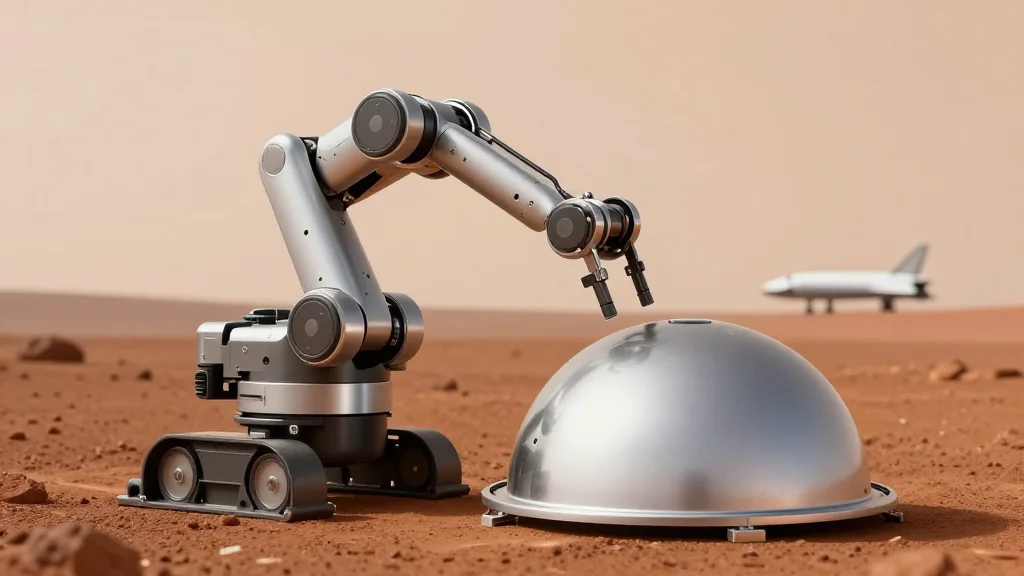
SpaceX Files S‑1 for $1.75T IPO, Unveils $700B Musk Pay Package and Mars‑robotics Roadmap

Why It Matters
SpaceX’s IPO filing brings the economics of space‑based robotics into the public eye. By tying a $700 billion pay package to milestones that require autonomous construction, refueling and AI‑driven operations on Mars, the company signals that robotics will be a primary cost driver and growth engine for the emerging space‑economy. The disclosed losses and massive capital needs also force investors to confront the financing gap between profitable launch services and the speculative, robot‑intensive infrastructure needed for a multi‑planetary civilization. If successful, SpaceX could catalyze a new wave of private‑sector investment in space robotics, spurring suppliers, software firms, and chip makers to develop hardware capable of operating in microgravity. Conversely, failure to meet the ambitious targets could dampen enthusiasm for large‑scale robotic ventures beyond Earth, reshaping how venture capital and public markets allocate resources to deep‑tech projects.
Key Takeaways
- •SpaceX filed an S‑1 on May 20, 2026 seeking a $1.75 trillion valuation.
- •Elon Musk was granted one billion restricted shares worth ~$700 billion, with an extra $600 billion tied to Mars milestones.
- •2025 financials show a $4.9 billion loss on $18.7 billion revenue; Starlink contributed >$11 billion.
- •Robotics are central to the plan: autonomous refueling, orbital AI data centers, and Mars habitat construction.
- •Total addressable market cited at $28.5 trillion, $26.5 trillion of which is AI‑related.
Pulse Analysis
SpaceX’s filing is less a traditional IPO and more a manifesto for a trillion‑dollar, robot‑centric future. The company is leveraging its launch and satellite dominance to bankroll an ecosystem where autonomous machines do the heavy lifting—building habitats, refueling rockets, and running AI compute farms in orbit. This strategy mirrors the historical shift from human‑centric to machine‑centric production seen in the automotive and semiconductor sectors, but on a planetary scale.
The compensation structure is a double‑edged sword. By aligning Musk’s wealth with the achievement of a $7.5 trillion market cap and a million‑person Mars colony, the board is betting that investors will tolerate extreme risk for outsized upside. However, the vesting conditions also raise corporate‑governance red flags: shareholders have limited recourse if the robotic infrastructure fails to materialize, and the sheer scale of the payout could dilute future equity.
From a market perspective, the IPO could unlock a new class of capital for deep‑tech robotics. Public investors, accustomed to terrestrial AI and autonomous‑vehicle plays, will now be exposed to the economics of space‑based manufacturing and logistics. If SpaceX can demonstrate credible progress on robotic refueling stations and orbital data centers within the next five years, it could set a benchmark that attracts a wave of ancillary startups, from low‑gravity 3‑D printing firms to AI‑driven rover manufacturers. Failure, however, would likely tighten the capital pipeline for space robotics, pushing the burden back onto government contracts and defense budgets. The coming months will test whether the market believes in Musk’s vision of a robot‑enabled, multi‑planetary civilization.
SpaceX files S‑1 for $1.75T IPO, unveils $700B Musk pay package and Mars‑robotics roadmap
Comments
Want to join the conversation?
Loading comments...