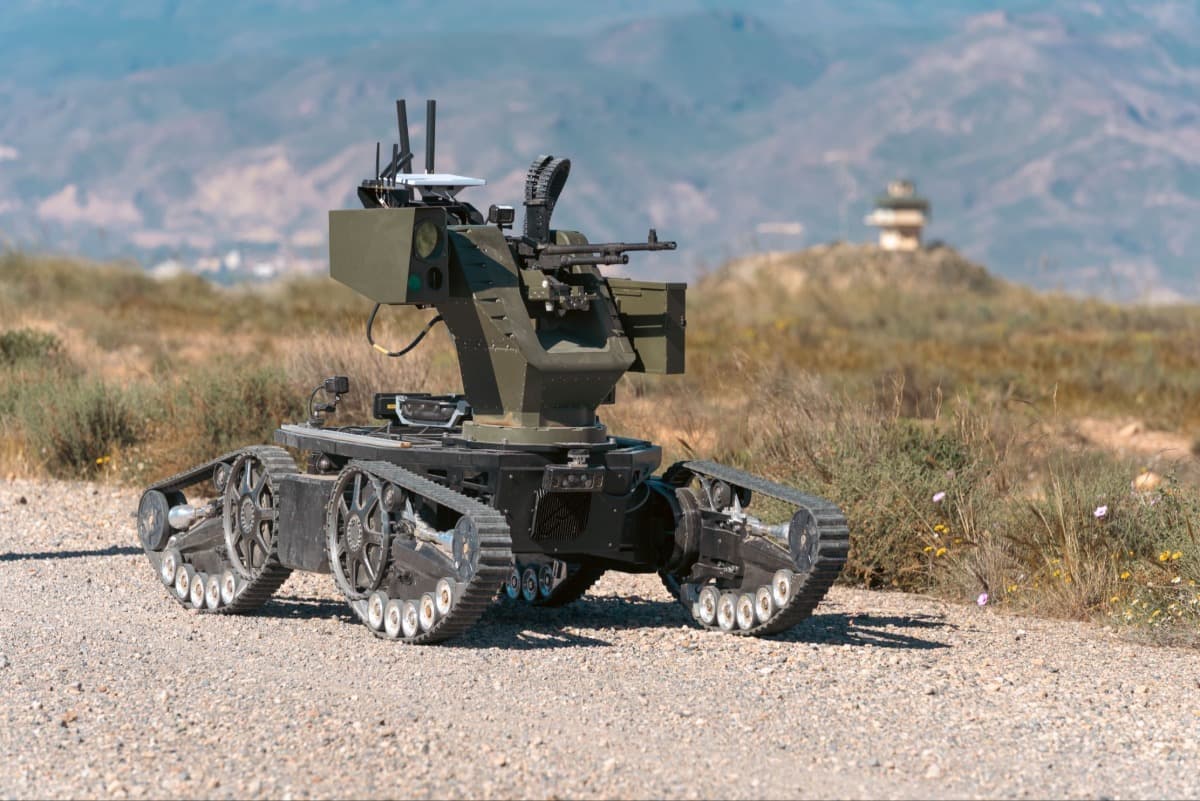
Spanish Army Tests Armed Robotic Ground Vehicles
Why It Matters
The trials prove that remotely operated ground vehicles can deliver accurate firepower in dynamic combat scenarios, offering a way to protect personnel and increase operational tempo. This capability aligns with European armies’ push toward autonomous systems and could accelerate procurement of UGVs across NATO.
Key Takeaways
- •EM&E's aunav.BEST and aunav.LINK completed live‑fire trials in Spain.
- •Guardian Aspis stations fired 7.62 mm rounds up to 1,200 m while moving.
- •Single‑operator control merges vehicle navigation and weapon aiming in one interface.
- •Tests support Spain’s Force 35 modernization and broader UGV adoption.
Pulse Analysis
The rise of unmanned ground vehicles (UGVs) reflects a broader shift in modern militaries toward autonomous, network‑centric warfare. European forces, particularly those participating in the NATO "Force 35" initiative, are seeking platforms that can operate alongside manned units while reducing the risk to soldiers. Spain’s recent Tactical Experimentation Campaign underscores this trend, providing a real‑world proving ground for technologies that blend mobility, firepower, and remote control.
EM&E’s Aunav series—specifically the BEST and the newly unveiled LINK—demonstrated a high degree of integration with the Guardian Aspis remote weapon station. Both platforms carried a stabilized 7.62 mm machine gun capable of engaging targets at 1,200 m while on the move, a benchmark for accuracy in kinetic engagements. The LINK’s single‑operator concept consolidates vehicle navigation and weapon aiming into a single user interface, streamlining training and reducing crew footprints. This design philosophy not only speeds reaction times but also minimizes the exposure of personnel in high‑threat environments.
The successful trials have ripple effects beyond Spain’s borders. Defense contractors see a viable market for modular UGV solutions that can be retrofitted to existing weapon stations, while NATO allies evaluate interoperability standards for future joint operations. As budgets tighten, the cost‑effectiveness of a single‑operator system—requiring fewer soldiers and less logistical support—makes it an attractive option for forces looking to modernize without a wholesale overhaul. Continued live‑fire testing and field deployments will be critical to validate durability, cybersecurity, and command‑and‑control integration, shaping the next generation of combat‑ready robotic platforms.
Spanish Army tests armed robotic ground vehicles
Comments
Want to join the conversation?
Loading comments...