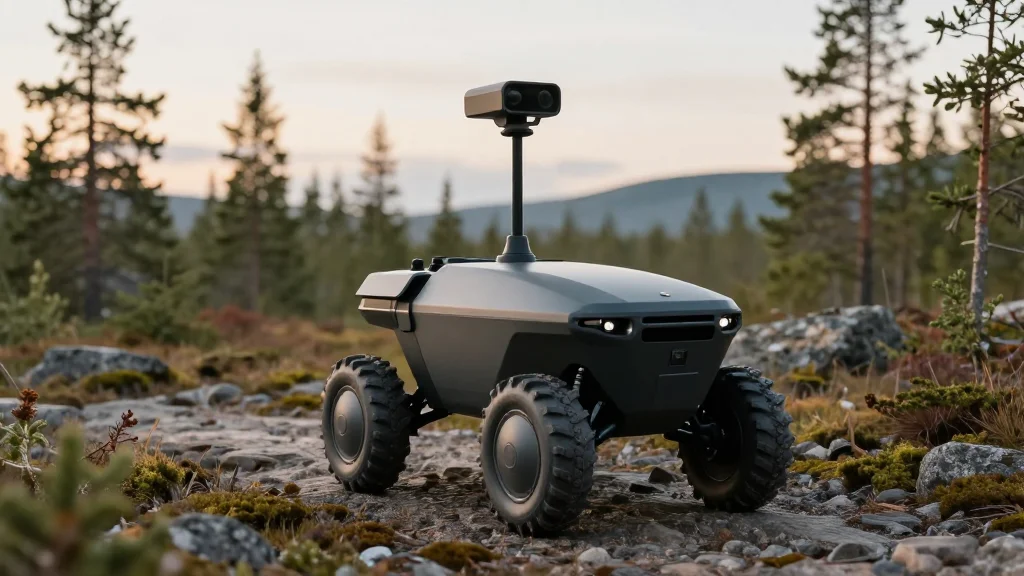
Sweden Looks to Commercial World to Meet Military UGV Needs
Why It Matters
By tapping the commercial sector, Sweden accelerates access to cutting‑edge UGV technology, strengthening its rapid‑response capabilities while reducing acquisition risk and cost. This approach signals a broader shift toward hybrid defence‑industry models worldwide.
Key Takeaways
- •Sweden seeks 500 kg payload UGVs for rugged terrain
- •FMV prioritises low‑cognitive‑load remote operation
- •Commercial firms invited to fill innovation gap
- •CMIP framework drives novel defence procurement methods
Pulse Analysis
Sweden’s latest defence push reflects a growing trend of militaries turning to the commercial tech ecosystem for uncrewed ground vehicle (UGV) capabilities. Traditional defence contractors often face lengthy development cycles, whereas commercial robotics firms can iterate faster, leveraging advances in autonomy, sensor fusion, and lightweight materials. By issuing a clear requirement—500 kg payload, all‑terrain mobility, and streamlined command‑and‑control—Sweden is creating a market signal that could attract startups and midsize manufacturers eager to prove their solutions in a real‑world defence context.
The civil‑military innovation programme (CMIP) underpins this strategy, providing a structured pathway for dual‑use technologies to transition from civilian labs to the battlefield. FMV’s procurement language explicitly calls for solutions not yet available, encouraging experimental designs and risk‑sharing contracts. This approach reduces the cognitive load on operators by integrating intuitive interfaces and autonomous navigation, which is critical for missions in complex environments such as forests or urban rubble where human‑controlled vehicles struggle. The emphasis on operator ergonomics also aligns with broader NATO efforts to improve soldier‑machine teaming.
Globally, Sweden’s move may reshape the UGV market by validating commercial platforms for defence use, prompting other nations to adopt similar hybrid procurement models. Companies that can demonstrate rapid deployment, modular payloads, and robust C2 links stand to secure lucrative contracts, while the Swedish armed forces gain faster access to cutting‑edge capabilities without the overhead of bespoke development. This synergy between civilian innovation and military need could accelerate the overall pace of unmanned systems adoption across NATO and EU partners.
Sweden looks to commercial world to meet military UGV needs
Comments
Want to join the conversation?
Loading comments...