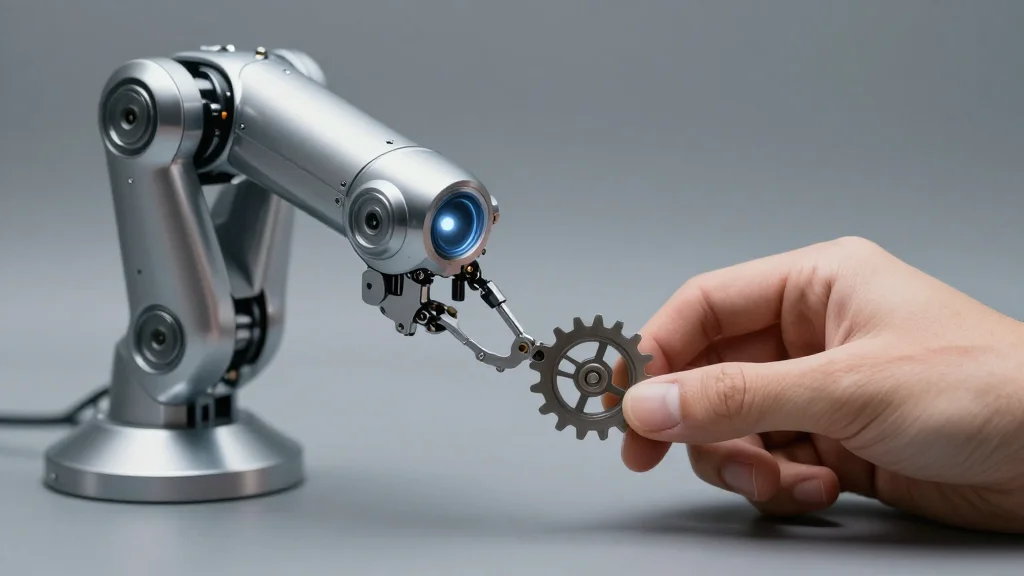
Swiss Researchers Show Robots Learning Complex Tasks by Watching Humans

Why It Matters
The EPFL demonstration tackles a core limitation of current industrial robots, which rely on pre‑programmed motions and struggle with variability. By enabling robots to learn by observation, manufacturers could reduce the time and cost of re‑tooling production lines for new products. In service sectors, such as hospitality or retail, adaptable robots could perform a wider range of tasks, expanding the market for robotic assistants. At the same time, the research forces a conversation about the boundaries of machine autonomy. As robots gain the ability to modify their own behavior, questions about accountability, safety, and the potential for misuse become more pressing. Establishing standards now could shape how these systems are regulated and accepted by the public.
Key Takeaways
- •EPFL team published a Science Robotics paper demonstrating observation‑based learning.
- •Robots replicated a human‑tossed ball task and transferred the skill to other units.
- •Sthithpragya Gupta highlighted the goal of everyday robot assistance like coffee making.
- •Robert Platt called the work a "breakthrough" and noted rapid change similar to AI chatbots.
- •Susan Schneider warned that functional learning does not imply robot consciousness.
Pulse Analysis
The EPFL breakthrough arrives at a moment when manufacturers are seeking flexible automation to keep pace with shorter product cycles. Traditional robotic cells require extensive reprogramming for each new task, a bottleneck that has limited adoption beyond high‑volume, repetitive processes. Observation‑based learning could compress the deployment timeline from months to weeks, giving companies a competitive edge in fast‑moving markets.
Historically, robot learning has progressed through reinforcement learning and imitation learning, each with trade‑offs in data efficiency and safety. The EPFL approach blends kinematic self‑awareness with visual demonstration, sidestepping the need for massive trial‑and‑error runs that have hampered earlier methods. If the technique scales to multi‑degree‑of‑freedom systems, it could redefine the economics of robot integration, lowering the barrier for small and medium enterprises.
However, the technology also amplifies existing governance challenges. As robots become capable of self‑modifying behavior, ensuring they remain within prescribed safety envelopes will require robust verification frameworks. Industry standards bodies may need to incorporate real‑time monitoring and fail‑safe mechanisms into certification processes. The dialogue sparked by Susan Schneider's cautionary remarks underscores the necessity of aligning technical progress with ethical oversight before autonomous assistants become commonplace.
Swiss Researchers Show Robots Learning Complex Tasks by Watching Humans
Comments
Want to join the conversation?
Loading comments...