Taiwan's NCSIST Unveils Three U.S.-Based Robot Dogs for Defense

Companies Mentioned
Why It Matters
Taiwan's robot‑dog showcase reflects a strategic shift toward autonomous, low‑cost platforms that can operate in contested environments where traditional armored vehicles are vulnerable. By integrating domestic sensors and weapons onto a foreign chassis, Taiwan reduces dependence on any single supplier and creates a modular architecture that can be upgraded as technology evolves. The move also has regional ramifications. As tensions in the Taiwan Strait persist, the ability to field agile, networked ground assets could alter the calculus of deterrence, offering Taipei a credible asymmetric capability that complicates an adversary's planning. Moreover, the demonstration may encourage other Asian defence establishments to pursue similar hybrid approaches, spurring a niche market for licensed quadruped platforms paired with locally sourced payloads.
Key Takeaways
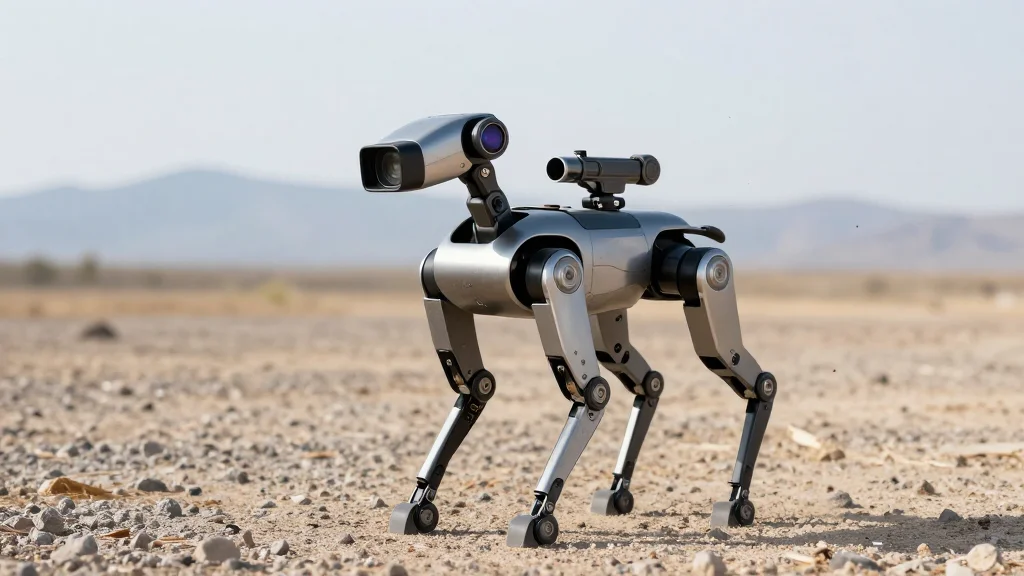
- •NCSIST displayed three robot‑dog variants on June 2 at Taiwan's Ministry of National Defense.
- •All models are built on Ghost Robotics' Vision 60 quadrupedal platform.
- •Payloads include electro‑optical reconnaissance, LiDAR with thermal imaging, and a rear‑mounted weapon turret.
- •Deputy Director Jen Kuo‑kuang emphasized the goal of a “non‑red” supply chain to avoid Chinese components.
- •Field trials and a live‑fire exercise are planned for later in 2026.
Pulse Analysis
Taiwan's decision to adopt a U.S. quadruped base while customizing payloads domestically is a pragmatic response to both geopolitical pressure and supply‑chain risk. Historically, Taiwan has relied on imported platforms that come with limited local support. By licensing the Vision 60 chassis, NCSIST gains immediate access to a battle‑tested mobility solution, while the in‑house development of sensors and weapons ensures that critical capabilities remain under national control. This hybrid model mirrors trends in the broader defence industry, where nations seek to balance rapid fielding with sovereign technology.
From a market perspective, the demonstration could open a new revenue stream for Ghost Robotics, which may see increased demand for platform licensing in regions where export restrictions are tight. At the same time, Taiwanese firms that supplied the electro‑optical and LiDAR modules stand to benefit from government contracts, potentially accelerating the domestic unmanned systems ecosystem. Competitors such as Boston Dynamics and ANYbotics may feel pressure to offer more flexible licensing arrangements to stay relevant in similar markets.
Looking forward, the success of Taiwan's robot dogs will hinge on integration with existing command‑and‑control infrastructure and the ability to operate autonomously in complex terrain. If field trials confirm reliable performance, the technology could expand beyond reconnaissance to logistics, mine clearance and even swarm tactics. Such capabilities would not only enhance Taiwan's defensive posture but also set a precedent for other small to medium powers seeking cost‑effective, high‑tech solutions in contested littorals.
Taiwan's NCSIST Unveils Three U.S.-Based Robot Dogs for Defense
Comments
Want to join the conversation?
Loading comments...