TARS Brings Real-Life Embodied AI to ICRA 2026 Robotics Conference
Why It Matters
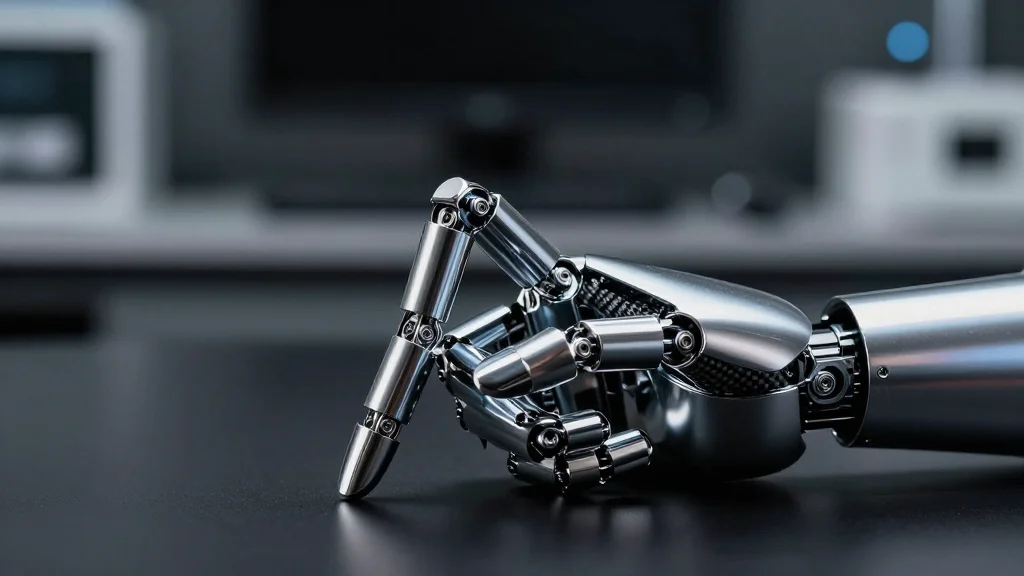
DexHand bridges the long‑standing simulation‑to‑reality gap in embodied AI, enabling robots to sense and act with human‑level dexterity, which could accelerate automation across manufacturing and service sectors.
Key Takeaways
- •DexHand mimics human hand with 21 degrees of freedom
- •Demonstrated all 26 sign‑language gestures with low‑latency control
- •Integrated 0.05 mm resolution cameras capture textures at 240 Hz
- •AWE 3.0 model predicts material properties, reducing reaction lag
- •Simplified drive uses only three motor and reducer types
Pulse Analysis
The emergence of embodied artificial intelligence has been hampered by the disparity between virtual models and physical performance. TARS tackles this challenge by feeding real human motion data into its SenseHub platform, ensuring that the robot’s control algorithms are trained on authentic kinematics rather than synthetic approximations. This approach not only improves the fidelity of simulation training but also shortens the iteration cycle for deploying new manipulation skills in real‑world settings.
DexHand’s architecture stands out for its 21‑degree‑of‑freedom layout that mirrors the metacarpal and phalangeal structure of a human hand. By reproducing the thumb’s CMC and MCP joint convergence, the device eliminates the blind spots common in parallel‑joint designs, delivering smoother micro‑manipulation. The inclusion of miniature cameras capable of 0.05 mm resolution at 240 Hz provides tactile‑level visual feedback, while the AWE 3.0 foundation model interprets hardness, roughness, and slip risk, allowing the robot to anticipate rather than merely react to material interactions.
From a market perspective, DexHand’s streamlined drive system—relying on just three motor and reducer types—lowers manufacturing complexity and cost, making it attractive for high‑volume assembly lines. As industries push for greater flexibility and precision in automation, a robotic hand that can seamlessly translate human gestures into reliable, high‑speed actions could become a cornerstone of next‑generation factories. The technology also hints at broader applications in tele‑operation, prosthetics, and collaborative robotics, where intuitive human‑machine interfaces are increasingly demanded.
TARS Brings Real-Life Embodied AI to ICRA 2026 Robotics Conference
Comments
Want to join the conversation?
Loading comments...