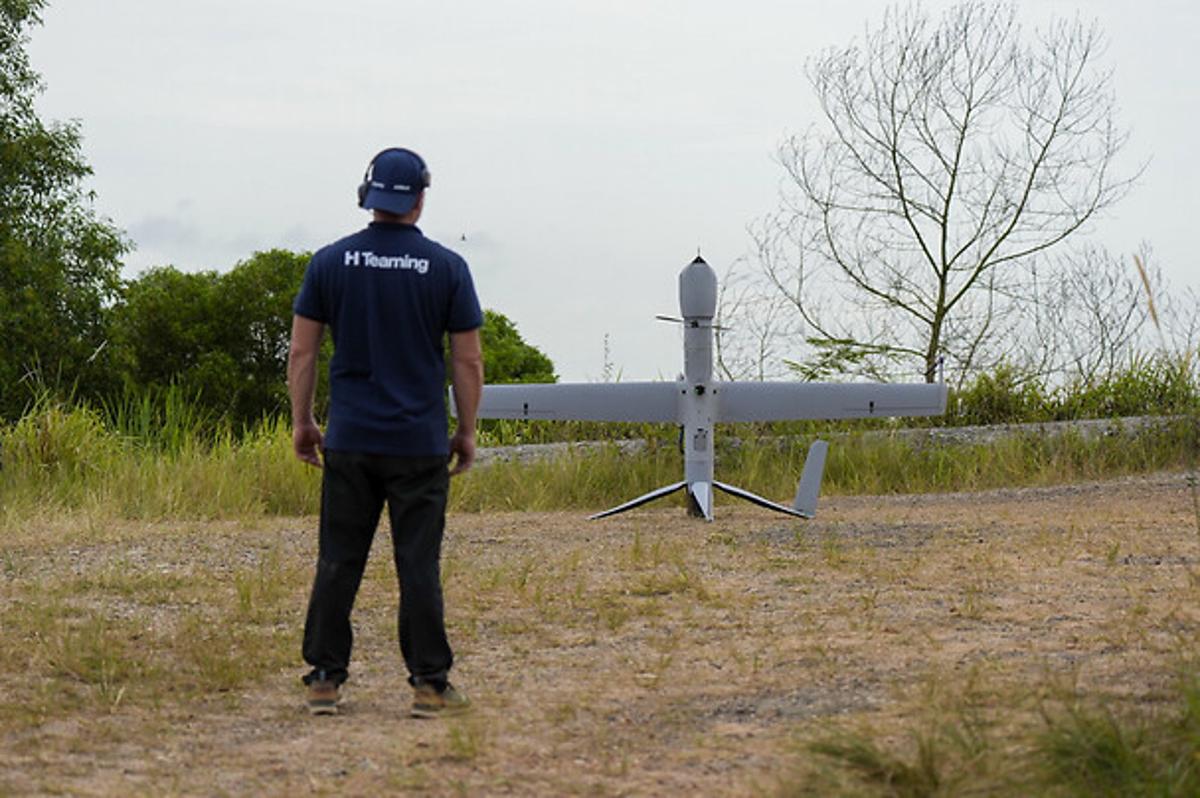
Teaming for Teaming: Airbus Connects with Singapore for Pioneering Collaboration
Companies Mentioned
Why It Matters
The successful drone‑helicopter teaming proves that networked aerial assets can dramatically improve search‑and‑rescue effectiveness while protecting crew, signaling a strategic shift for defense and emergency services toward integrated unmanned‑manned operations.
Key Takeaways
- •Flexrotor UAS provided 14‑hour endurance surveillance for H225M SAR mission
- •HTeaming enabled real‑time video, mapping, and pilot‑directed drone control
- •Stand‑off distance increased, reducing helicopter crew exposure to hazards
- •System is helicopter‑agnostic, paving way for broader multi‑platform deployments
Pulse Analysis
The Airbus Flexrotor‑HTeaming demonstration arrives at a time when search‑and‑rescue (SAR) agencies are grappling with the limits of manned‑only operations. Traditional helicopters can hover only a few hours before fuel constraints force a return, and crews remain vulnerable in hostile or disaster‑struck environments. By pairing a 14‑hour endurance Flexrotor UAS with the RSAF’s H225M, Airbus delivered continuous high‑resolution video, terrain mapping and live intelligence directly to the cockpit, effectively turning the helicopter into a mobile command hub that can stay out of harm’s way while still directing the drone’s actions.
Beyond the immediate SAR benefits, the demo underscores a broader industry trend toward interoperable, platform‑agnostic networking. HTeaming’s open‑architecture datalink is designed to work with any helicopter and any drone, reducing integration costs and accelerating adoption across allied forces. For defense planners, this means a single software suite can unlock new capabilities on legacy airframes, extending their service life and offering a cost‑effective path to multi‑domain operations. The technology also dovetails with emerging concepts such as swarming UAS and AI‑driven analytics, where rapid data fusion between manned and unmanned assets becomes a decisive advantage.
The commercial implications are equally compelling. As governments invest in next‑generation SAR and battlefield awareness, vendors that can promise plug‑and‑play teaming solutions will capture a growing market share. Airbus’s move positions it ahead of competitors still tied to proprietary, single‑platform systems. Moreover, the successful Singapore trial provides a template for other nations seeking to modernize their rescue and combat‑support fleets, potentially spurring a wave of contracts for HTeaming licences, training services, and future Flexrotor upgrades. In short, the partnership signals a shift from isolated aircraft to collaborative aerial ecosystems, reshaping how safety, intelligence and mission success are achieved in the sky.
Teaming for teaming: Airbus connects with Singapore for pioneering collaboration
Comments
Want to join the conversation?
Loading comments...