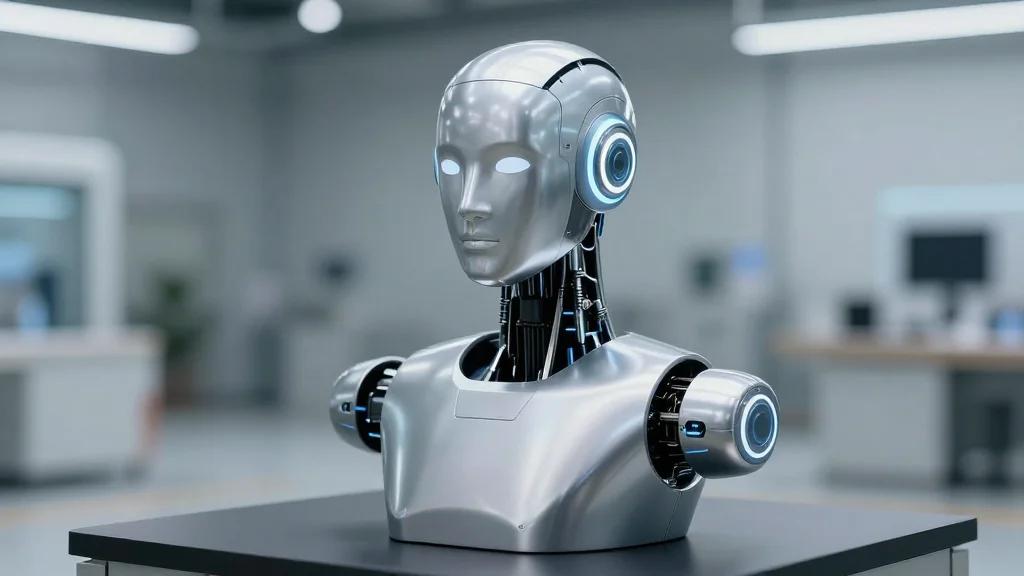
Tesla Commits $25 B to Mass‑Produce Optimus Humanoid, Targets 2026 Launch

Companies Mentioned

Why It Matters
Tesla’s $25 billion commitment signals a decisive bet that humanoid robots can become a mass‑market commodity, not just a niche industrial tool. If the company meets its cost and performance targets, manufacturers worldwide could replace a sizable portion of manual labor, reshaping cost structures and potentially accelerating offshoring reversals. The move also forces traditional robot makers to rethink product roadmaps and service models, as they confront a competitor with deep AI expertise and a vertically integrated supply chain. Beyond economics, the rollout raises regulatory and safety questions that could set precedents for how autonomous machines share workspaces with humans. The outcome will influence standards, insurance models, and labor‑policy debates across multiple jurisdictions.
Key Takeaways
- •Tesla pledges $25 billion to mass‑produce Optimus, targeting 2026 start in Fremont.
- •Goal of up to 10 million units annually at an estimated $15,000 unit cost.
- •Prototype trials show 92% task completion in battery‑cell assembly, promising up to 40% labor‑cost reduction.
- •Morgan Stanley forecasts $9 billion annual revenue if Optimus captures 5% of the $180 billion 2030 robotics market.
- •Supply‑chain bottlenecks in neodymium alloys and high‑purity silicon could delay volume ramp‑up.
Pulse Analysis
Tesla’s foray into humanoid robotics represents a strategic extension of its AI and manufacturing expertise, but it also tests the limits of the company’s capital efficiency. The $25 billion outlay is massive relative to the robotics sector, where typical capex for new platforms runs in the low‑single‑digit billions. Tesla’s ability to amortize this spend across its automotive and energy divisions could give it a cost advantage, yet the projected $15,000 unit price still exceeds the price of most collaborative robot arms, suggesting that early adopters will be limited to high‑margin, high‑volume environments like Tesla’s own factories.
From a competitive standpoint, incumbents such as Fanuc, Yaskawa, and ABB have built ecosystems around modular, task‑specific cobots. Optimus’s humanoid form factor promises greater flexibility but also introduces complexity in perception, balance, and safety compliance. If Tesla can deliver on its performance claims, it may force a wave of redesigns among legacy players, accelerating the convergence of AI‑driven perception and traditional robotics. Conversely, any delay or cost overrun could reinforce the market’s preference for proven, lower‑risk solutions.
Regulatory risk is another wild card. OSHA’s pending safety standards could impose design constraints that increase engineering costs or limit deployment scenarios. Companies that proactively integrate force‑limiting actuators and robust emergency‑stop systems may gain a competitive edge. Ultimately, Tesla’s success will hinge on its ability to translate prototype efficiency into reliable, high‑volume production while navigating raw‑material scarcity and evolving safety regulations. The next twelve months will be a litmus test for whether humanoid robots can transition from a headline‑grabbing concept to a staple of modern manufacturing.
Tesla Commits $25 B to Mass‑Produce Optimus Humanoid, Targets 2026 Launch
Comments
Want to join the conversation?
Loading comments...