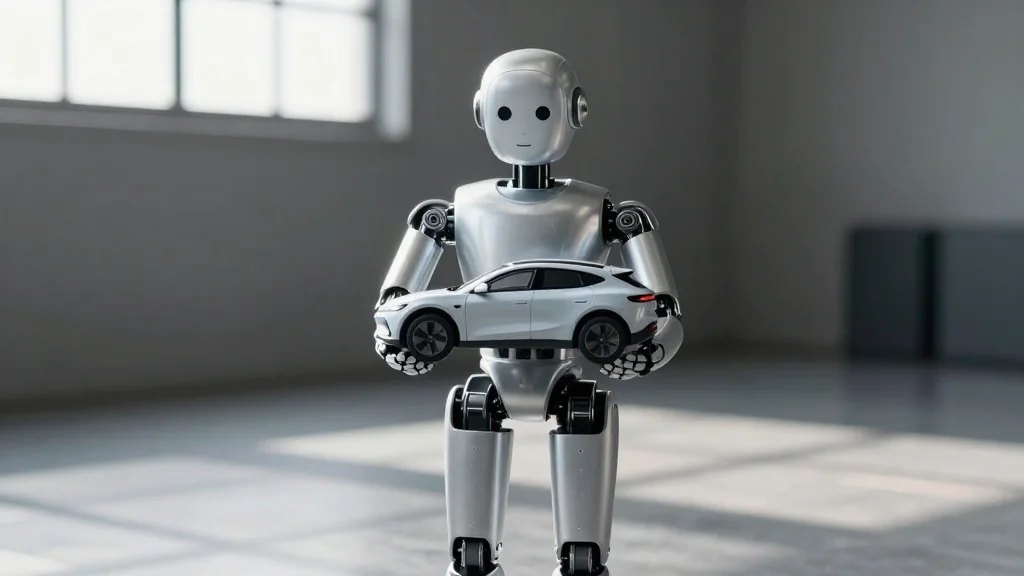
Tesla Shifts From Model S/X to Affordable SUV While Revving up Humanoid Robot Plans

Why It Matters
Tesla’s pivot illustrates a broader industry trend where automakers leverage vehicle platforms to fund non‑automotive ventures, particularly robotics and AI. By reallocating capacity from low‑volume luxury models to a mass‑market SUV, Tesla aims to generate the cash flow needed to bring Optimus from prototype to production, potentially reshaping labor markets if a low‑cost humanoid robot becomes widely available. The move also pressures rivals to consider similar cross‑segment strategies, accelerating convergence between automotive manufacturing and robotics. If Tesla can successfully commercialize both an affordable SUV and a functional humanoid robot, it would validate a business model that blends high‑volume vehicle sales with high‑margin robotics services, setting a new benchmark for diversification in the mobility sector.
Key Takeaways
- •Tesla will end Model S and Model X production by year‑end, freeing capacity for new projects.
- •The company is developing a smaller, cheaper SUV that will be 18 inches shorter than the Model Y and priced below $40,000.
- •Production of the new SUV is planned for Shanghai first, with later rollout to the U.S. and Europe.
- •Tesla’s long‑term focus includes scaling its Optimus humanoid robot, despite regulatory delays for driverless cars.
- •Q1 deliveries showed 341,893 Model 3/Y units versus just 16,000+ from other models, highlighting the need for a high‑volume product.
Pulse Analysis
Tesla’s strategic realignment is less about abandoning cars and more about rebalancing its portfolio to sustain long‑term growth. The Model S/X shutdown frees up assembly lines, tooling, and labor that can be repurposed for a high‑volume, lower‑margin vehicle—a classic economies‑of‑scale play. Historically, Tesla’s success has hinged on disruptive pricing; the Model 3’s $35,000 launch price unlocked a massive market segment that the Model S never reached. Replicating that formula with a new SUV could restore the cash flow needed to fund the capital‑intensive Optimus program, which remains in a speculative phase.
From a competitive standpoint, Tesla’s dual focus differentiates it from pure‑play EV makers and pure‑play robotics firms. While companies like Boston Dynamics have advanced robot hardware, they lack Tesla’s automotive manufacturing expertise and brand reach. Conversely, traditional automakers lack the AI depth that Tesla claims to possess. By marrying mass‑produced vehicle economics with a robot platform, Tesla could achieve cost reductions that make humanoid robots viable for commercial use—a market that has been limited to high‑cost, low‑volume deployments.
The biggest risk lies in execution. Tesla’s history of announced projects that never materialize (e.g., the original Semi and Roadster) casts doubt on timelines. Moreover, the robot’s commercial adoption will depend on regulatory clarity around safety and labor implications. If Tesla can deliver the SUV on schedule and demonstrate a functional Optimus prototype within the next year, it will reinforce investor confidence and potentially trigger a wave of robotics investment across the auto sector. Failure, however, could accelerate the narrative that Tesla is overextending beyond its core competency, pressuring the stock and inviting competitors to capture the robotics narrative.
Tesla shifts from Model S/X to affordable SUV while revving up humanoid robot plans
Comments
Want to join the conversation?
Loading comments...