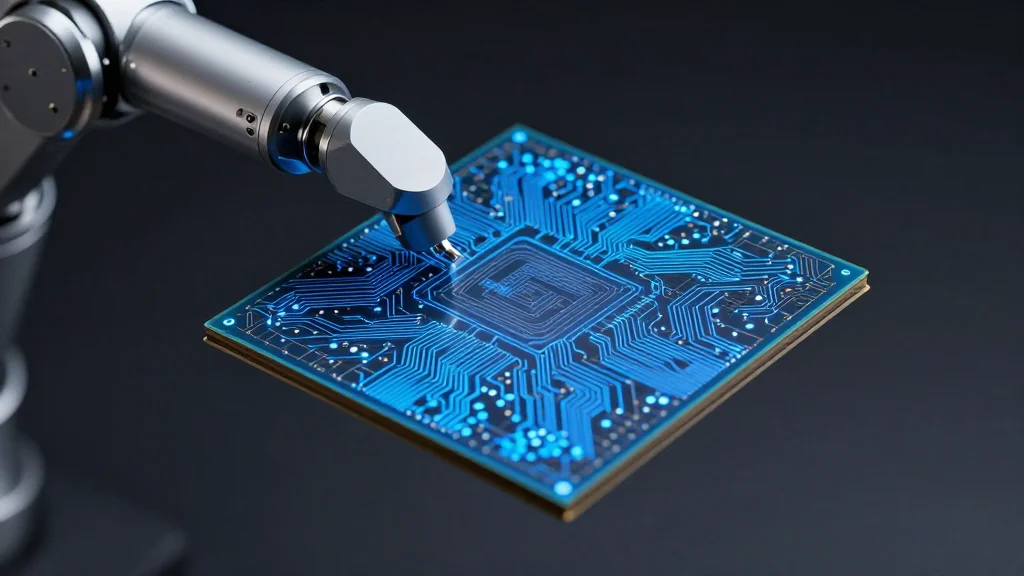
Tesla, SpaceX and Intel Commit $55B to Terafab Fab Targeting Robotics AI Chips


Why It Matters
Terafab represents the most ambitious domestic semiconductor effort aimed directly at robotics and AI hardware since the early 2000s. By co‑locating design, fabrication and advanced packaging, the project promises lower latency, higher energy efficiency and faster iteration cycles for autonomous robots, potentially lowering the cost barrier for widespread deployment in manufacturing, logistics and consumer applications. The partnership also redefines Intel’s role in the market, positioning it as a strategic supplier for high‑performance AI chips rather than a pure‑play PC processor maker. If the fab reaches its projected capacity, the sheer volume of AI‑optimized silicon could accelerate the commercialization of humanoid robots and advanced driver‑assistance systems, reshaping competitive dynamics among robotics firms that currently depend on external chip vendors. The initiative also underscores a broader geopolitical trend toward on‑shoring critical semiconductor capacity, reducing exposure to supply‑chain disruptions that have plagued the industry over the past decade.
Key Takeaways
- •Phase 1 Terafab investment: $55 billion; total potential spend up to $119 billion
- •Targeted 2‑nanometer Intel 14A process for AI and robotics chips
- •Goal of 1 million wafer starts per month, 100‑200 billion chips annually
- •Wedbush sees Intel as a "transformative new customer" but flags execution risk
- •Prototype fab at GigaTexas slated for small‑batch production in 2026, volume in 2027
Pulse Analysis
The Terafab alliance is a strategic gamble that could rewrite the economics of robotics hardware. Historically, robot manufacturers have been constrained by the lag between chip design and fab availability, often relying on legacy nodes that limit performance per watt. By securing a dedicated 2‑nm pipeline, Tesla and SpaceX aim to leapfrog competitors, delivering robots that can process sensor data locally with minimal latency—a critical advantage for real‑time navigation and manipulation.
However, the venture’s success hinges on Intel’s ability to deliver a mature 14A process at scale, a milestone that has eluded many foundries. The $55 billion upfront spend reflects both confidence and pressure; any delay could cascade into higher robot unit costs and slower adoption rates. Wedbush’s cautionary tone highlights that while the upside is "real," the capital intensity and supply‑chain coordination required are unprecedented for a private partnership of this magnitude.
From a market perspective, the ripple effects could be profound. Equipment suppliers like ASML stand to benefit from a surge in demand for extreme‑ultraviolet lithography tools, while downstream robotics firms may see a compression of the cost curve for AI‑enabled actuators. If Terafab achieves its volume targets, it could also create a domestic alternative to Asian fabs, reshaping global semiconductor geopolitics and giving U.S. robotics companies a more secure supply chain. The next 12‑18 months will be a litmus test: prototype yields, 14A process stability, and the ability to meet the aggressive wafer‑start schedule will determine whether Terafab becomes the backbone of the next wave of autonomous robots or a cautionary tale of over‑ambitious vertical integration.
Tesla, SpaceX and Intel Commit $55B to Terafab Fab Targeting Robotics AI Chips
Comments
Want to join the conversation?
Loading comments...