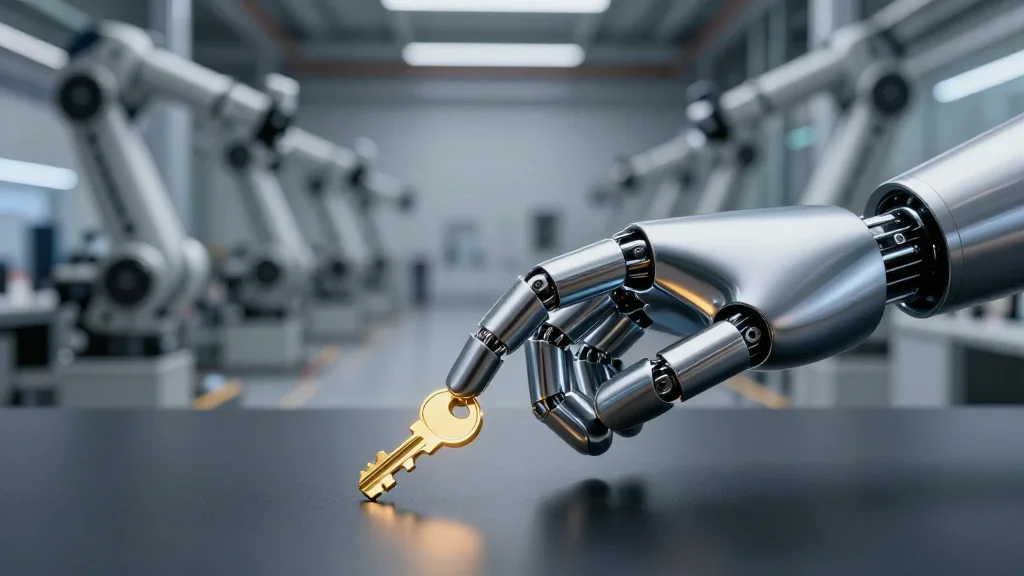
Tesla Taps Shanghai Gigafactory as ‘Golden Key’ for Mass‑Production of Humanoid Robots

Companies Mentioned
Why It Matters
Tesla’s decision to use its Shanghai Gigafactory for robot production could reshape the economics of humanoid robotics. By applying automotive‑scale manufacturing to a traditionally low‑volume market, Tesla may drive down unit costs and accelerate adoption across industries facing labor constraints. The move also deepens Tesla’s reliance on Chinese supply chains, highlighting how geopolitical dynamics are influencing the future of AI‑enabled hardware. Beyond cost, the announcement signals a broader industry trend: automakers are repurposing their factories for AI‑driven machines, blurring the line between vehicle production and robotics. If successful, Tesla could set a new benchmark for speed‑to‑market, forcing legacy robot manufacturers to rethink their production models and potentially spurring a wave of innovation in robot design and application.
Key Takeaways
- •Allan Wang Hao says Shanghai Gigafactory is a "golden key" for robot mass‑production
- •Shanghai plant produced >850,000 vehicles in 2025, 52% of Tesla’s global output
- •Tesla aims to leverage China’s cost‑efficient component supply chain for robotics
- •Optimistic investors see a path to undercut traditional robot makers on price
- •Prototype robot batch expected by Q4 2026, with larger scale rollout by 2028
Pulse Analysis
Tesla’s pivot to robot manufacturing at Shanghai reflects a strategic bet on economies of scale that could disrupt the entrenched robotics sector. Historically, robot makers have operated on thin margins, relying on bespoke engineering and low-volume production. Tesla’s automotive pedigree—characterized by massive capital investment, vertical integration, and a relentless focus on cost reduction—offers a template for mass‑producing humanoid machines at a price point previously unattainable. If the Shanghai line can achieve the same throughput as its vehicle lines, Optimus could become the first truly mass‑market robot, opening up use‑cases that were previously limited to high‑cost, specialized units.
The decision also underscores the growing importance of China as a hub for advanced manufacturing. While Tesla’s Fremont plant conversion signaled a domestic push, the Shanghai announcement leverages the country’s mature supply chain for sensors, actuators, and AI chips. This could accelerate the timeline for commercial deployment, but it also ties Tesla’s robot ambitions to the stability of Sino‑U.S. trade relations. Any escalation could force Tesla to re‑evaluate its sourcing strategy, potentially prompting a dual‑track approach that splits production between the U.S. and China.
Looking ahead, the success of Optimus will hinge on more than just production capacity. Market acceptance will depend on demonstrable ROI for end users, regulatory approvals for safety, and the ability to integrate with existing enterprise software ecosystems. Competitors are unlikely to sit idle; Chinese firms such as UBTech are already scaling up, and Western players may accelerate their own AI‑robot initiatives. Tesla’s advantage will be its brand cachet and the speed at which it can iterate—attributes that have historically given it an edge in the electric‑vehicle market and could now translate into a leadership position in the next wave of physical AI.
Tesla Taps Shanghai Gigafactory as ‘Golden Key’ for Mass‑Production of Humanoid Robots
Comments
Want to join the conversation?
Loading comments...