The Rise of Collaborative Robots and Human-Robot Teams in Modern Factories
•February 8, 2026
0
Why It Matters
Material stability directly influences cobot precision, safety margins, and downtime, making it a competitive advantage for manufacturers seeking agile, high‑mix production.
Key Takeaways
- •Cobots work safely alongside humans, increasing flexibility
- •Precision depends on material stability, especially thermal expansion
- •Alumina ceramics reduce deformation, improve repeatability
- •Targeted ceramic components extend maintenance intervals
- •Early material selection boosts safety and ROI
Pulse Analysis
The surge of collaborative robots reflects a broader shift toward adaptable manufacturing ecosystems where humans and machines share tasks. Companies are abandoning rigid, single‑purpose cells in favor of flexible workstations that can be reprogrammed for multiple product variants. This transition fuels demand for robots that not only sense their environment but also maintain micron‑level accuracy despite constant human interaction, positioning cobots as the linchpin of next‑generation factories.
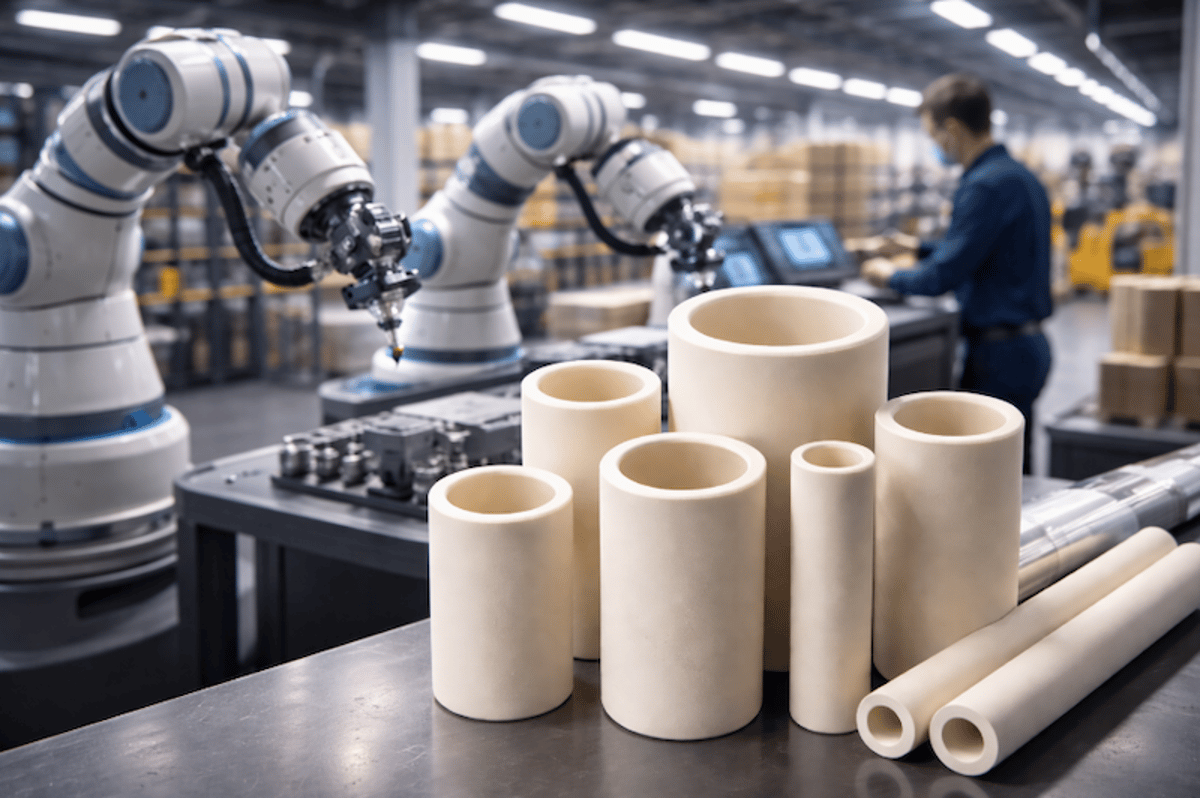
Achieving that accuracy hinges on the physical integrity of the robot’s structural components. Advanced ceramics, particularly high‑purity alumina, offer near‑zero thermal expansion, exceptional wear resistance, and electrical insulation—attributes that metal alloys alone cannot provide in high‑precision contexts. By integrating alumina rods and tubes into joints, housings, and sensor mounts, manufacturers mitigate drift caused by heat buildup and repetitive motion cycles. The result is a more stable kinematic chain, reduced calibration frequency, and lower total‑cost‑of‑ownership for the automation system.
Looking ahead, the convergence of digital control algorithms with engineered material solutions will define the competitive edge of smart factories. Early‑stage material selection becomes a strategic decision, influencing safety certifications, maintenance schedules, and overall return on investment. As product mixes become more complex and production runs shorter, the reliability afforded by ceramic‑enhanced cobots will enable manufacturers to scale up customization without sacrificing throughput or quality, cementing human‑robot collaboration as a core pillar of modern industrial strategy.
The Rise of Collaborative Robots and Human-Robot Teams in Modern Factories
0
Comments
Want to join the conversation?
Loading comments...