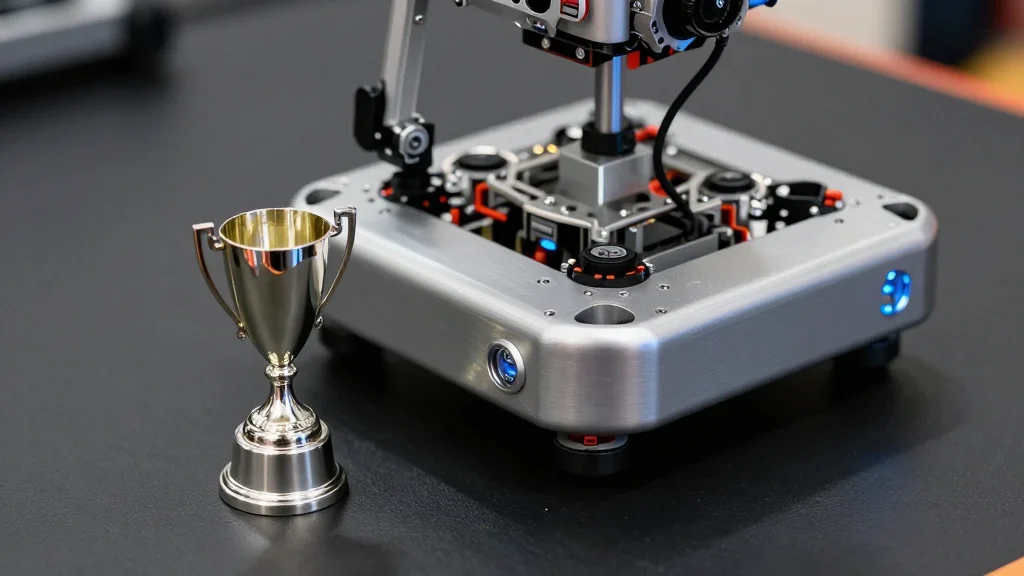
Three Detroit High‑School Robotics Teams Head to FIRST World Championship in Houston

Why It Matters
The qualification of three Detroit high‑school teams for the FIRST World Championship highlights a burgeoning talent pipeline that could reshape the city’s economic future. By exposing students to advanced engineering, programming and project‑management skills, the programs prepare a workforce ready for the autonomous‑vehicle, AI‑driven manufacturing, and robotics sectors that are expanding in the Midwest. Beyond job training, the teams serve as community ambassadors, demonstrating that STEM opportunities are accessible to diverse populations. Cristo Rey’s Impact Award win, for example, underscores how robotics can be leveraged to engage under‑represented youth, fostering inclusive pipelines that address longstanding equity gaps in technology fields.
Key Takeaways
- •University of Detroit Jesuit, Cristo Rey and The School at Marygrove qualified for the 2026 FIRST World Championship in Houston.
- •More than 600 teams from around the globe will compete at the championship, the largest gathering of student‑built robots.
- •Teams earned spots after strong performances at the Michigan State Championship in Saginaw (April 16‑18).
- •Cristo Rey won the FIRST Impact Award, highlighting community outreach and cultural representation.
- •The trip showcases Detroit’s growing robotics ecosystem and could attract industry partnerships and funding.
Pulse Analysis
Detroit’s emergence on the global robotics stage is no accident; it reflects a strategic realignment of the city’s educational and economic priorities. Historically anchored by the auto industry, Detroit has leveraged its manufacturing heritage to attract robotics firms seeking a skilled labor pool familiar with complex mechanical systems. High‑school programs like those at U‑D Jesuit act as early feeders, giving students hands‑on experience that aligns with industry needs for mechatronics, AI integration and systems engineering.
The timing of these qualifications is also significant. As major automakers accelerate investments in autonomous driving platforms, the demand for engineers who can bridge software and hardware is surging. By showcasing their capabilities at the FIRST World Championship, Detroit teams not only gain prestige but also create direct pipelines to internships and apprenticeships with local firms such as Rivian, GM’s Cruise and a host of emerging startups. This creates a virtuous cycle: industry support funds school labs, which produce talent that fuels further industry growth.
Equity considerations amplify the impact. Cristo Rey’s emphasis on cultural representation and community outreach demonstrates that robotics can be a vehicle for social mobility. When students see robots that reflect their own identities, participation rates rise, diversifying the future talent pool. This diversification is crucial for companies that recognize inclusive teams drive better innovation outcomes.
Looking ahead, the real test will be whether these programs can sustain momentum beyond a single championship appearance. Continued success will depend on stable funding, mentorship networks, and the ability to translate competition experience into real‑world projects. If Detroit can institutionalize these elements, the city could become a model for other post‑industrial regions seeking to reinvent themselves through STEM education and robotics.
Three Detroit High‑School Robotics Teams Head to FIRST World Championship in Houston
Comments
Want to join the conversation?
Loading comments...