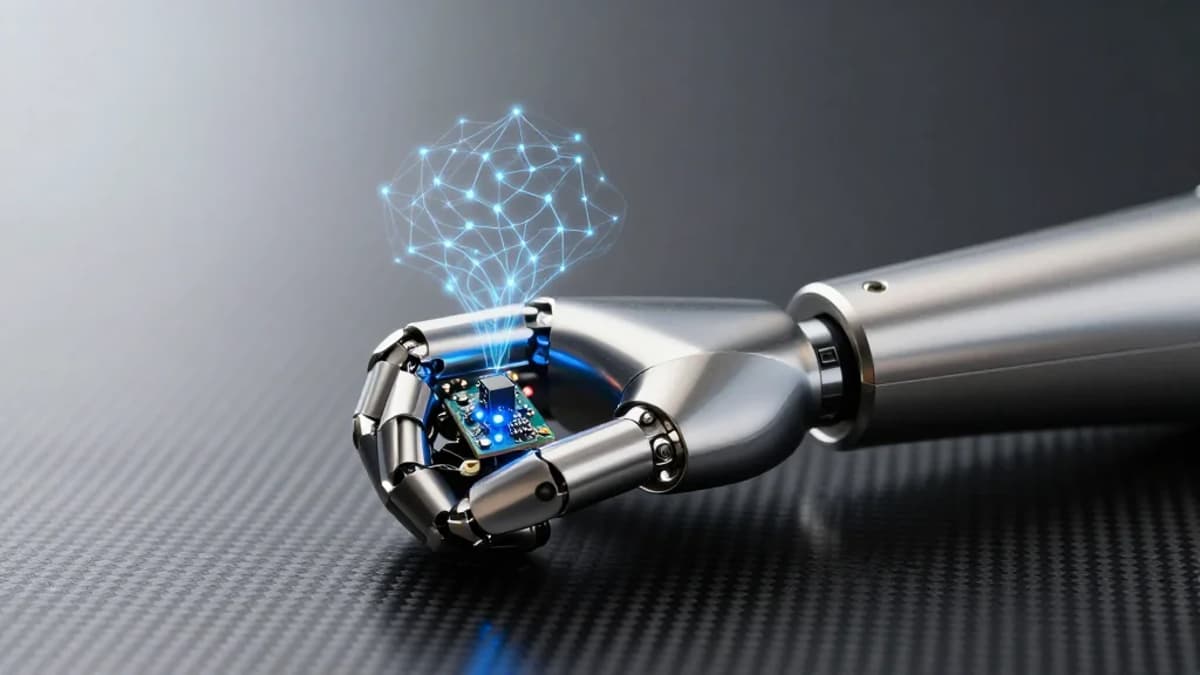
TI Accelerates the Next Generation of Physical AI with NVIDIA
•March 5, 2026
0
Why It Matters
Integrating deterministic control and advanced AI compute shortens development cycles and raises safety standards, unlocking broader commercial use of humanoid robots.
Key Takeaways
- •TI and NVIDIA combine AI compute with real‑time control
- •mmWave radar fuses with Jetson Thor for low‑latency perception
- •Solution enhances detection of transparent and reflective obstacles
- •Enables faster move from simulation to production‑ready robots
- •Showcased at NVIDIA GTC 2026, boosting industry visibility
Pulse Analysis
The robotics sector is reaching a tipping point where pure GPU horsepower no longer guarantees safe operation. Manufacturers now demand deterministic control loops, power‑efficient actuation, and real‑time sensing that can be trusted in dynamic environments. Texas Instruments’ analog and embedded‑processing expertise, paired with NVIDIA’s Jetson Thor and Holoscan ecosystem, creates a hardware‑software stack that bridges that gap. By embedding TI’s motor‑control, radar and power‑management blocks directly into the AI compute pipeline, developers can prototype humanoid platforms with a single, cohesive architecture rather than stitching together disparate components.
The joint solution leverages TI’s IWR6243 mmWave radar, which delivers 3‑D point clouds over Ethernet, and fuses them with camera feeds inside the Holoscan Sensor Bridge. This low‑latency sensor‑fusion pipeline reduces false positives and enables reliable detection of glass doors, reflective surfaces, and dust‑filled air—scenarios where vision alone struggles. Coupled with Jetson Thor’s GPU‑accelerated inference, the system can run complex perception models and safety‑critical control loops within milliseconds, meeting functional‑safety standards required for collaborative robots in hospitals or retail spaces.
From a business perspective, the TI‑NVIDIA partnership shortens the development cycle from months of simulation to weeks of hardware validation, accelerating time‑to‑market for commercial humanoids. The announcement at GTC 2026 signals to investors that the supply chain for safety‑grade AI robotics is consolidating around a few integrated platforms, potentially raising the barrier to entry for smaller players. As enterprises seek autonomous assistants that can operate alongside humans, the combined offering positions both companies to capture a growing share of the industrial‑automation and service‑robot markets.
TI accelerates the next generation of physical AI with NVIDIA
0
Comments
Want to join the conversation?
Loading comments...