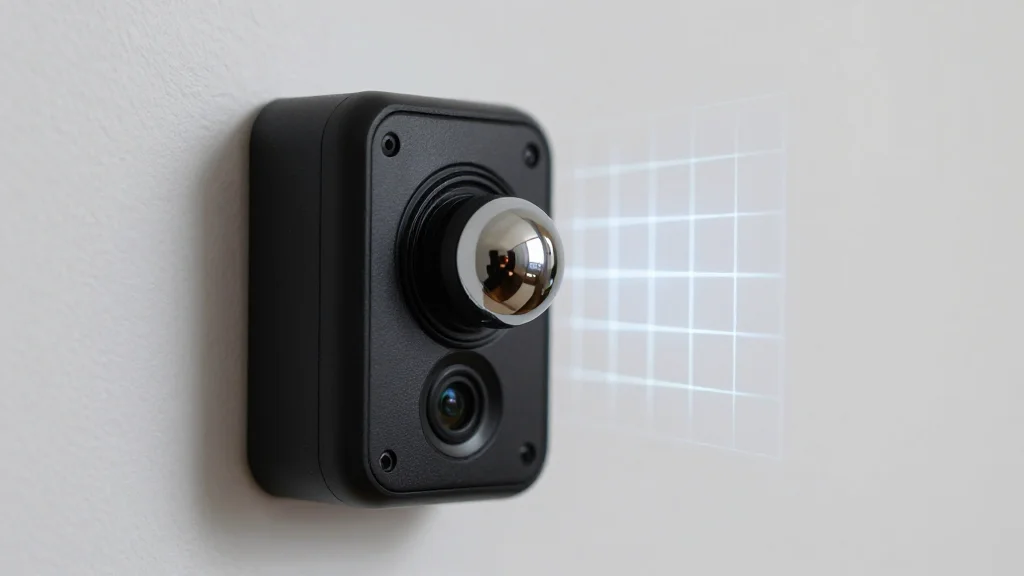
Turning Surroundings Into a 'Virtual Screen' Could Help Machines See Better in 3D
Why It Matters
The breakthrough removes a long‑standing barrier in machine vision—accurate 3D sensing of mixed‑reflectivity scenes—enabling safer autonomous navigation and more precise robotic operations. Its scalability could reshape inspection, manufacturing, and medical imaging markets.
Key Takeaways
- •Virtual screen uses room’s matte surfaces for specular measurement
- •Event cameras capture high‑speed 3D data across extreme lighting
- •Technique bridges gap between diffuse and specular 3D sensing
- •Scalable from microscale surgery to full‑room digitization
Pulse Analysis
The new system builds on deflectometry, a technique that traditionally required massive physical screens to map reflections from shiny surfaces. By repurposing every matte object in a scene as a virtual display, the researchers eliminate the need for bulky hardware, allowing compact, portable setups that can be deployed in factories, clinics, or on autonomous platforms. This paradigm shift not only cuts costs but also expands the angular coverage of specular measurements, a critical factor for capturing complex geometries in real‑world environments.
A key enabler of the technology is the neuromorphic event camera, which records changes in illumination rather than full frames. This high‑temporal‑resolution sensor handles lighting variations from dim to blindingly bright, making it ideal for mixed‑reflectance scenes such as car interiors or surgical fields. The event‑based approach also reduces data bandwidth, enabling real‑time 3D video streams that traditional cameras struggle to deliver. Together with advanced algorithms that separate diffuse and specular components, the system achieves millimeter‑scale accuracy at video‑rate speeds.
Industry implications are far‑reaching. Autonomous vehicles can now perceive glass doors, polished metal, and road markings with equal fidelity, reducing the risk of misjudging distances. In robotic surgery, surgeons gain precise 3D maps of wet tissue and reflective instruments, improving navigation and outcomes. Manufacturing lines can inspect glossy finishes without costly tunnel‑screen setups, accelerating quality control. As the technology matures, its scalability promises to democratize high‑performance 3D imaging across sectors that demand both speed and accuracy.
Turning surroundings into a 'virtual screen' could help machines see better in 3D
Comments
Want to join the conversation?
Loading comments...