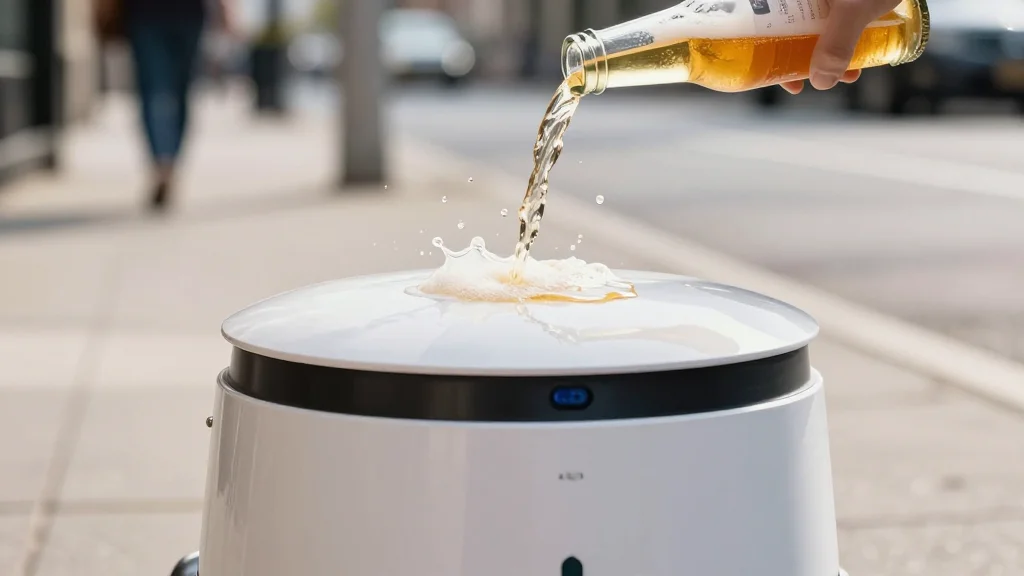
Two Suspects Sought After Beer‑doused Daxbot Sidewalk Robots in Hollister

Why It Matters
The Hollister beer‑pouring incident underscores a growing tension between the promise of autonomous municipal services and the practical challenges of protecting them in public spaces. As federal grants fund more sidewalk‑survey robots, cities must confront the reality that low‑tech vandalism can disrupt high‑tech solutions, inflating maintenance costs and eroding public confidence. The episode may prompt policymakers to embed security considerations—ranging from robust hardware designs to community‑engagement strategies—into the early stages of robotics projects, ensuring that the data‑driven benefits of such deployments are not undermined by preventable sabotage. Furthermore, the incident highlights the importance of real‑time data capture for law‑enforcement purposes. The robots’ own cameras provided crucial evidence, demonstrating a secondary utility of autonomous platforms: acting as unbiased witnesses. This dual‑use potential could become a selling point for municipalities seeking to justify the expense of robotic fleets, but it also raises privacy and data‑ownership questions that will need clear regulatory guidance.
Key Takeaways
- •Hollister police are hunting two men who knocked over and poured beer on Daxbot sidewalk‑survey robots.
- •The robots are part of a federal Safe Streets and Roads for All Grant aimed at mapping ADA compliance.
- •Surveillance footage from the robots captured the vandalism, providing key evidence for investigators.
- •Daxbot’s technology creates prioritization maps of sidewalk hazards, data that will guide city improvements.
- •The incident raises security and public‑acceptance concerns for future municipal robotics deployments.
Pulse Analysis
The Hollister episode is a microcosm of the broader security dilemma facing municipal robotics. While the technology promises granular, real‑time infrastructure data, its physical exposure makes it a low‑hanging fruit for opportunistic vandalism. Historically, city‑wide sensor networks—traffic cameras, air‑quality monitors—have faced similar threats, prompting a gradual evolution toward hardened enclosures and remote monitoring. Robotics, however, adds a mobile, high‑visibility element that can attract both curiosity and hostility.
From a market perspective, the incident could accelerate demand for anti‑tamper solutions. Companies like Daxbot may soon bundle ruggedized casings, GPS‑based geofencing, and AI‑driven anomaly detection into their standard offerings, turning security into a differentiator. Investors watching the municipal robotics space will likely scrutinize how firms address these risks, potentially influencing funding rounds and partnership decisions.
Looking ahead, city planners must treat security as a core component of deployment budgets, not an afterthought. Public‑education campaigns that clearly articulate the societal benefits—safer sidewalks, better compliance with the Americans with Disabilities Act—could mitigate vandalism born of misunderstanding. Moreover, leveraging the robots’ own sensor data for law‑enforcement purposes creates a feedback loop that both deters crime and adds value to the investment. The Hollister case will likely become a reference point in municipal procurement guidelines, shaping how the next generation of autonomous city services are designed, protected, and accepted by the public.
Two suspects sought after beer‑doused Daxbot sidewalk robots in Hollister
Comments
Want to join the conversation?
Loading comments...