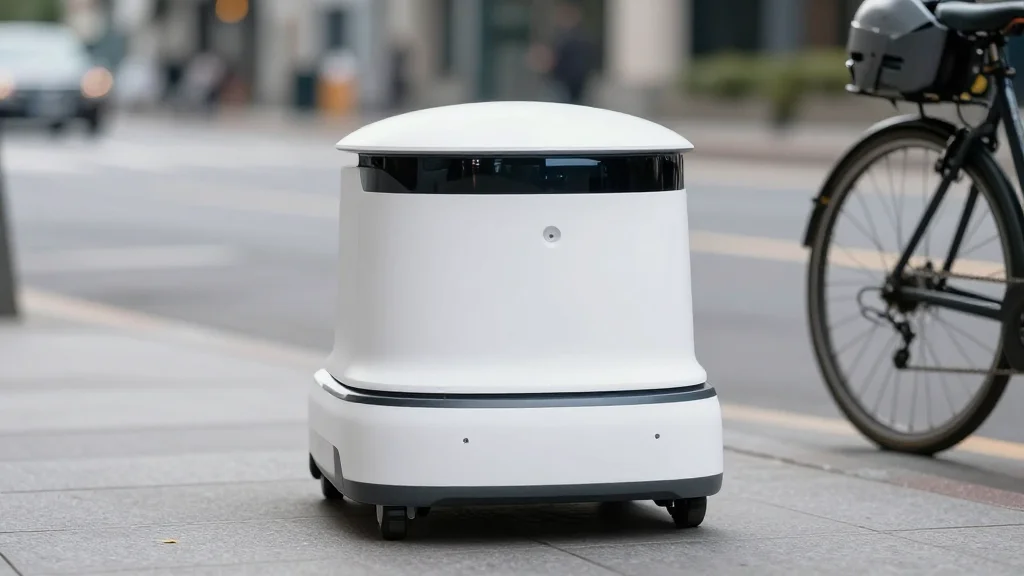
Uber and Avride Face Lawsuit After Delivery Robot Injures Jersey City Cyclist

Why It Matters
The lawsuit spotlights a regulatory blind spot: who is responsible when a robot, not a human driver, causes injury in shared public spaces? A ruling against Uber and Avride could compel the industry to adopt stricter safety standards, influencing everything from sensor redundancy to real‑time human oversight. It also raises the specter of costly litigation that could deter investors and slow capital inflows into autonomous delivery ventures. Beyond legal liability, the case could affect public perception of robot couriers. If consumers view these machines as unsafe, adoption rates may falter, prompting companies to pivot toward alternative last‑mile solutions such as human couriers or hybrid models that keep robots confined to private property.
Key Takeaways
- •Cyclist Conor Shannon sues Uber and Avride after a delivery robot collision in Jersey City.
- •Lawyer Adam Lederman claims the incident is the first serious injury involving an autonomous delivery robot.
- •Uber‑Avride partnership, announced in 2024, aimed to expand robot deliveries to multiple U.S. cities.
- •The lawsuit alleges failure to ensure safe navigation on sidewalks, bike lanes and crosswalks.
- •Potential outcomes include higher insurance costs, stricter city permits, and revised safety protocols for robot fleets.
Pulse Analysis
The Uber‑Avride case arrives at a moment when the autonomous delivery market is at a crossroads. On one hand, firms have been racing to capture the $30‑plus billion last‑mile logistics opportunity, leveraging robots to cut labor costs and meet consumer expectations for ultra‑fast delivery. On the other, the regulatory framework for low‑speed, sidewalk‑operating robots remains fragmented, with most cities applying the same rules that govern pedestrians and cyclists. This legal challenge could force a de‑facto standardization, as municipalities demand proof of safety before granting permits.
Historically, liability in autonomous vehicle crashes has hinged on the concept of "reasonable expectation of safety"—a benchmark that is still being defined for ground‑based robots. If a court finds Uber and Avride negligent, it may set a precedent that manufacturers must certify not only sensor performance but also robust fail‑safe mechanisms and clear human‑override procedures. Such a ruling would likely increase development costs, but it could also spur innovation in redundant sensing and AI‑driven decision‑making, ultimately making the technology safer for all road users.
From an investor standpoint, the case injects uncertainty into valuation models that currently assume smooth regulatory rollout. Venture capitalists may demand higher equity stakes or impose stricter milestones tied to safety certifications. Meanwhile, competitors like Starship Technologies and Nuro, which have already secured limited city approvals, might gain a competitive edge if they can demonstrate superior safety records. In short, the outcome of this lawsuit could reshape the risk‑reward calculus for the entire autonomous delivery ecosystem.
Uber and Avride Face Lawsuit After Delivery Robot Injures Jersey City Cyclist
Comments
Want to join the conversation?
Loading comments...