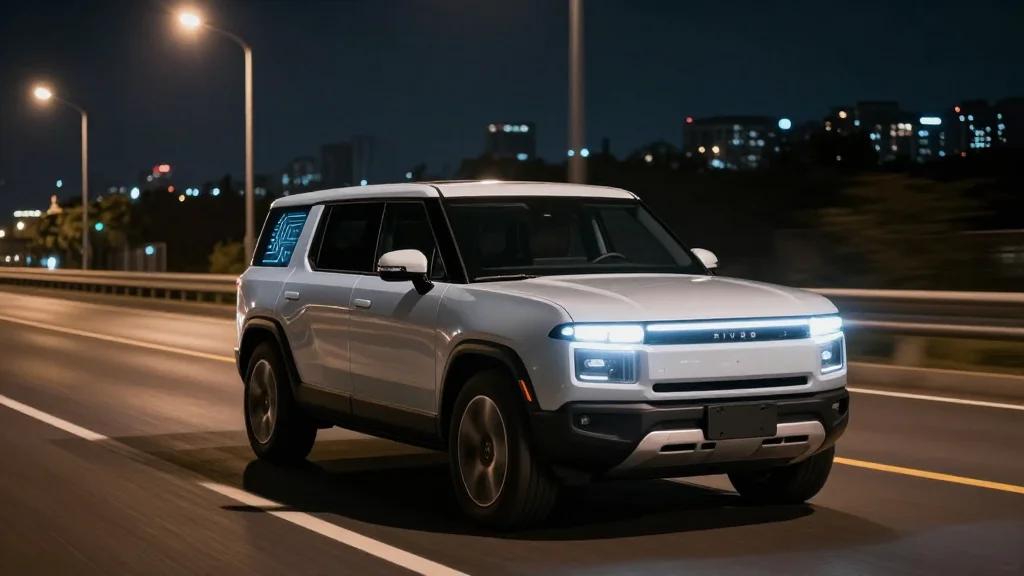
Uber Commits $1.25 B to Rivian for 50,000 Robotaxis by 2031

Why It Matters
Deploying 50,000 unsupervised robotaxis would dramatically increase the supply of on‑demand autonomous rides, potentially lowering per‑trip costs and expanding access in dense urban corridors. The scale of Uber’s investment also pressures competitors to accelerate their own autonomous programs, intensifying a technology arms race that could speed up regulatory frameworks and safety standards. Moreover, the vertical integration model—combining vehicle manufacturing, compute hardware, and software under a single partnership—offers a template for future mobility ventures seeking tighter control over cost and data. The partnership also raises questions about labor displacement, city infrastructure readiness, and the competitive dynamics between ride‑hailing platforms and traditional automakers. As Uber and Rivian aim to operate without safety drivers, the industry will need to address public trust, insurance models, and the environmental impact of a massive electric fleet charging network.
Key Takeaways
- •Uber invests $1.25 billion in Rivian, with $300 million upfront.
- •Plan to field up to 50,000 unsupervised robotaxis by 2031.
- •Initial purchase of 10,000 Rivian R2 SUVs; option for 40,000 more in 2030.
- •Service to launch in San Francisco and Miami in 2028, expanding to 25 cities.
- •Uber also allocating $100 million for autonomous‑vehicle charging hubs.
Pulse Analysis
Uber’s alliance with Rivian marks a decisive bet on scale rather than incremental improvements. By tying the bulk of its $1.25 billion investment to autonomous milestones, Uber forces Rivian to prioritize self‑driving capabilities alongside its consumer EV line, effectively creating a dual‑use platform that can amortize R&D costs across two revenue streams. Historically, robotaxi pilots have struggled to achieve profitability due to high capital expenditures and limited fleet sizes; Uber’s approach seeks to flip that equation by achieving economies of scale early.
The partnership also reflects a broader industry trend toward vertical integration, mirroring how Tesla combined vehicle production with its own autopilot stack. Uber’s access to Rivian’s battery technology and manufacturing capacity could shorten the time to market for unsupervised fleets, but it also concentrates risk. If regulatory approvals lag or safety incidents occur, the $1.25 billion could become a sunk cost without a clear path to return. Competitors like Waymo, backed by Alphabet’s deep AI expertise, may retain an edge in perception software, while Amazon’s Zoox continues to develop purpose‑built robots. Uber will need to leverage its massive rider base and data from its consumer EV customers to close that gap.
Looking ahead, the success of the Uber‑Rivian robotaxi fleet will hinge on three variables: regulatory clearance for driverless operation, the reliability of Rivian’s autonomous stack under real‑world conditions, and the economic model for charging infrastructure. If Uber can demonstrate safe, high‑utilization rides in its 2028 launch cities, it could trigger a cascade of city approvals and attract additional fleet partners, cementing its position as a leading mobility provider in the autonomous era.
Uber commits $1.25 B to Rivian for 50,000 robotaxis by 2031
Comments
Want to join the conversation?
Loading comments...