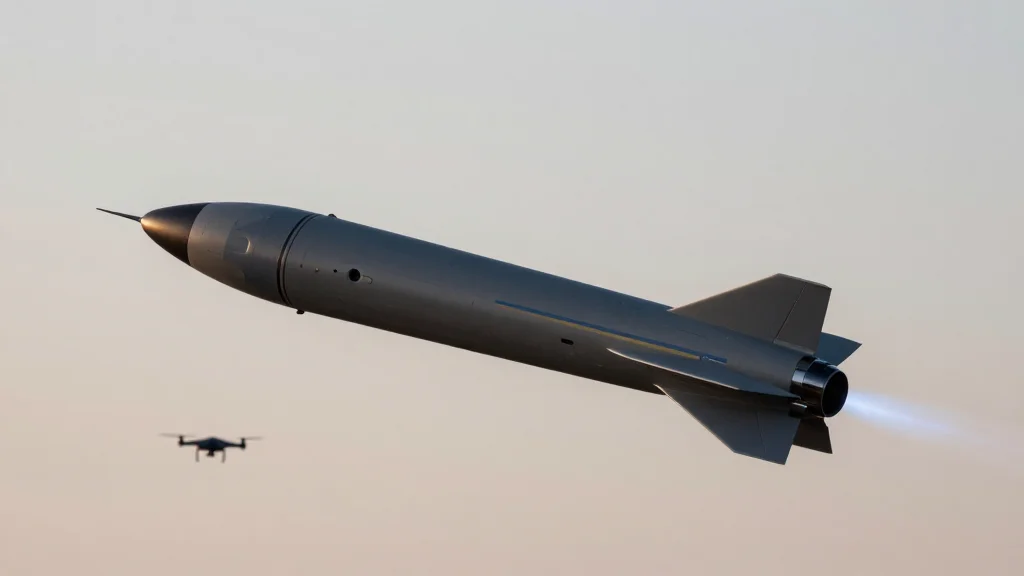
Ukraine Downs Iranian Shahed Drones, Showcasing Homegrown Interceptor Capability

Why It Matters
The successful downing of Shahed drones by Ukrainian‑made interceptors demonstrates that a war‑torn nation can rapidly develop and field sophisticated counter‑UAV technology. This challenges the traditional dominance of Western defense firms in the niche but growing market for low‑cost drone defence. For countries confronting swarms of inexpensive UAVs, Ukraine’s solution offers a potentially affordable alternative, which could accelerate proliferation of similar systems in regions from the Middle East to Africa. Beyond the commercial angle, the incident underscores the expanding geopolitical role of Ukraine’s defence sector. By positioning itself as a supplier of anti‑drone capabilities, Kyiv can deepen strategic ties with NATO allies and non‑aligned states alike, leveraging its battlefield experience into diplomatic capital. The move also adds a new dimension to the broader conflict dynamics involving Iran, Russia, and the United States, as drone technology becomes a shared battlefield asset across multiple fronts.
Key Takeaways
- •Ukrainian forces intercepted Iranian Shahed drones during U.S.–Israel strikes, per President Zelenskyy.
- •Shahed drones cost about $25,000 each; Ukrainian interceptors are built on a modular, low‑cost platform.
- •Ukraine offers to share interceptor technology and assist in securing the Strait of Hormuz.
- •The incident highlights a shift in the global counter‑UAV market, challenging Western dominance.
- •U.S. Pentagon’s $1.1 billion Drone Dominance program may face new competition from Ukrainian firms.
Pulse Analysis
Zelenskyy’s disclosure does more than showcase a tactical win; it signals a strategic pivot for Ukraine’s defence industry. Historically, Kyiv has relied on foreign arms imports, but the war forced a rapid indigenisation of weapons systems. The homegrown interceptor’s success against Shahed drones validates that model and suggests a new export narrative: “battle‑tested, affordable, and locally produced.”
For NATO, this development is a double‑edged sword. On one hand, allies gain a proven, cost‑effective tool to counter cheap UAV swarms that have plagued recent conflicts in Ukraine, Syria, and Yemen. On the other, integrating Ukrainian hardware into existing NATO air‑defence networks will require standardisation, certification, and logistics support—tasks that could strain already‑busy procurement pipelines. The Pentagon’s Drone Dominance initiative, which aims to field a unified U.S. counter‑UAV architecture, may need to accommodate or even partner with Ukrainian firms to stay ahead of proliferating low‑cost drones.
Geopolitically, Ukraine’s willingness to assist in securing the Strait of Hormuz expands its diplomatic reach beyond the European theatre. By offering technical expertise in a chokepoint that handles roughly 20% of global oil trade, Kyiv positions itself as a stakeholder in global energy security. This could translate into deeper security guarantees from the United States and its allies, reinforcing the strategic calculus that keeps Ukraine in the Western security umbrella.
In the longer term, the episode may accelerate a broader trend: nations under pressure from asymmetric aerial threats are likely to invest in homegrown, modular counter‑UAV solutions rather than rely solely on high‑end, expensive Western systems. Ukraine’s experience could become a case study for other emerging defence economies, potentially reshaping the competitive landscape of the robotics‑driven defence sector for years to come.
Ukraine Downs Iranian Shahed Drones, Showcasing Homegrown Interceptor Capability
Comments
Want to join the conversation?
Loading comments...