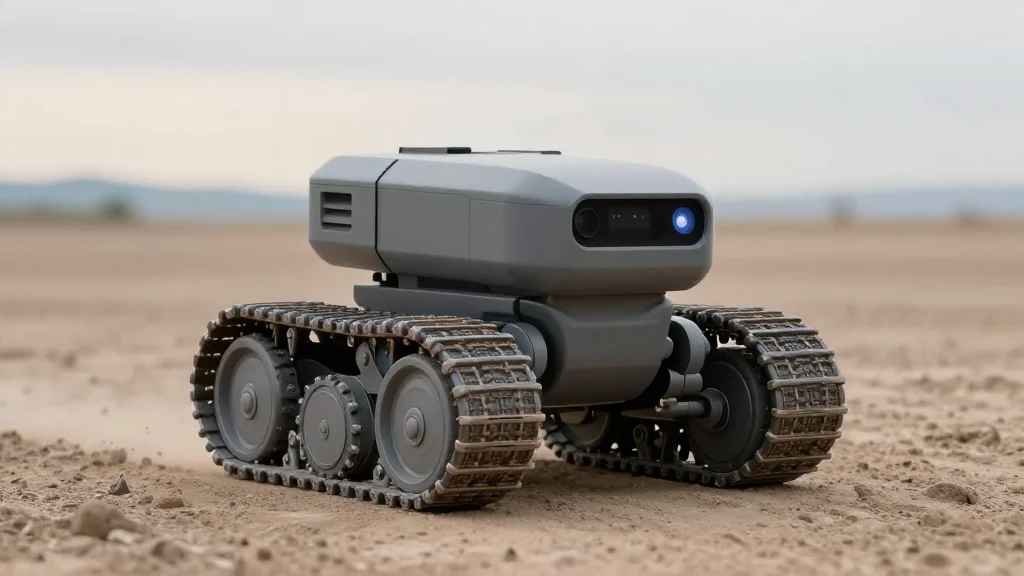
Ukraine Records 7,000 Unmanned Ground Vehicle Missions in One Month

Why It Matters
The record‑breaking UGV deployment signals a broader shift in modern warfare toward autonomous logistics and combat platforms. By offloading dangerous tasks to inexpensive robots, Ukraine reduces infantry casualties and maintains operational tempo despite intense Russian air surveillance. The rapid industrialization of battlefield robotics also creates a new export niche for Ukrainian defense firms, potentially influencing global arms markets and prompting NATO allies to explore similar low‑cost solutions. Beyond the immediate conflict, the Ukrainian experience offers a live case study of how decentralized, rapid‑iteration development cycles can produce combat‑ready autonomous systems at scale. This could accelerate adoption of unmanned ground platforms in humanitarian aid, disaster response and other security contexts, reshaping the civilian robotics market as well.
Key Takeaways
- •Ukraine logged a record 7,000 UGV missions in January, the highest monthly total since the war began.
- •Land robots now handle about 90% of Ukrainian army logistics, delivering ammo, food and evacuating wounded.
- •Production of combat‑capable UGVs grew nearly sixfold in 2025, creating a $252 million market.
- •Attrition remains high, with an estimated 25% loss rate—about three robots per day—due to Russian aerial attacks.
- •Defense Minister Mykhailo Fedorov said over 100 Russian troops surrendered after encounters with unmanned units.
Pulse Analysis
Ukraine’s UGV surge is less a technological novelty than a strategic necessity born from asymmetric constraints. Faced with superior Russian air power, Kyiv has turned to cheap, expendable robots that can operate under the radar of expensive anti‑drone systems. This approach mirrors the broader trend of “swarm” tactics, where quantity and redundancy offset individual platform vulnerability. The rapid scaling—sixfold production growth in a single year—demonstrates how wartime pressure can compress development cycles that would normally span decades in peacetime defense programs.
The implications extend beyond the Eastern European theater. Western defense contractors, long focused on high‑end, high‑cost autonomous platforms, now see a market for low‑cost, modular robots that can be fielded quickly and in large numbers. Ukraine’s ecosystem—engineers on the front line, rapid feedback loops, and local manufacturing—offers a blueprint for other nations seeking to develop indigenous robotic capabilities without relying on traditional defense budgets. However, the high attrition rate underscores a critical trade‑off: while robots preserve human lives, they also demand a robust supply chain and continual replenishment, a logistical challenge that could strain Ukraine’s already stretched industrial base.
Looking forward, the next phase will likely involve integrating AI‑driven autonomy to reduce operator load and improve decision‑making speed. If Ukraine can successfully transition from remote‑controlled to semi‑autonomous UGVs, it could set a new standard for battlefield logistics, prompting NATO allies to invest in similar capabilities. The ongoing conflict thus serves as an inadvertent proving ground for the future of unmanned ground warfare, with lessons that will reverberate through both military and civilian robotics sectors for years to come.
Ukraine Records 7,000 Unmanned Ground Vehicle Missions in One Month
Comments
Want to join the conversation?
Loading comments...