Ukraine Says Russians Are Surrendering to Robots
Why It Matters
Demonstrating combat‑effective unmanned ground systems signals a strategic pivot toward robotics in modern warfare, influencing NATO procurement and accelerating U.S. AI‑drone initiatives.
Key Takeaways
- •Ukraine reports enemy position taken solely by unmanned ground and aerial platforms
- •President Zelensky cites 22,000 robot missions in three months, saving lives
- •U.S. Army testing AI‑controlled ULTRA ground drones near Russian border
- •Ukraine’s “I Want to Live” drone program streamlines enemy surrenders
- •Zelensky frames defense industry as security partnership, not weapons fair
Pulse Analysis
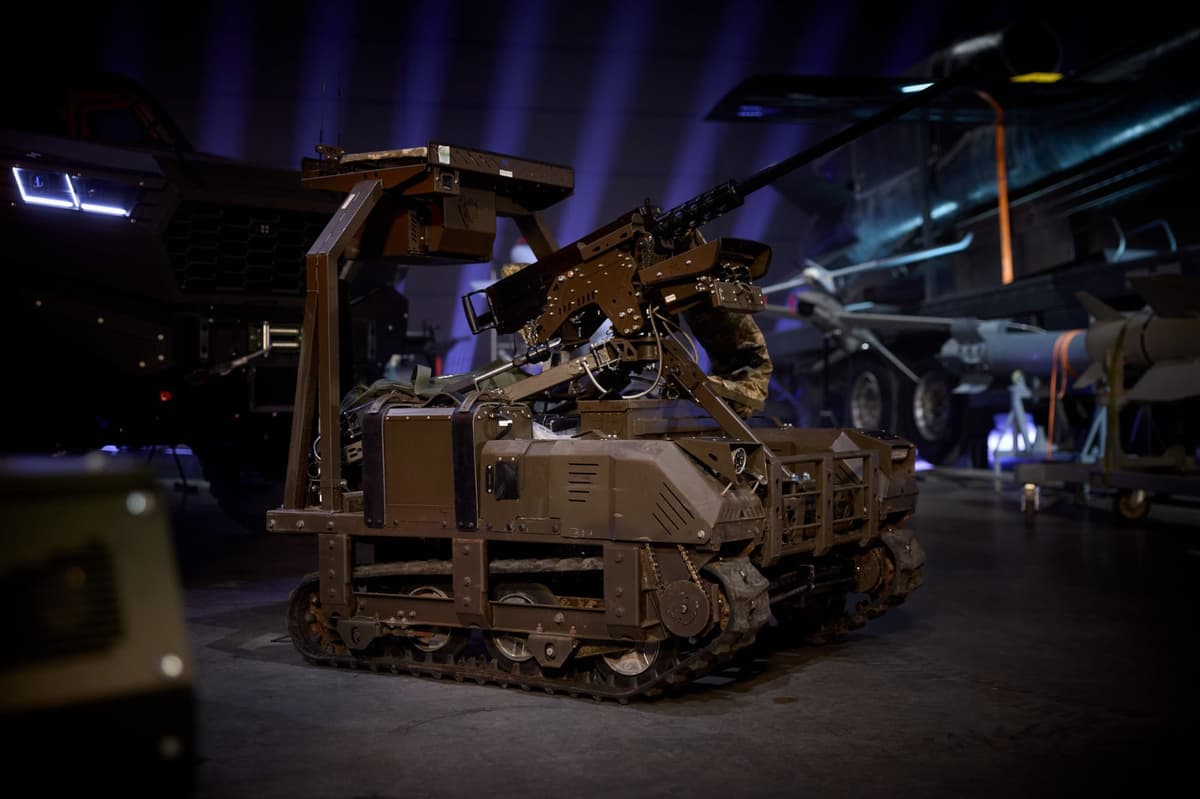
The December raid north of Kharkiv illustrates how unmanned systems are moving from support roles to decisive combat assets. Ukrainian footage showed a swarm of roughly 50 FPV drones coordinating with a fleet of autonomous ground vehicles equipped with machine‑guns and sensors, allowing the 13th National Guard Brigade to seize a Russian position without infantry exposure. While the Wall Street Journal confirmed the robot‑heavy assault, it did not verify any surrender, highlighting the gap between propaganda and battlefield reality. Nonetheless, the operation validates the tactical value of integrated air‑ground robot teams.
Zelensky’s claim of 22,000 robot missions in the last quarter reflects a rapid scaling of autonomous platforms that can perform reconnaissance, logistics and direct fire tasks. This surge has caught the attention of Western militaries; the U.S. Army’s ULTRA program, an AI‑driven ground drone tested near the Georgian border, mirrors Ukraine’s approach and signals a broader NATO interest in reducing soldier exposure. Meanwhile, Ukraine’s “I Want to Live” initiative, which uses drones to coordinate safe surrender routes, demonstrates how robotics are reshaping not only combat but also humanitarian engagement on the front lines.
The robot breakthrough also reshapes Ukraine’s defense‑industry strategy. By positioning its high‑tech weapons as security partnerships rather than bulk sales, Kyiv aims to attract long‑term investment and technology transfer from European and American allies. If unmanned ground vehicles prove reliable, they could become a cornerstone of future European defense postures, prompting procurement shifts and new standards for AI ethics and battlefield accountability. For investors and policymakers, the Ukrainian model offers a glimpse of how wartime innovation can accelerate the commercial rollout of autonomous military systems worldwide.
Ukraine Says Russians are Surrendering to Robots
Comments
Want to join the conversation?
Loading comments...