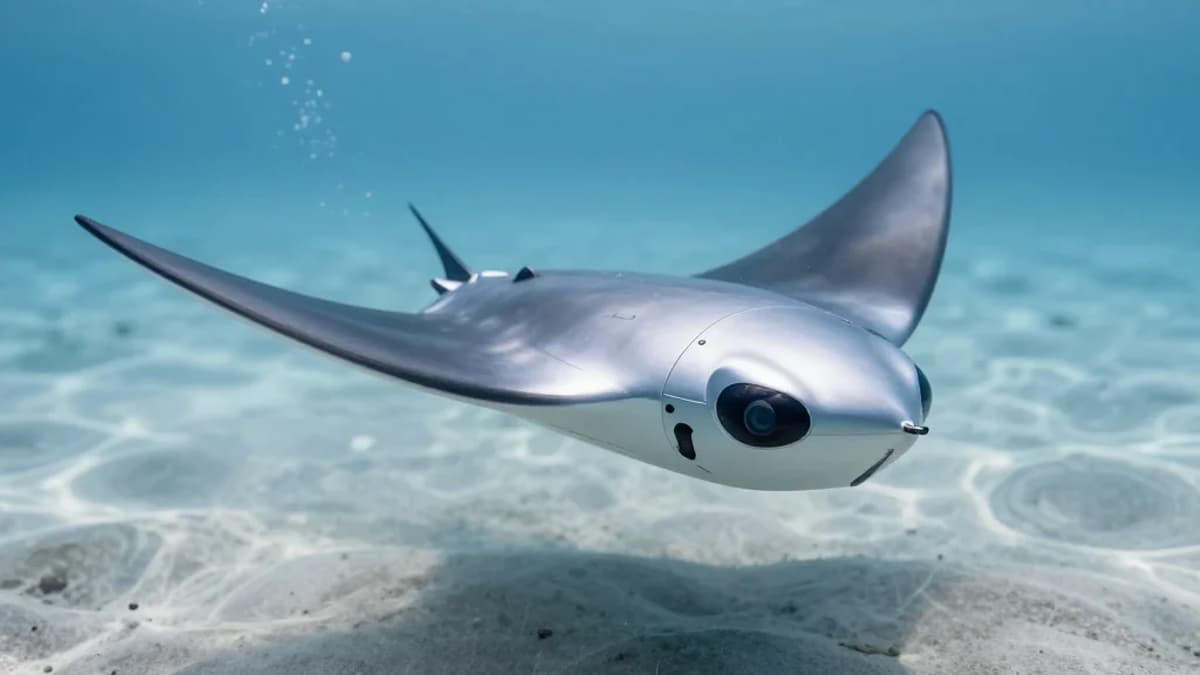
Underwater Robots Inspired by Nature Are Making Progress, but Hurdles Remain
•January 14, 2026
0
Why It Matters
Effective underwater robots are essential for unlocking the 74 % of the ocean floor still unmapped, offering commercial, scientific, and defense advantages. Overcoming actuation gaps will accelerate autonomous deep‑sea data collection.
Key Takeaways
- •Ray-inspired designs improve maneuverability in strong currents
- •47 robots analyzed, highlighting actuator diversity
- •Small robots excel with soft electro‑active materials
- •Mid-size robots lack suitable actuation solutions
- •Next hurdle: integrated sensing and AI navigation
Pulse Analysis
The ocean’s vast, uncharted depths demand a new generation of autonomous vehicles that can operate beyond the reach of surface‑based sensors. Traditional propeller‑driven AUVs struggle with stability in turbulent currents, prompting engineers to look to nature for solutions. By emulating the flat, wing‑like bodies of rays, designers achieve smoother gliding and reduced energy consumption, a critical advantage for missions that require long endurance and precise maneuvering.
The recent npj Robotics review catalogues 47 ray‑inspired prototypes, exposing a clear size‑dependent split in actuation technology. Large platforms, comparable to dinner plates, rely on conventional electric servos that provide torque but add weight. At the opposite extreme, coin‑sized robots benefit from soft, electro‑active polymers or pneumatic balloons that flex with minimal mass. However, the mid‑size bracket—robots the size of a handheld device—faces a performance vacuum: existing actuators are either too bulky or lack the thrust needed to overcome drag. This gap highlights an urgent need for hybrid or novel actuation mechanisms that balance power density with lightweight construction.
Looking ahead, the true breakthrough will come from marrying advanced locomotion with onboard perception and decision‑making. Integrated water‑property sensors, coupled with AI‑driven navigation algorithms, could enable robots to adapt in real time to changing currents, avoid obstacles, and prioritize sampling targets. Such capabilities would transform offshore industries, from mineral exploration to environmental monitoring, and position bio‑inspired robotics at the forefront of the next wave of oceanic discovery.
Underwater robots inspired by nature are making progress, but hurdles remain
0
Comments
Want to join the conversation?
Loading comments...