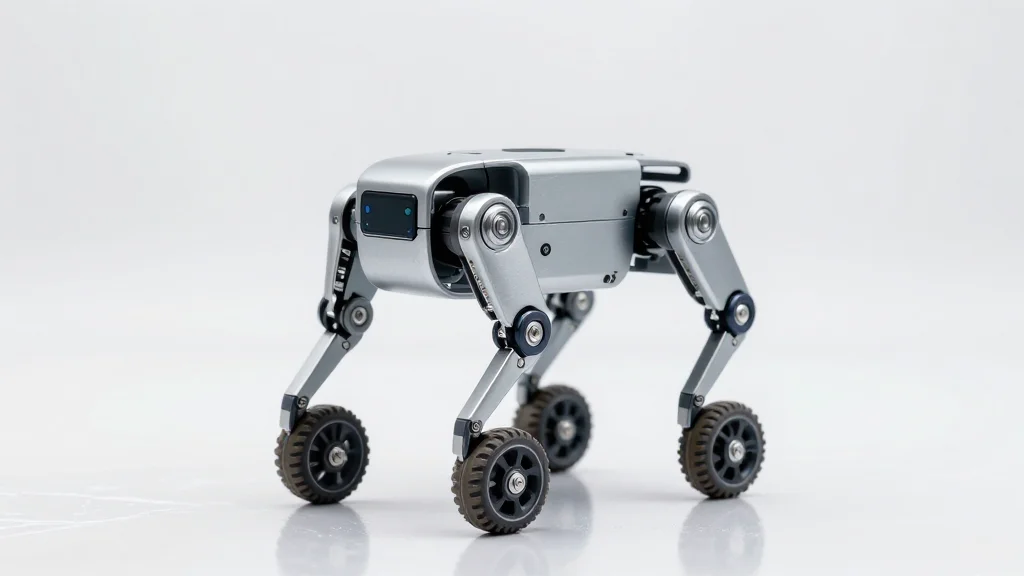
Unitree G1 Rolls and Skates, Showcasing Next‑Gen Mobile Robot Agility

Companies Mentioned
Why It Matters
The G1’s ability to switch between legs, wheels, roller blades and ice skates illustrates a pivotal evolution in robot design: modular locomotion. This flexibility could lower total cost of ownership by allowing a single hardware platform to serve multiple roles, from rapid indoor transport to delicate navigation on low‑friction surfaces. For the robotics industry, such adaptability may accelerate adoption in sectors that have been hesitant due to the high expense of specialized robots. Moreover, the showcase underscores the growing influence of generative AI in training complex motor skills. By simulating failures and iterating in virtual environments, companies can compress development cycles and achieve performance levels that rival human agility. If Unitree can commercialize these capabilities at scale, it could reshape competitive dynamics, pressuring rivals to invest heavily in AI‑driven locomotion research.
Key Takeaways
- •Unitree G1 robot demonstrated on large wheels, roller blades and ice skates in a 1:15 video.
- •The robot costs about $16,000, weighs 77 lb and stands 4 ft tall.
- •Wheeled mobility offers speed and efficiency, while legged platforms retain advantage on uneven terrain.
- •Modular accessories could expand the G1’s use cases in home, commercial and industrial settings.
- •Generative AI training enabled the robot to master balance on slippery ice surfaces.
Pulse Analysis
Unitree’s multi‑modal demo is more than a publicity stunt; it signals a strategic pivot toward hardware modularity that could redefine the economics of service robotics. Historically, manufacturers have locked customers into a single locomotion paradigm—either legged or wheeled—forcing firms to purchase separate fleets for different tasks. By offering interchangeable foot modules, Unitree may unlock a new revenue stream through accessory sales while also lowering entry barriers for end‑users who can start with a basic legged robot and upgrade as needs evolve.
The demonstration also highlights the maturation of AI‑driven simulation pipelines. Training a quadruped to balance on ice requires precise modeling of friction, inertia and control loops—tasks that would have taken months of physical trial‑and‑error a decade ago. The ability to iterate virtually accelerates development and reduces wear on expensive hardware, giving early adopters a competitive edge. Companies that lag in integrating such AI tools risk falling behind as customers demand ever‑greater agility and adaptability.
Looking forward, the market will likely see a wave of modular locomotion kits from other players, spurring a standards battle over attachment interfaces, power distribution, and control software. If Unitree can establish a de‑facto standard, it could lock in ecosystem partners and shape the next generation of mobile robots. Conversely, if the industry fragments, customers may face integration challenges that could slow adoption. The coming months—particularly any announcements of accessory pricing or partnership deals—will be critical in determining which scenario unfolds.
Unitree G1 Rolls and Skates, Showcasing Next‑Gen Mobile Robot Agility
Comments
Want to join the conversation?
Loading comments...