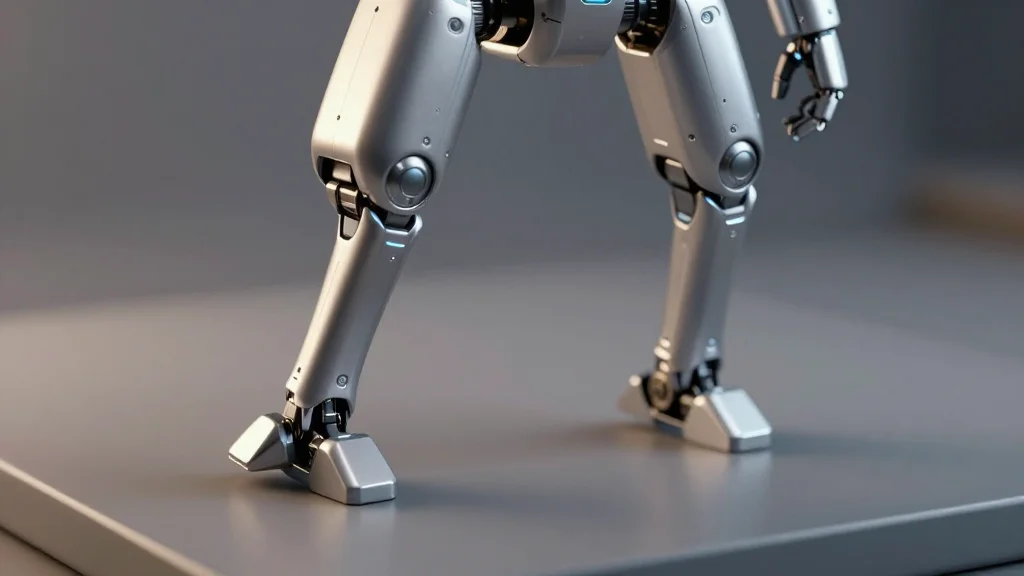
Unitree Launches $650,000 Piloted ‘Transformer’-Style Bipedal Robot

Companies Mentioned

Why It Matters
The GD01 could open a new market segment where large, transformable robots serve as mobile work platforms in environments too dangerous for humans. Its price point suggests a willingness among industrial players to invest in hybrid human‑robot solutions, potentially accelerating adoption of manned exoskeletons and heavy‑duty mecha across sectors ranging from construction to disaster response. At the same time, the robot’s capabilities raise strategic questions about dual‑use technology. As civilian firms push the envelope on size and power, defense establishments may seek to adapt these platforms for battlefield logistics or reconnaissance, prompting a need for clearer regulatory frameworks and international dialogue on the responsible deployment of manned robotic systems.
Key Takeaways
- •Unitree unveiled the GD01, a $650,000, 500 kg bipedal robot that transforms into a quadruped.
- •CEO Wang Xingxing called it "the world's first production‑ready manned mecha" in the launch video.
- •Marketing staff Huang Jiawei highlighted applications in high‑risk and harsh environments.
- •Pre‑orders secured from a Chinese construction firm and a European research consortium.
- •Future updates aim for semi‑autonomous operation and reduced weight for broader market appeal.
Pulse Analysis
Unitree’s GD01 launch is a strategic gamble that could redefine the economics of large‑scale robotics. By embedding a human operator, the company sidesteps the current limitations of fully autonomous AI while still delivering the raw power and reach of a machine that can lift, carry, and navigate terrain beyond human capability. This hybrid approach may prove more palatable to early adopters who are wary of trusting fully autonomous systems with high‑value or life‑critical tasks.
Historically, the robotics market has been bifurcated between low‑cost, high‑volume service robots and high‑cost, low‑volume industrial arms. The GD01 sits in a third tier, targeting niche applications where the cost of a human‑piloted robot is justified by the reduction in risk and the increase in operational efficiency. If Unitree can demonstrate reliable performance in field trials, it could catalyze a wave of similar offerings from competitors, prompting a re‑evaluation of pricing models and ROI calculations for hazardous‑site work.
From a geopolitical perspective, the GD01’s dual‑use potential cannot be ignored. While Unitree frames the robot as a civilian tool, its size, payload capacity, and human‑in‑the‑loop design align closely with concepts explored by defense research labs worldwide. The launch may accelerate discussions around export controls for large‑scale manned robots, similar to those governing drones and autonomous weapons. Companies entering this space will need to balance commercial ambitions with emerging regulatory scrutiny, shaping the next decade of robotics development.
Unitree Launches $650,000 Piloted ‘Transformer’-Style Bipedal Robot
Comments
Want to join the conversation?
Loading comments...