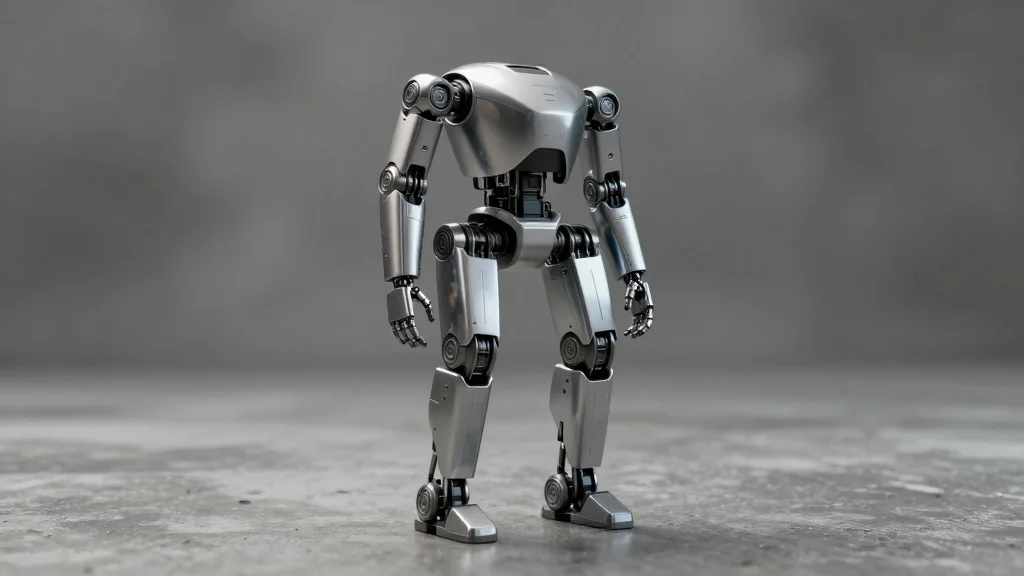
Unitree Robotics Lands Orders for GD01 Mecha Robot After Viral Debut

Companies Mentioned

Why It Matters
The GD01 marks a tangible shift from small‑scale autonomous robots to large, human‑piloted platforms that can perform tasks in complex, unstructured environments. Its commercial uptake signals that customers are ready to invest in high‑impact robotics solutions, potentially accelerating the transition of advanced mecha concepts from science‑fiction to everyday industry. If Unitree can deliver on performance claims—especially battery endurance and safety—the GD01 could set a new benchmark for civilian‑grade humanoid transport, prompting other manufacturers to accelerate their own manned‑robot programs. This could reshape supply chains, labor dynamics, and safety standards across construction, logistics, and public‑safety sectors.
Key Takeaways
- •Unitree secured multiple orders within hours of the GD01 debut
- •GD01 price: ¥3.9 million (~$540,000)
- •Robot weight 500 kg, height 2.8 m, transforms between bipedal and quadrupedal modes
- •Unitree’s 2025 humanoid shipments topped 5,500 units; quadruped market share 60‑70%
- •GD01 aims at civilian transport and industrial applications, pending further technical data
Pulse Analysis
Unitree’s rapid order capture reflects a broader trend in Chinese robotics: leveraging state‑backed funding and a massive domestic market to leapfrog traditional Western players. The GD01’s hybrid locomotion architecture is a clever engineering compromise, allowing the platform to navigate both smooth urban terrain and rugged sites without the need for multiple dedicated machines. However, the real test will be operational reliability; pilot‑controlled robots introduce new safety and liability considerations that manufacturers have largely avoided with fully autonomous systems.
From a competitive standpoint, Boston Dynamics and other Western firms have built reputations on unmanned quadrupeds and limited‑scope humanoids. Unitree’s decision to go manned could be a strategic differentiation, but it also raises the bar for performance expectations. If the GD01 can demonstrate reasonable battery life—currently undisclosed—it may open a market segment for short‑range, high‑payload transport that bridges the gap between forklifts and autonomous drones. Conversely, high price and limited payload could confine the robot to niche applications like media stunts or high‑visibility public projects, limiting its broader economic impact.
Looking forward, the GD01 could serve as a testbed for modular upgrades, such as plug‑in power packs or AI‑driven assistance that gradually reduces the need for a human pilot. Success in this incremental approach would validate a hybrid model of human‑machine collaboration, potentially influencing regulatory frameworks and insurance models worldwide. For investors and industry watchers, the next milestones—detailed technical specifications, delivery schedules, and real‑world case studies—will be critical signals of whether the GD01 is a flash‑in‑the‑pan novelty or the first step toward a new class of commercial mecha.
Unitree Robotics lands orders for GD01 mecha robot after viral debut
Comments
Want to join the conversation?
Loading comments...