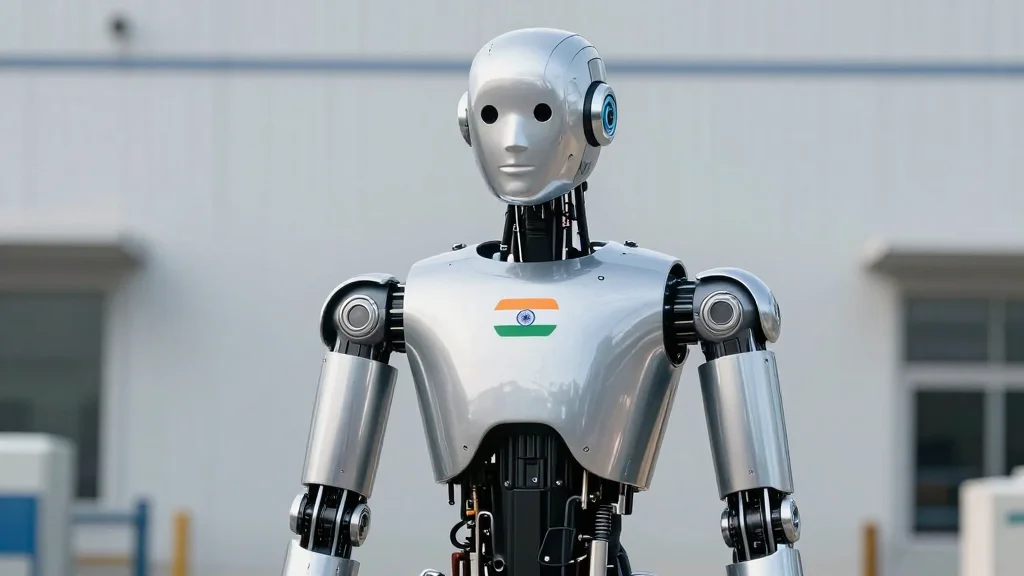
Unitree Robotics Launches H1 Humanoid in India, Targeting Manufacturing Automation

Companies Mentioned

Why It Matters
Unitree’s Indian launch signals a shift in the global robotics supply chain, where Chinese manufacturers are moving from low‑cost industrial arms to sophisticated humanoid platforms. By pricing the H1 below $100 k, Unitree lowers the entry barrier for Indian SMEs, potentially accelerating the country’s automation curve and influencing labor market dynamics. The move also tests the resilience of Indian policy frameworks that balance openness to foreign technology with security concerns. Successful deployment could encourage other Chinese firms to target emerging economies, reshaping competitive dynamics that have long been dominated by Western players.
Key Takeaways
- •Unitree Robotics will sell the H1 humanoid in India starting next quarter.
- •Pricing set at ₹75‑80 lakhs ($90‑96 k), undercutting Western rivals.
- •H1 specifications: 3.3 m/s top speed, 50 kg payload, modular design.
- •Service center to be established in Mumbai for local support.
- •Analysts see the launch as a catalyst for SME automation under "Make in India".
Pulse Analysis
Unitree’s aggressive pricing strategy reflects a broader trend of Chinese firms leveraging scale to undercut incumbents in high‑margin segments like humanoid robotics. Historically, the humanoid market has been dominated by a handful of Western players with premium pricing, limiting adoption to large enterprises or research labs. By positioning the H1 at roughly $90 k, Unitree not only expands its addressable market but also forces competitors to reconsider cost structures if they wish to retain relevance in price‑sensitive regions.
India’s manufacturing landscape is at a crossroads. Labor cost inflation, coupled with government incentives for domestic production, creates a fertile environment for automation solutions that can be integrated quickly and affordably. The H1’s ability to operate without extensive pre‑mapped environments reduces implementation time, a critical factor for SMEs that cannot afford prolonged downtime. However, the geopolitical backdrop adds complexity; Indian policymakers may impose stricter vetting of Chinese technology, especially in sectors deemed strategic. Unitree’s decision to set up a local service hub could be a pre‑emptive move to demonstrate compliance and build trust.
If the H1 gains traction, we could see a cascade effect: other Chinese robotics firms may follow suit, intensifying competition and driving down prices across the board. This could accelerate the diffusion of advanced robotics in emerging markets, reshaping global manufacturing supply chains and potentially redefining labor demand in regions that have traditionally relied on human-intensive processes.
Unitree Robotics Launches H1 Humanoid in India, Targeting Manufacturing Automation
Comments
Want to join the conversation?
Loading comments...