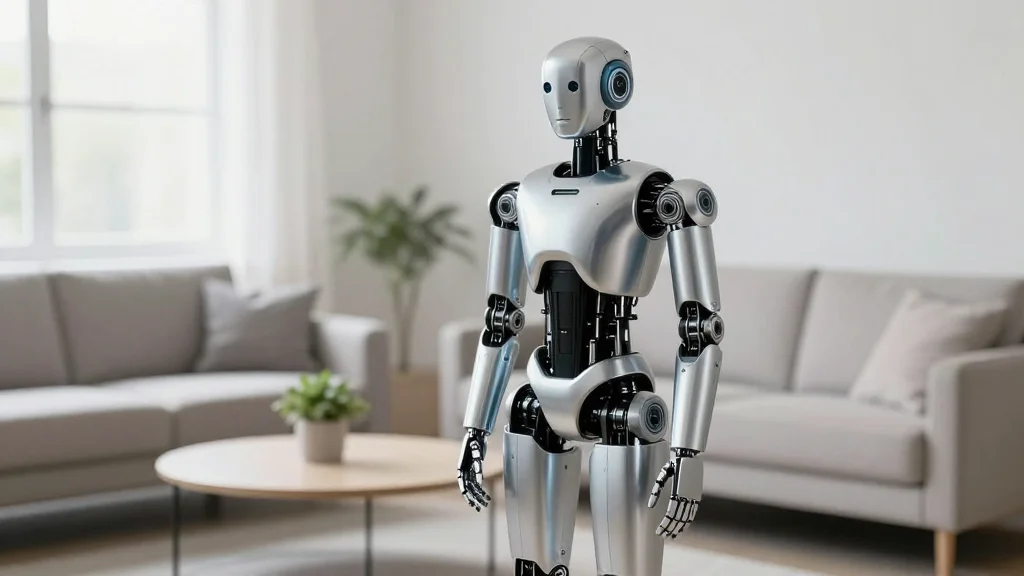
UniX AI Deploys First Mass‑Produced Humanoid Robot Panther in Private Home

Why It Matters
Deploying Panther in a real household proves that humanoid robots can handle the chaotic, dynamic conditions of everyday life, a hurdle that has kept the technology in the research phase for decades. Success in this arena could unlock new revenue streams for robotics firms, accelerate the development of assistive technologies for aging populations, and drive standards for safety and interoperability in consumer robotics. The milestone also forces the broader robotics ecosystem to confront production challenges, cost reduction, and software extensibility. Companies that can match UniX AI’s performance while delivering affordable units will likely dominate the emerging home‑service market, reshaping investment flows and talent priorities across the sector.
Key Takeaways
- •Panther performed waking, bed‑making, breakfast preparation, whole‑home cleaning, and object organization in an unmodified private residence.
- •UniX AI claims Panther is the first mass‑producible, commercially viable service humanoid robot deployed in a real home.
- •Founder and CEO Fengyu Yang emphasized reliable task execution in unpredictable environments as the core challenge.
- •Investor interest surged after Yang’s Morgan Stanley China Summit keynote, with multiple U.S. dollar funds signaling intent.
- •UniX AI aims to ship 1,000 Panther units by end‑2027 and open the platform to third‑party software developers.
Pulse Analysis
The Panther rollout represents a strategic inflection point for the robotics industry, shifting the narrative from spectacle to utility. Historically, humanoid robots have been relegated to research labs or theme‑park attractions because their sensor suites and control algorithms could not cope with the stochastic nature of homes. UniX AI’s integration of vision‑haptic perception, real‑time replanning, and robust actuation suggests that the technology stack has finally reached a maturity level that can be mass‑produced. This breakthrough lowers the barrier to entry for service‑oriented applications, where the value proposition is tied directly to daily convenience and care.
From a market perspective, the home service segment has been a white space compared with the well‑served industrial automation market. Analysts estimate a potential addressable market of $30‑$50 billion by 2030, driven by aging demographics and rising demand for in‑home assistance. Panther’s entry could catalyze a wave of venture capital into consumer robotics, prompting incumbents like Boston Dynamics and SoftBank Robotics to accelerate their own household offerings. However, scaling will be the true test; cost‑effective manufacturing of high‑precision components and achieving regulatory clearance across jurisdictions are non‑trivial hurdles.
Looking ahead, the success of Panther will likely hinge on ecosystem development. By allowing third‑party developers to create task modules, UniX AI can emulate the app‑store model that propelled smartphones to ubiquity. If the company can nurture a vibrant developer community, the robot’s functionality will expand far beyond the initial task set, creating network effects that reinforce its market position. Conversely, failure to deliver on reliability or affordability could reinforce skepticism and stall broader adoption. The coming months will therefore be a litmus test for whether humanoid robotics can transition from a laboratory curiosity to a household staple.
UniX AI Deploys First Mass‑Produced Humanoid Robot Panther in Private Home
Comments
Want to join the conversation?
Loading comments...