Why It Matters
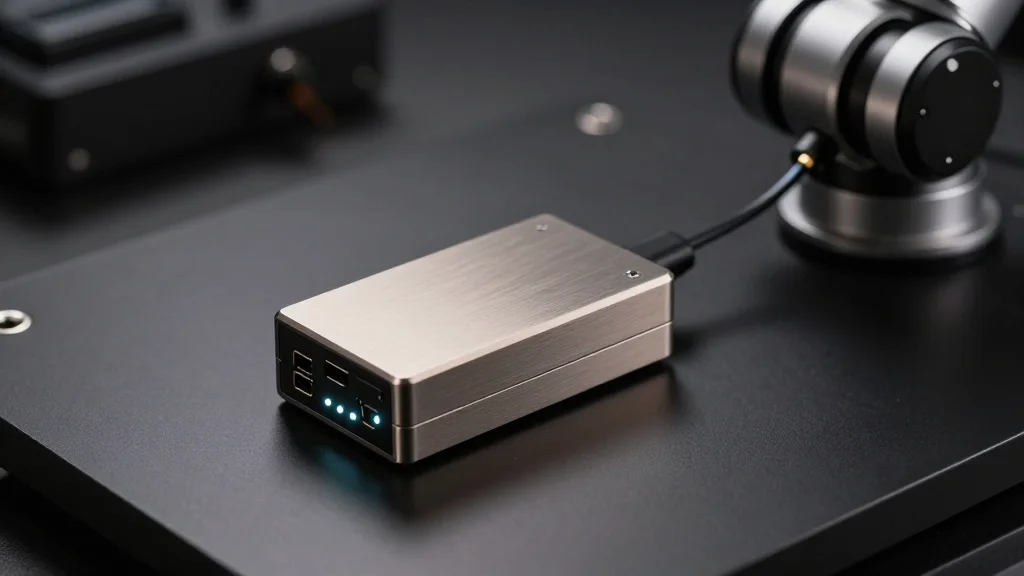
The Titanium Maestro reduces latency and expands axis capacity, enabling manufacturers to boost throughput and meet tighter precision standards, a critical advantage in competitive, automation‑driven markets.
Key Takeaways
- •Titanium Maestro offers sub‑microsecond EtherCAT cycle times.
- •Supports up to 32 axes with synchronized motion profiles.
- •Precision accuracy improved to ±0.5 µm for high‑speed tooling.
- •Designed for harsh environments, meeting IP65 protection standards.
Pulse Analysis
Elmo Motion Control, a long‑standing player in industrial automation, has announced its latest flagship, the Titanium Maestro. The release arrives at a time when manufacturers are pushing the limits of speed, precision, and reliability in sectors ranging from robotics to high‑speed packaging. Traditional motion controllers often become bottlenecks when machines demand sub‑millisecond response times and tight coordination across dozens of axes. By leveraging advances in semiconductor technology and a modular architecture, Elmo aims to address these constraints and reinforce its position in the competitive motion‑control market.
The Titanium Maestro distinguishes itself with ultra‑fast EtherCAT communication that can achieve sub‑microsecond cycle times, dramatically reducing latency compared with legacy fieldbuses. It also supports up to 32 axes simultaneously, allowing complex kinematic chains to be managed from a single controller without sacrificing synchronization. Accuracy claims of ±0.5 µm enable high‑speed machining, laser cutting, and semiconductor wafer handling to maintain tolerances previously reserved for bespoke solutions. Moreover, the unit meets IP65 ingress protection, ensuring reliable operation in dusty or moist factory floors, a critical factor for continuous‑run environments.
For end users, the Titanium Maestro translates into higher throughput, lower downtime, and the ability to implement more sophisticated motion algorithms such as adaptive feed‑forward and real‑time error correction. Competitors will need to match Elmo’s blend of speed, axis count, and ruggedness, potentially accelerating innovation across the motion‑control ecosystem. Early adopters in automotive assembly and pharmaceutical packaging are already piloting the controller, reporting up to a 20 % increase in cycle efficiency. As Industry 4.0 initiatives demand tighter integration between hardware and analytics, the Maestro’s open‑architecture firmware positions it well for future upgrades and AI‑driven optimization.
Untitled
Comments
Want to join the conversation?
Loading comments...