Companies Mentioned
Why It Matters
IntelliSwarm delivers a cost‑effective, rapid‑deployment autonomy layer that can unify disparate drone platforms, giving defense customers resilient, networked capabilities in contested airspace.
Key Takeaways
- •IntelliSwarm flight‑tested on Banshee loitering munition.
- •SwarmOS integrated with BRAIN X2 in three weeks.
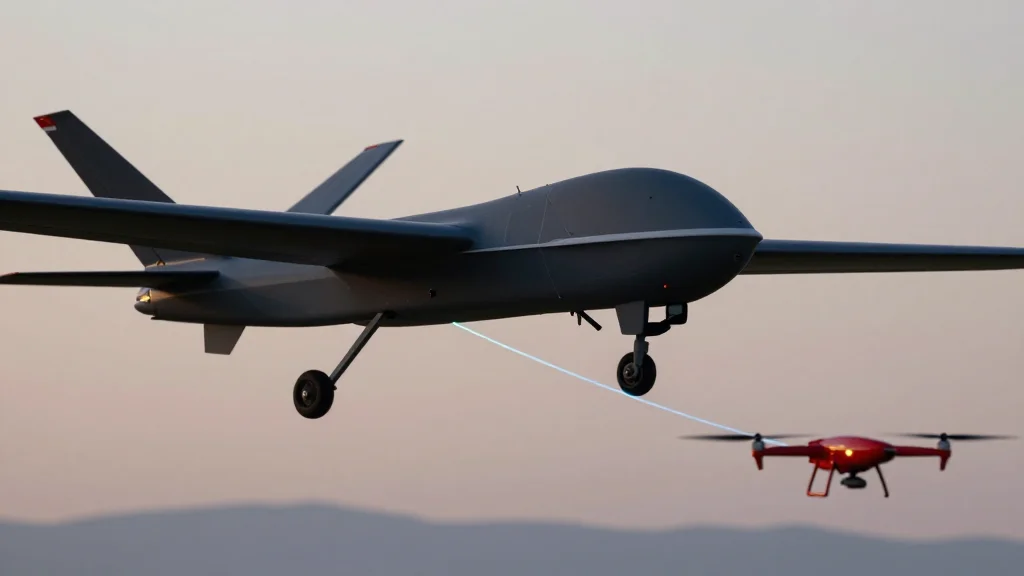
- •Enables heterogeneous drone collaboration in denied environments.
- •Reduces costs and accelerates deployment for OEMs.
- •Supports decentralized, secure mesh networking per DoD standards.
Pulse Analysis
The defense sector is accelerating its shift toward autonomous swarming as a force multiplier in contested environments. Palladyne AI’s IntelliSwarm addresses a critical gap by merging its patented SwarmOS software with the BRAIN X2 edge‑AI avionics, creating a single stack that handles perception, decision‑making, and flight control. This convergence eliminates the need for separate, vendor‑specific solutions and aligns with the Department of Defense’s push for open‑system, NDAA‑compliant technologies that can operate without GPS or continuous communications.
Technical integration was achieved in an unprecedented three‑week window, underscoring Palladyne’s agile development capabilities. By embedding SwarmOS directly into the BRAIN X2 GNC processor, the system delivers real‑time sensor fusion and coordinated behavior at the edge, enabling each platform to act as an intelligent peer. The decentralized mesh network ensures graceful degradation; if one node is compromised, the remaining assets continue the mission autonomously, a vital attribute for high‑risk, denied‑domain operations.
For UAV manufacturers and attritable‑munition producers, IntelliSwarm offers a plug‑and‑play autonomy layer that reduces development cycles and lowers per‑effect costs. Its platform‑agnostic design means legacy and next‑generation drones can interoperate, expanding mission scalability and simplifying logistics. As the technology moves toward full commercial rollout, it is poised to become a cornerstone of future U.S. and allied unmanned force structures, delivering decisive edge performance while adhering to stringent security and data‑sovereignty requirements.
Untitled
Comments
Want to join the conversation?
Loading comments...