Companies Mentioned
Why It Matters
The debut underscores the rapid commercialization of general‑purpose humanoid robots, positioning China as a competitive player in global AI‑driven automation. Large‑scale production could lower costs and accelerate adoption across manufacturing, logistics, and service sectors.
Key Takeaways
- •MATRIX‑3 walks at 3.9 km/h with biomimetic joints.
- •27‑DOF hand offers micron‑level precision for delicate tasks.
- •Company aims to ship 5,000 units in 2026, 100k by 2027.
- •Production in Shanghai’s MFH Factory enables end‑to‑end mass manufacturing.
- •Expo demos attracted senior officials, highlighting China’s humanoid leadership.
Pulse Analysis
The humanoid robot market has long been dominated by a handful of Western and Japanese firms, but recent advances in embodied artificial intelligence are reshaping the competitive landscape. Matrix Robotics, founded by former Tesla China Design chief Haixing Zhang, leverages China’s deep manufacturing base and a dedicated R&D team to accelerate development cycles. By unveiling MATRIX‑3 at the BEYOND Expo—a high‑visibility platform that draws investors, technologists, and policy makers—the company signaled that Chinese firms are now ready to compete on both performance and scale. The expo’s global audience amplified the robot’s visibility far beyond domestic borders.
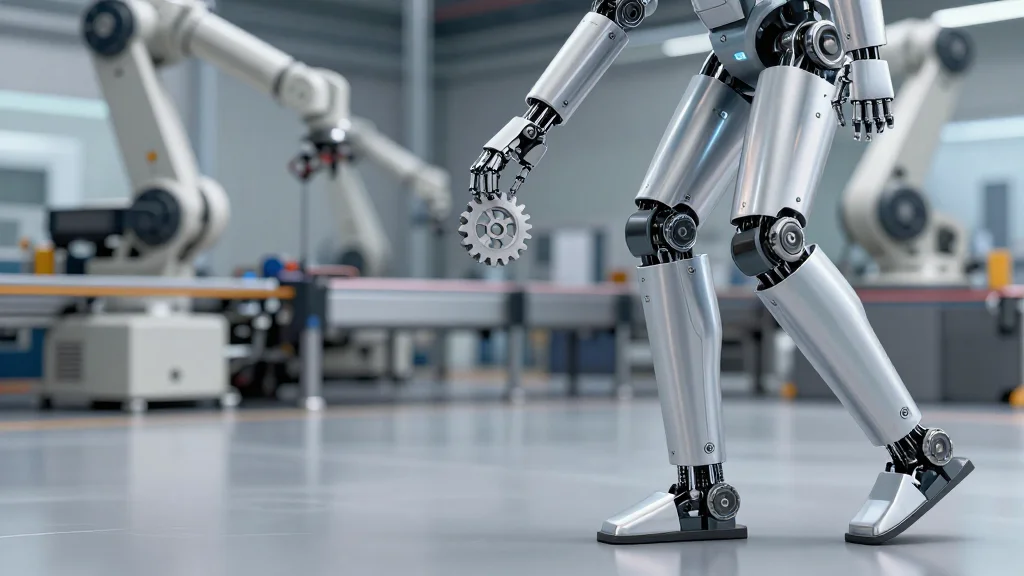
MATRIX‑3 combines a suite of cutting‑edge technologies: biomimetic linear joints that enable stable bipedal locomotion at 3.9 km/h, a 27‑degree‑of‑freedom dexterous hand capable of micron‑level manipulation, and a 3D‑woven safety skin that mimics human touch. Weighing 65 kg and standing 1.7 m tall, it can operate continuously for four hours, lift 15 kg, and perform tasks ranging from fruit‑handling to medical assistance. Matrix Robotics has already commissioned its MFH Factory in Shanghai, targeting 5,000 units this year and scaling to 100,000 units by 2027, a production ramp that promises to drive unit costs down dramatically.
The ability to mass‑produce affordable humanoid robots could unlock new use cases in logistics, high‑end manufacturing, and even household services, where flexibility and human‑like interaction are prized. For Chinese industry, the move aligns with national strategies that prioritize AI, robotics, and advanced manufacturing as pillars of economic growth. International partners are likely to view the RAAS ecosystem and partnership programs as gateways to tap into China’s supply chain efficiencies. As embodied AI transitions from laboratory prototypes to everyday workforces, MATRIX‑3 may become a benchmark for the next generation of general‑purpose robotic assistants.
Untitled
Comments
Want to join the conversation?
Loading comments...