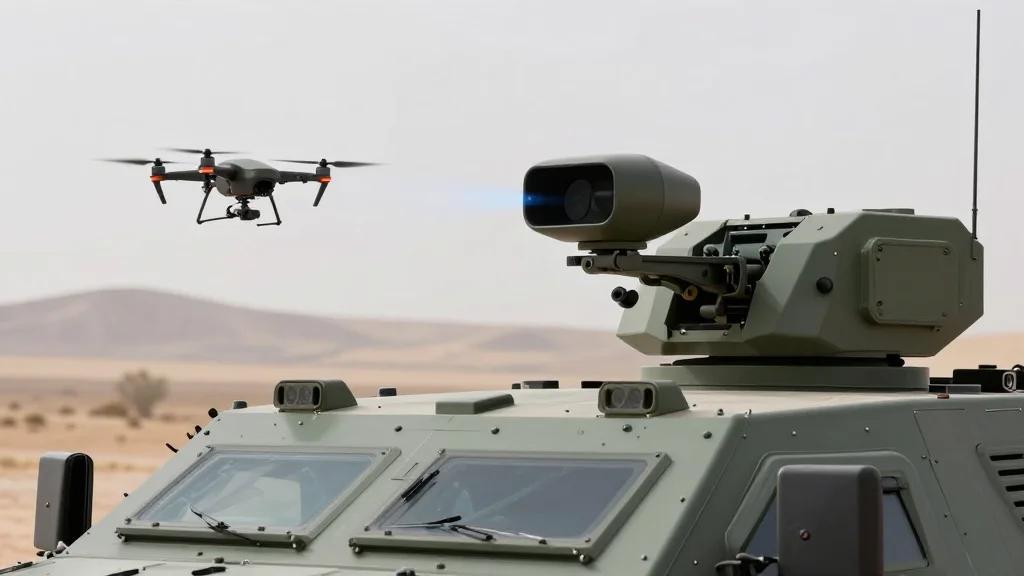
U.S. Army Live‑Fire Test Validates Golden Shield Autonomous Counter‑UAS System

Why It Matters
Golden Shield’s autonomous capabilities represent a tangible step toward reducing human workload in contested airspaces, a long‑standing challenge for modern militaries. By automating detection and engagement, the system can react faster than a human‑in‑the‑loop, mitigating the risk posed by swarms of inexpensive commercial drones. The open‑architecture approach also lowers barriers for future upgrades, meaning the Army can incorporate emerging AI and sensor technologies without wholesale platform replacements. In the broader robotics arena, the test validates the viability of distributed autonomous networks—an architecture that could translate to civilian sectors such as critical‑infrastructure protection and large‑scale event security. Furthermore, the successful demonstration signals to allied forces and potential adversaries that the U.S. is advancing its autonomous defence posture. As peer competitors invest heavily in counter‑UAS solutions, the Army’s layered, vehicle‑centric model may set a new standard for how ground forces defend against aerial threats, influencing procurement strategies across NATO and beyond.
Key Takeaways
- •Live‑fire test conducted April 7‑9, 2026 at Fort Hood, Texas
- •First autonomous cross‑vehicle engagement linking sensor and weapon platforms
- •Golden Shield uses scalable, open‑architecture to integrate sensors, effectors, and C2
- •Exercise part of the Pegasus Charge initiative to modernise armoured divisions
- •Next steps include integration into training and fielding to select brigades by 2027
Pulse Analysis
The Golden Shield exercise arrives at a pivotal moment for the defense robotics market. Historically, counter‑UAS solutions have been siloed—dedicated ground‑based radars paired with manually operated interceptors. Golden Shield’s networked, vehicle‑mounted approach collapses that model, turning every armoured platform into a node in a distributed defence grid. This shift could reshape procurement, moving contracts from single‑purpose vendors toward systems integrators capable of delivering modular, software‑defined capabilities.
From a competitive standpoint, the Army’s open‑architecture stance invites a broader ecosystem of suppliers. Companies specializing in AI‑driven sensor fusion, kinetic interceptors, and directed‑energy weapons will likely compete for plug‑in contracts, driving innovation and price pressure. The test also underscores the importance of rapid data exchange standards; interoperability will become a decisive factor as the Army scales the system across multiple brigades.
Looking ahead, the success of Golden Shield may accelerate the adoption of similar autonomous networks in other services—particularly the Air Force and Marine Corps, which are already experimenting with swarm‑defeat technologies. If the Army can demonstrate reliable, low‑latency decision‑making in contested environments, it could set a doctrinal precedent for autonomous defence across the joint force, cementing the role of robotics as a core enabler of future combat operations.
U.S. Army Live‑Fire Test Validates Golden Shield Autonomous Counter‑UAS System
Comments
Want to join the conversation?
Loading comments...