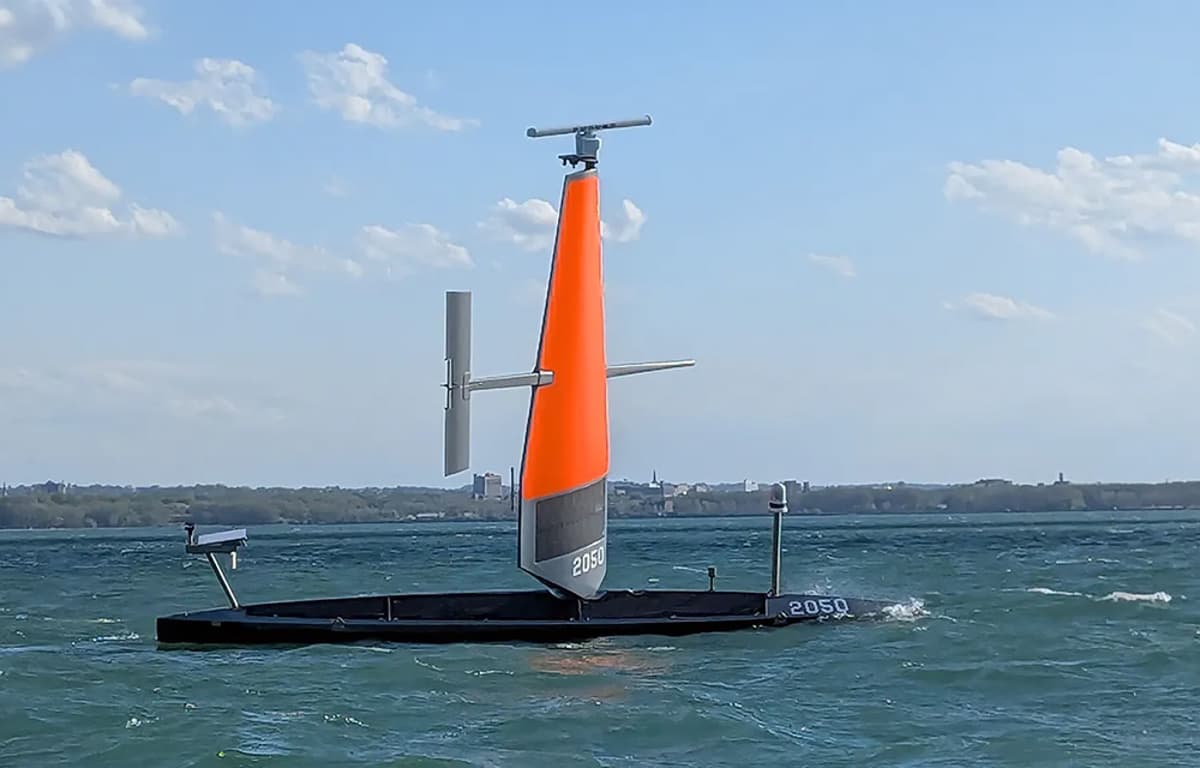
US Coast Guard Pays USD 15.5 Million for Drone Vessels to Patrol Great Lakes, Northeast and Detect IUU Fishing
Companies Mentioned
Why It Matters
The deployment gives the Coast Guard a scalable, low‑cost sensor layer that frees crewed assets for rapid interdiction, strengthening U.S. maritime security and fisheries enforcement.
Key Takeaways
- •Saildrone receives $15.5 million contract for 16 Voyager USVs.
- •Vessels will patrol Great Lakes and Northeast Atlantic for IUU fishing.
- •USVs provide real‑time radar, cameras, AIS for maritime domain awareness.
- •Deployment reduces crewed patrol burden, freeing assets for interdiction.
- •Partnership expands Coast Guard’s persistent surveillance across 20,000+ sq mi.
Pulse Analysis
The U.S. Coast Guard faces a growing challenge: monitoring vast, remote waterways while contending with limited crewed assets. Illegal, unreported, and unregulated (IUU) fishing threatens fish stocks, revenue, and national security, especially in the Great Lakes and the Northeast Atlantic where commercial traffic is dense. Traditional patrol boats are costly to operate and cannot maintain continuous coverage, creating gaps that sophisticated fishers can exploit. Integrating autonomous platforms offers a practical solution to extend surveillance without proportionally increasing personnel costs.
Saildrone’s Voyager USVs are 10‑meter, solar‑powered vessels that combine high‑resolution optical cameras, synthetic‑aperture radar and automatic identification system (AIS) transponders. These sensors feed a live data stream to Coast Guard operators, enabling rapid detection of suspicious vessel behavior and precise targeting of enforcement actions. The $15.5 million contract—equivalent to roughly €13.3 million—covers 16 units, each capable of operating for months on a single charge. By providing a persistent, low‑maintenance presence, the fleet reduces the need for fuel‑intensive patrol ships and allows human crews to focus on high‑impact interdiction rather than routine monitoring.
The partnership signals a broader shift toward autonomous maritime security. As climate change opens new shipping lanes and fishing grounds, agencies will increasingly rely on unmanned systems to maintain domain awareness. For the commercial sector, the heightened detection capability may deter illegal operators and encourage compliance with sustainable fishing practices. Moreover, the success of the Great Lakes and Northeast deployments could pave the way for similar contracts in the Gulf of Mexico, the Pacific, and even international waters, cementing autonomous USVs as a cornerstone of modern maritime governance.
US Coast Guard pays USD 15.5 million for drone vessels to patrol Great Lakes, Northeast and detect IUU fishing
Comments
Want to join the conversation?
Loading comments...