Robotics News and Headlines
  • All Technology
  • AI
  • Autonomy
  • B2B Growth
  • Big Data
  • BioTech
  • ClimateTech
  • Consumer Tech
  • Crypto
  • Cybersecurity
  • DevOps
  • Digital Marketing
  • Ecommerce
  • EdTech
  • Enterprise
  • FinTech
  • GovTech
  • Hardware
  • HealthTech
  • HRTech
  • LegalTech
  • Nanotech
  • PropTech
  • Quantum
  • Robotics
  • SaaS
  • SpaceTech
AllNewsDealsSocialBlogsVideosPodcastsDigests

Robotics Pulse

EMAIL DIGESTS

Daily

Every morning

Weekly

Sunday recap

NewsDealsSocialBlogsVideosPodcasts
RoboticsNewsU.S. Unveils “Parasitic” MMAUV That Hitchhikes Onto Ships & Submarines — Changing Rules Of Naval Warfare
U.S. Unveils “Parasitic” MMAUV That Hitchhikes Onto Ships & Submarines — Changing Rules Of Naval Warfare
DefenseRobotics

U.S. Unveils “Parasitic” MMAUV That Hitchhikes Onto Ships & Submarines — Changing Rules Of Naval Warfare

•February 10, 2026
0
Eurasian Times – Defence
Eurasian Times – Defence•Feb 10, 2026

Companies Mentioned

Lockheed Martin

Lockheed Martin

LMT

Microsoft

Microsoft

MSFT

Why It Matters

By extending the reach of existing surface and subsurface assets without additional crew, the Lamprey MMAUV accelerates distributed maritime operations and lowers the cost of persistent undersea presence, reshaping naval power projection.

Key Takeaways

  • •Docking onto host vessels without redesign
  • •Hydrogen‑based generators fully charge en route
  • •Launches aerial drones and lightweight torpedoes
  • •Provides stealthy seabed ISR and strike
  • •Acts as modular force multiplier for navies

Pulse Analysis

Undersea unmanned systems are emerging as the next frontier in naval warfare, following the rapid adoption of aerial and surface drones. The Lamprey MMAUV builds on lessons from the Russia‑Ukraine conflict, where USVs demonstrated the disruptive potential of low‑cost, autonomous platforms. By integrating a self‑charging, hitchhiking capability, Lockheed Martin addresses the logistical bottleneck of limited endurance that has hampered previous undersea drones, offering a scalable solution that can be fielded from existing fleets without extensive retrofitting.

Technically, the Lamprey features suction‑cup or docking mechanisms that attach securely to a ship’s hull or a submarine’s exterior, drawing power from built‑in hydrogenerators that convert water flow into electricity. Its 24‑cubic‑foot payload bay supports a variety of mission kits, from quad‑thruster propulsion and autonomous navigation computers to launch tubes for up to six aerial micro‑UAVs or lightweight torpedoes. The vehicle’s retractable mast enables real‑time data links with surface command, allowing seamless hand‑off of intelligence to platforms such as the F‑35. This open‑architecture design ensures that operators can tailor payloads for surveillance, electronic warfare, or kinetic strikes, making the Lamprey a versatile tool across the spectrum of maritime operations.

Strategically, the Lamprey MMAUV could shift naval doctrine toward distributed, low‑observable undersea networks that augment traditional carrier and submarine groups. By turning any vessel into a mothership, navies can project persistent presence into contested littorals and denied zones without exposing high‑value assets. The ability to loiter on the seabed and launch payloads on demand enhances sea denial capabilities, complicating adversary anti‑access strategies. While the technology promises cost‑effective force multiplication, it also raises questions about command‑and‑control security, acoustic signatures, and integration with legacy platforms—issues that will shape procurement and operational concepts in the coming years.

U.S. Unveils “Parasitic” MMAUV That Hitchhikes Onto Ships & Submarines — Changing Rules Of Naval Warfare

Just like drones have changed modern warfare on land and in the air, undersea drones can transform naval warfare. In the Russia-Ukraine War, unmanned Surface Vehicles (USVs) have targeted ships, helicopters, and even fighter jets.

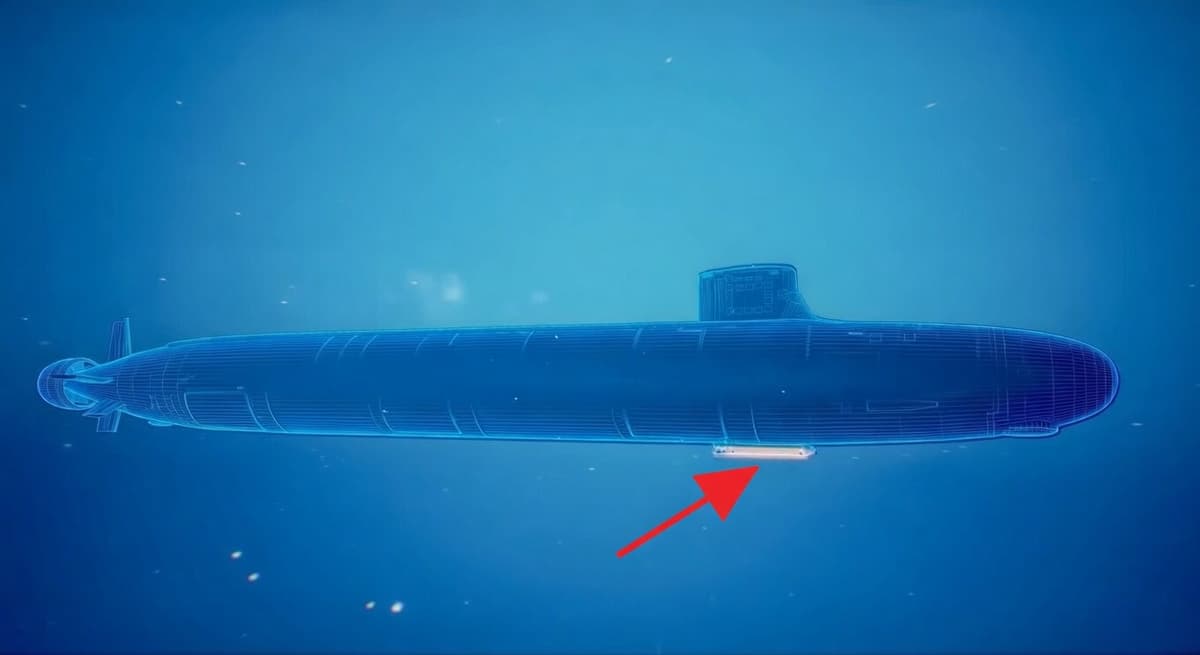
Not to be outdone, Lockheed Martin has now unveiled its robotic Lamprey Multi-Mission Autonomous Undersea Vehicle (MMAUV), which can hitch a ride on friendly ships and submarines, charge its batteries like a parasite, and arrive at the theatre ready for operations.

The highly modular design of the MMAUV allows it to attach itself to the hulls of ships or submarines without requiring a design change to the host vehicle, charge its batteries using its built-in hydrogenerators, and arrive at its destination fully charged.

The uncrewed undersea drone can also be configured to launch aerial drones, torpedoes, and decoys, and conduct surveillance, reconnaissance, intelligence, patrolling, and offensive missions.

The drone can also loiter stealthily on the seafloor, waiting patiently for its target.

These undersea vehicles will play a key role in patrolling and surveying the world’s oceans in the future. They will act as a force multiplier, allowing navies to cast their sensor nets over vast distances without committing too many vehicles or personnel.

Lockheed Martin calls it a breakthrough “plug-and‑play” submersible that gives US and allied warfighters a technological and strategic advantage in today’s contested maritime arena.

“Dumbest Phrase in History” — Hegseth’s Campaign to Restore Warrior Ethos in U.S. Military Gains Speed

File Image

LampreyMMAUV can perform a wide range of missions, including delivering undersea and air kinetic and non-kinetic effects; performing intelligence, surveillance, reconnaissance, targeting, and multi-intelligence collection; and deploying equipment to the seafloor.

“The modern battlespace demands platforms that hide, adapt, and dominate,” said Paul Lemmo, vice president and general manager of Sensors, Effectors & Mission Systems at Lockheed Martin.

They can also be compared to wingman drones that fly with fighter jets, acting as a force multiplier, feeding information and battlefield imagery through their sensors, and protecting the manned fighter jets by moving ahead into high-risk zones to conduct intelligence and offensive missions.

Su-57 Gets F-35-Like DAS Capabilities, Lethal Weapons & Possibly Even S-71 UAV To Boost Russian Stealth Jet

The Hitchhiking Undersea Drones

One of the most unique features of LampreyMMAUV is its ability to latch onto bigger ships and submarines.

The undersea drone gets its name from the Lampreys, a jawless fish also called the “vampire fish,” owing to their parasitic nature. The fish latches onto bigger fish to feed on blood and fluids or to hitch a ride while enjoying protection and scraps of food.

Similarly, the LampreyMMAUV is equipped with suction cups or a docking mechanism that allows it to latch onto the hulls of bigger ships.

UK is Defenseless! Top Generals Admit Massive Crisis With “No War Plan, No Munitions” & Only 10K Troops

The drone is designed in such a way that the host vehicle requires no design alterations.

By hitchhiking, the LampreyMMAUV not only conserves its own energy but also allows the drone to recharge its batteries through built-in hydrogenators. In simple terms, hydrogenators could be called turbo-generators.

This arrangement allows the LampreyMMAUV to reach its destination with its batteries 100% charged.

This unique ability of the Lamprey to latch onto host ships opens several exciting possibilities. Theoretically, a single ship or submarine can transport multiple Lampreys and launch them at stand-off range.

Furthermore, once their mission is over, the ship can also recover these MMAUVs. Thus, any ship or submarine can now act as a mothership for these undersea drones.

This capability could be crucial while operating in remote areas, shallow waters, or denied areas that are too risky for larger ships.

The drones are equipped with a quad-thruster propulsion system, autonomous onboard computers, sensors, and subsystems. It also has a mast for surface and subsea communications.

Its open design and 24 cubic foot payload bay can accommodate a wide range of customizable mission payloads for subsea seabed warfare.

From anti‑submarine torpedoes to UAV launchers, the open‑architecture payload bay lets customers tailor the vehicle to any mission set.

When equipped with optional launch tubes, it can maneuver into contested areas to launch short-range surveillance or strike UAVs, giving friendly forces new options for monitoring and denying threats.

Based on the information released, the drone features three retractable twin-tube launchers, capable of carrying up to six aerial drones for kinetic and non-kinetic purposes.

Saudi F-35 Mockup Appears at Defense Show; Will Riyadh Acquire U.S. Stealth Jets or End Up Like UAE?

LampreyMMAUV can also launch lightweight torpedoes for anti-submarine warfare.

It can also confuse and disrupt enemy sensors by creating virtual decoys to draw adversaries off-target.

It can also deploy sonobuoys, sonars, passive radio-frequency (RF) signal detection systems, and other sensors for intelligence gathering and surveillance.

LampreyMMAUV can communicate with surface ships or undersea vehicles using its retractable mast. This way, it can pass the information it gathers to friendly assets.

The computer-generated video released by Lockheed Martin shows the MMAUV passing information to an F-35 Joint Strike Fighter flying overhead, which then fires a missile at a target ship.

It can execute Assured Access (stealthy intelligence, persistent surveillance, precision strike) or Sea Denial (electronic disruption, decoy deployment, kinetic attack), giving commanders a single platform that flips the maritime balance of power.

The LampreyMMAUV can also loiter on the seabed, wait quietly for its target, gather intelligence data, and launch strike drones or move to a new location upon receiving new commands.

LampreyMMAUV undersea drone lying on the seabed. Credits Lockheed Martin.

The drone has two rear propellers, as well as two mounted on the sides of the body.

However, the company has shared no details on the LampreyMMAUV’s range or speed.

“Built with the U.S. Navy’s need for covert, assured access and sea denial operations, LampreyMMAUV can arrive in theater with a fully charged battery. Mimicking nature, it can hitch a ride on a host surface vessel or submarine, utilize hydrogenators to charge batteries, and arrive in theater ready for operational missions,” according to a press release by Lockheed Martin.

Lighter, Smarter, Deadlier — U.S. Unveils M1E3 Abrams Tank, 5 Years Early; White House Heaps Praises

“Lockheed Martin’s LampreyMMAUV can perform a wide range of missions, including delivering undersea and air kinetic and non-kinetic effects; performing intelligence, surveillance, reconnaissance, targeting, and multi-intelligence collection; and deploying equipment to the seafloor. “

Lockheed’s unveiling of LampreyMMAUV shows how undersea warfare is evolving and how stealthy, distributed, and compact systems capable of conducting both intelligence and offensive missions, as well as communicating with mothership, are the future.

  • Sumit Ahlawat has over a decade of experience in news media. He has worked with Press Trust of India, Times Now, Zee News, Economic Times, and Microsoft News. He holds a Master’s Degree in International Media and Modern History from the University of Sheffield, UK. 

  • VIEWS PERSONAL OF THE AUTHOR. 

  • He can be reached at ahlawat.sumit85 (at) gmail.com

The post U.S. Unveils “Parasitic” MMAUV That Hitchhikes Onto Ships & Submarines — Changing Rules Of Naval Warfare appeared first on EURASIAN TIMES.

Read Original Article
0

Comments

Want to join the conversation?

Loading comments...