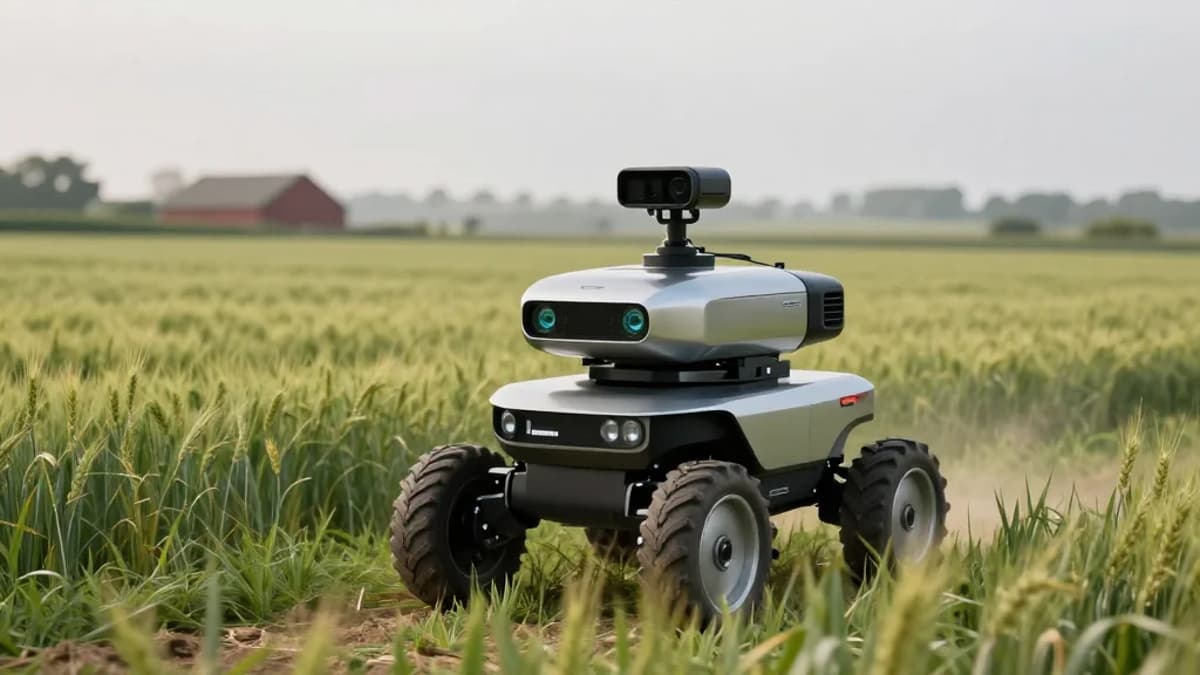
Video: Can Robots Help Save Farming?
•February 10, 2026
0
Why It Matters
These technologies promise to mitigate chronic labor gaps and reduce environmental impact, securing a more resilient food supply chain.
Key Takeaways
- •Labor shortages drive adoption of autonomous farming equipment.
- •ARWAC robot performs field tasks without human operators.
- •HiRes-Soils provides granular soil data for precision agriculture.
- •Thorvald robot assists harvesters, reducing labor dependence.
- •LIAT collaboration accelerates sustainable, climate‑resilient food production.
Pulse Analysis
The agricultural sector faces a perfect storm of labor scarcity, escalating input costs, and climate volatility, prompting a rapid pivot toward digital and robotic solutions. Across Europe, farms are experimenting with autonomous tractors, drone‑based scouting, and AI‑powered decision platforms to maintain yields while cutting overhead. This shift reflects broader industry trends where precision agriculture tools are no longer niche experiments but essential components of a modern, resilient food system.
At the heart of the UK’s agri‑tech renaissance, the Lincoln Institute for Agri‑Food Technology (LIAT) is piloting three flagship projects. The ARWAC field machine combines GPS navigation with machine‑learning algorithms to execute planting, weeding, and monitoring tasks without a driver, dramatically lowering labor hours. Parallelly, the HiRes‑Soils initiative deploys dense sensor networks and satellite imagery to generate centimetre‑scale soil health maps, enabling variable‑rate fertilisation and irrigation. Meanwhile, Saga Robotics’ Thorvald robot attaches to existing harvesters, providing real‑time crop assessment and automated picking assistance, which eases the bottleneck during peak harvest periods.
The convergence of these innovations signals a transformative opportunity for investors, policymakers, and agribusinesses. Scalable robotics can offset the projected 30% shortfall in farm labour by 2035, while data‑driven practices promise up to 15% reductions in water and fertilizer use, aligning with sustainability targets. However, widespread adoption hinges on cost‑effective hardware, robust data standards, and farmer training programs. As regulatory frameworks evolve to accommodate autonomous equipment, the sector is poised for accelerated growth, positioning the UK as a potential hub for next‑generation agri‑technology exports.
Video: Can robots help save farming?
0
Comments
Want to join the conversation?
Loading comments...