Companies Mentioned
Why It Matters
Integrating tactile sensing unlocks reliable, high‑precision manipulation for industrial robots, accelerating automation in assembly, logistics, and beyond.
Key Takeaways
- •Vision guides approach but cannot detect contact forces
- •Tactile sensors predict grasp failure with >80% accuracy
- •Benchmarks show tactile‑augmented policies outperform vision‑only in insertion tasks
- •Data collection bottleneck is hardware; new sensors ease deployment
- •Combined vision‑tactile systems are becoming industry standard for manipulation
Pulse Analysis
Robotics has long leaned on cameras to locate and align objects, but the physics of grasping—contact, force, friction—remain invisible to pure vision systems. In 2016, researchers demonstrated that tactile vibration data could anticipate grasp failures with 83% accuracy, a stark reminder that the moment of contact generates signals no image can capture. As robots move from pick‑and‑place to nuanced tasks like assembly and insertion, the gap between visual perception and physical interaction becomes a critical bottleneck.
The evidence now extends beyond isolated labs. Benchmarks such as ManiSkill‑ViTac reveal that policies incorporating tactile and force feedback consistently outpace vision‑only approaches, especially in force‑sensitive operations. Cutting‑edge models—including π0, OpenVLA, and Octo—rely on tightly synchronized streams of vision, proprioception, and touch; removing the tactile channel leads to measurable performance drops. This multimodal advantage is driving a paradigm shift, where data richness at the point of contact is recognized as the key lever for advancing manipulation capabilities.
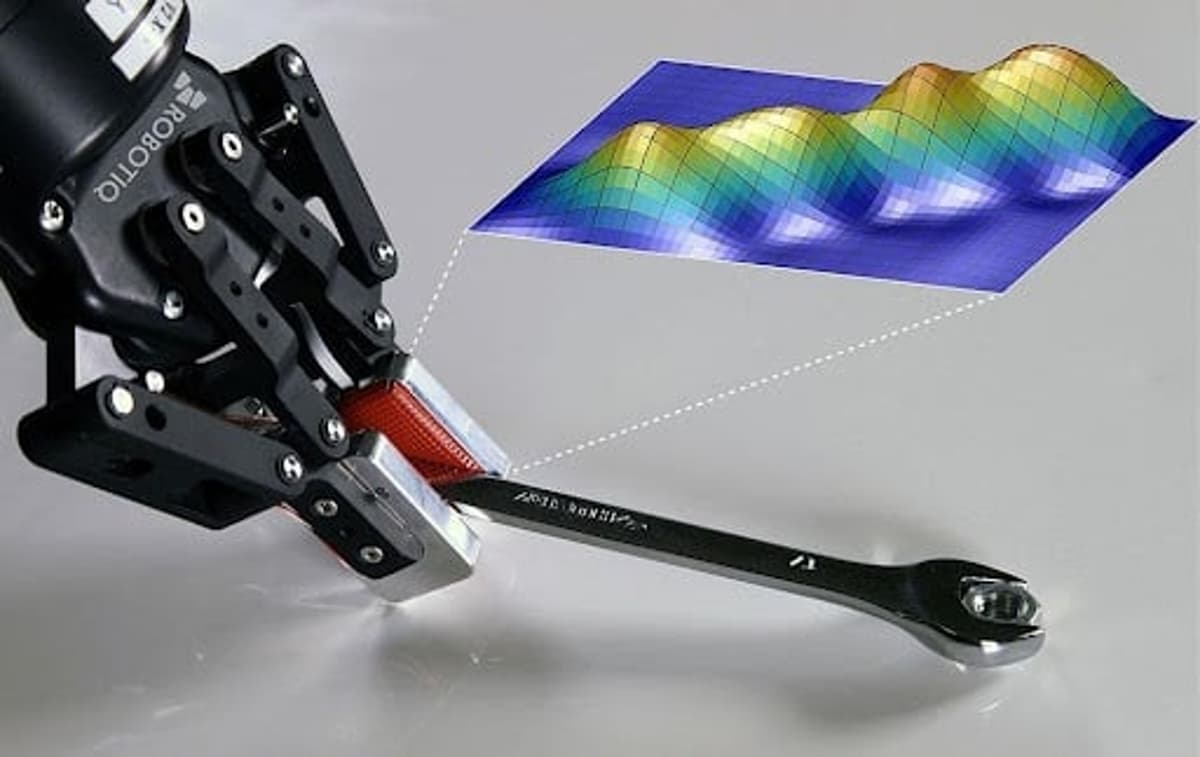
Scaling tactile data has historically been hampered by hardware constraints—specialized end‑effectors, precise force sensors, and reliable synchronization were scarce and costly. Recent advances in sensor design and open‑source data formats are lowering those barriers, enabling faster deployment and larger datasets. For manufacturers, this translates into robots that can reliably handle delicate assembly lines, reduce error rates, and increase throughput. Companies like Robotiq are capitalizing on this momentum, offering fingertip tactile sensors that embed force and vibration insights directly into the gripper, positioning them at the forefront of the emerging vision‑plus‑touch ecosystem.
Vision-only manipulation is hitting a wall
Comments
Want to join the conversation?
Loading comments...