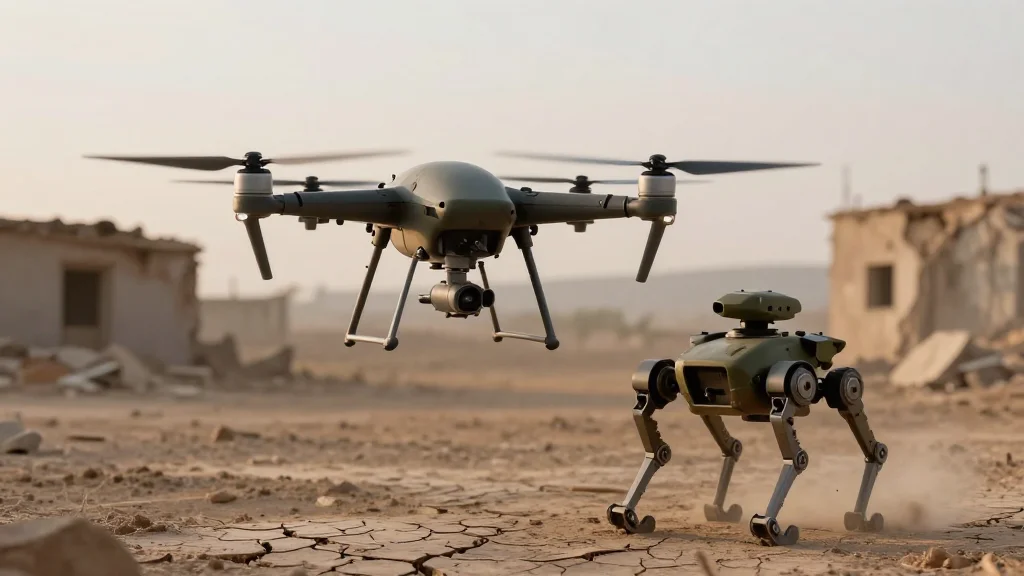
Western Defense Firms Test Drones and Combat Robots on Ukraine’s Frontlines

Companies Mentioned
Why It Matters
The rapid testing of drones and combat robots in an active war zone provides unprecedented real‑world data that can accelerate the maturation of autonomous weapons systems. For Western defense contractors, proving a system’s effectiveness under fire not only validates performance but also reduces the risk profile for future buyers, potentially reshaping procurement strategies across NATO. Moreover, the program forces a cultural shift within traditional defense firms, compelling them to adopt faster development cycles and closer field engagement. This could erode the historical advantage of large, bureaucratic suppliers and open the market to smaller, more agile innovators, ultimately driving competition and lowering costs for advanced robotics technologies worldwide.
Key Takeaways
- •Hundreds of Western firms applied to Ukraine’s “Test in Ukraine” program, launched July 2025.
- •Dozens of companies are currently testing drones, ground robots and AI systems on the front lines.
- •Ukrainian Deputy Defense Minister Oleksii Vyskub warned most Western firms cannot match Kyiv’s three‑month iteration cycle.
- •British startup Occam Industries leveraged the program to integrate AI software with Ukrainian‑built drones.
- •Combat‑proven status could unlock future NATO contracts and reshape global defense procurement.
Pulse Analysis
The “Test in Ukraine” initiative is a watershed for defense innovation, turning a conflict zone into a living laboratory. Historically, weapons systems have been validated through controlled exercises far removed from combat realities. By contrast, Ukraine’s urgent need for effective tools forces a rapid feedback loop that compresses years of development into months. This accelerates the learning curve for both hardware and software, especially in AI‑driven autonomy where real‑world data is essential for refining algorithms.
For Western firms, the program presents a paradox. On one hand, it offers a fast track to combat‑proven credibility, a powerful differentiator in a crowded market. On the other, it exposes the inertia of legacy development processes that rely on extensive certification and testing phases. Companies that can embed engineers on the ground and iterate in near‑real time will likely capture a larger share of post‑war contracts, while those clinging to slower cycles risk irrelevance. The pressure to field‑test in Ukraine may catalyze a broader industry shift toward modular, upgradable platforms that can be tweaked in the field, echoing trends seen in commercial tech.
Strategically, the data harvested from Ukraine will inform NATO’s future doctrine on autonomous systems. As allies observe which drones and robots survive the harsh conditions of Eastern Europe, they will adjust their own acquisition priorities, potentially accelerating the integration of unmanned systems into conventional forces. This could lead to a new arms race focused not just on firepower but on the speed of innovation, where the ability to iterate quickly becomes as decisive as the weapon’s lethality.
Western Defense Firms Test Drones and Combat Robots on Ukraine’s Frontlines
Comments
Want to join the conversation?
Loading comments...