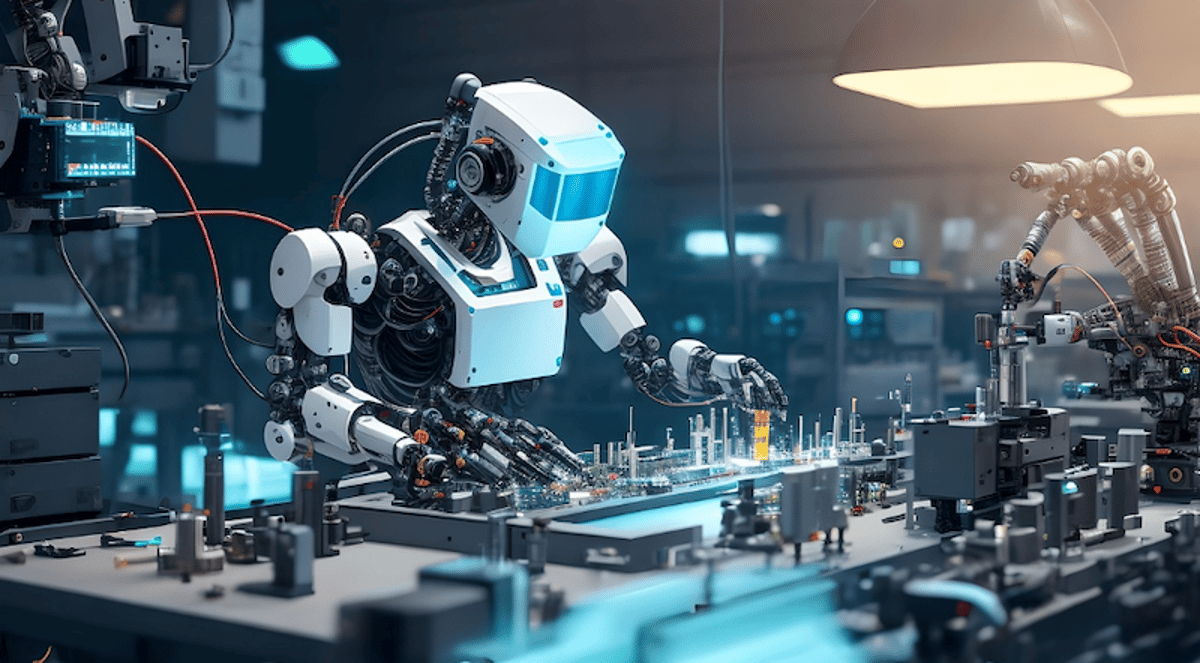
What Are the 5 Key Components of a Robot and How Do They Work?
•January 24, 2026
0
Why It Matters
Reliable component sourcing reduces downtime and accelerates time‑to‑market, a decisive advantage as robotics adoption expands across manufacturing, logistics, and service sectors.
Key Takeaways
- •Power system supplies and regulates robot energy.
- •Sensors convert environmental data into electrical signals.
- •Control unit processes data and commands actuators.
- •Actuators transform energy into precise mechanical motion.
- •End effectors enable task-specific interaction with objects.
Pulse Analysis
The five foundational components of a robot have evolved dramatically over the past decade. Modern power systems now incorporate high‑density lithium‑polymer cells and smart‑grid converters that adapt voltage on the fly, while sensor suites blend LiDAR, vision, and tactile arrays to create a rich perception layer. This data is fed into increasingly sophisticated control units—often edge AI processors—that execute real‑time path planning and fault detection, enabling robots to operate autonomously in dynamic environments.
Supply‑chain reliability is equally pivotal. Partnering with established electronic component distributors grants robotics firms access to vetted parts, volume pricing, and inventory buffers that mitigate shortages during demand spikes. Distributors also provide technical support, helping engineers match specifications to applications, which cuts redesign cycles and lowers total cost of ownership. As global logistics face periodic disruptions, a robust sourcing strategy becomes a competitive moat for manufacturers seeking to scale production without compromising quality.
Looking ahead, the synergy among these components will deepen as AI-driven control loops tighten feedback loops between sensors and actuators. Modular architectures allow end effectors to be swapped rapidly for new tasks, while advances in soft‑actuator technology promise safer human‑robot collaboration. Companies that invest in integrated hardware ecosystems and secure component pipelines are positioned to capture the fastest‑growing segments of the robotics market, from collaborative manufacturing cells to autonomous delivery fleets.
What Are the 5 Key Components of a Robot and How Do They Work?
0
Comments
Want to join the conversation?
Loading comments...