What Are The Remaining Bottlenecks For Humanoid Robotics? A Physical AI Study Finds The Limits Are Physical, Not Cognitive
AIRobotics

What Are The Remaining Bottlenecks For Humanoid Robotics? A Physical AI Study Finds The Limits Are Physical, Not Cognitive

The AI Insider
The AI InsiderJan 15, 2026

Why It Matters

These constraints directly affect the commercial viability and deployment speed of humanoid robots, reshaping investment and research priorities across the robotics industry.

What Are The Remaining Bottlenecks For Humanoid Robotics? A Physical AI Study Finds The Limits Are Physical, Not Cognitive

robot, toy, store, giant, machine, futuristic, childhood, cyborg, play, brown robot, robot, robot, robot, robot, robot

Insider Brief

  • A new Physical AI study finds that humanoid robotics is constrained less by artificial intelligence than by data scarcity, sim-to-real failures, energy limits, and the difficulty of safely coordinating whole-body physical interaction.

  • The research identifies a structural data gap, showing that simulations cannot yet reproduce the contact, balance, and timing needed for reliable humanoid movement, leading to sharp performance drops outside controlled environments.

  • The paper concludes that future progress will depend on advances in simulation fidelity, energy-efficient hardware, real-time control, and safety verification rather than larger or more capable learning models.

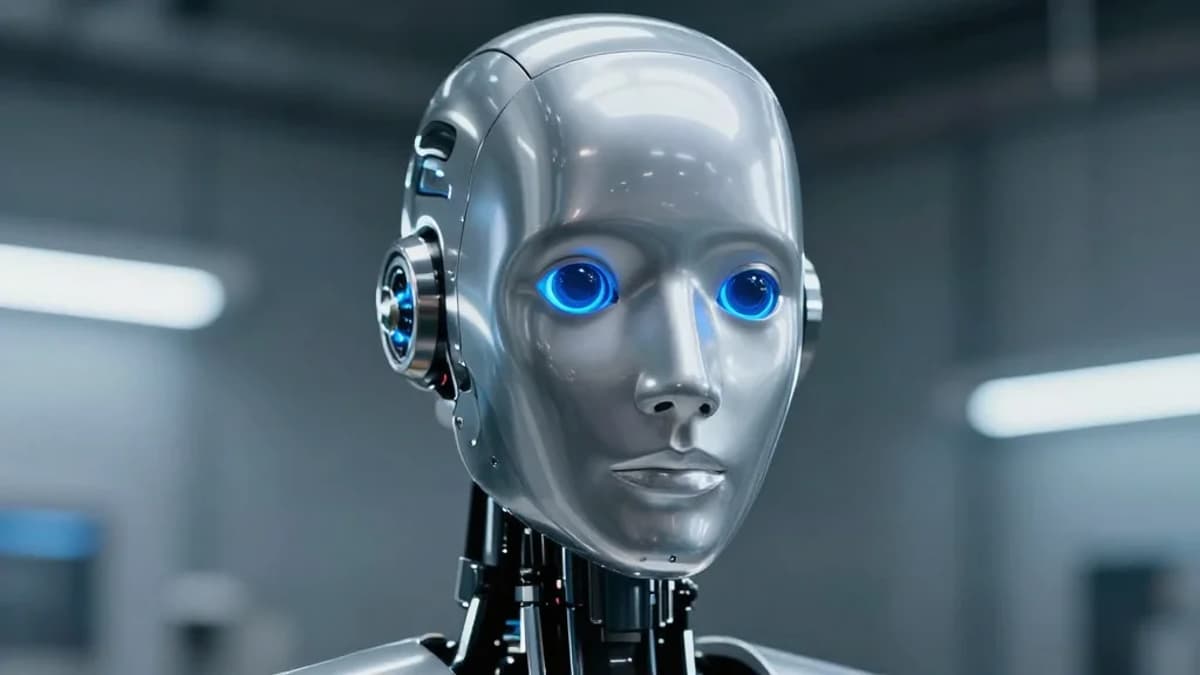
  • Image by Darndale

Humanoid robots have moved from science fiction to factory floors, research labs, and investor pitch decks, promising machines that can work alongside people in human spaces — but turning that promise into reliable reality has proven harder than expected.

According to new research, humanoid robots remain constrained less by artificial intelligence than by the physical realities of embodiment, according to a new academic synthesis that identifies data scarcity, energy limits and sim-to-real failures as the main obstacles to deployment.

The study, published as a preprint on TechRxiv, examines humanoid robotics through the broader framework of “Physical AI,” a field that treats intelligence as inseparable from sensing, movement and interaction with the real world. While recent advances in machine learning have improved perception and planning, the paper finds that humanoid systems continue to struggle with basic reliability, safety and efficiency when operating outside controlled environments.

At the center of the problem is embodiment itself. Humanoid robots must balance, walk, grasp and interact using many joints at once, often in close proximity to people. The study, conducted by Partha Pratim Ray, senior member of IEEE and assistant professor at Sikkim University, concludes that this complexity exposes weaknesses across the entire robotics stack, from data collection and simulation to hardware and control.

The paper identifies a fundamental shortage of high-quality training data for humanoid robots. Unlike software systems or even industrial robots, humanoids cannot easily generate large volumes of real-world experience. Physical trials are slow, expensive and prone to damage, especially when learning balance or dexterous manipulation.

Simulation has become the primary substitute, but the study notes that simulated environments struggle to reproduce the fine details of physical contact, surface friction, compliance and timing that humanoid robots depend on. As a result, models trained in simulation often perform well in virtual tests but degrade sharply when transferred to real hardware.

Ray describes this gap as structural rather than incremental. Improvements in neural networks alone do not solve the problem if the data used to train them fails to reflect real-world physics.

Why Simulation Breaks Down

The study places particular emphasis on the “sim-to-real” gap — or, the mismatch between simulated training and real-world behavior. For humanoids, this gap is wider than for wheeled robots or fixed robotic arms because small errors compound across the whole body.

A slight misestimate of friction or timing can destabilize a walking robot. Minor sensor noise can cascade into loss of balance. Even high-fidelity simulation tools cannot yet capture the full range of interactions required for robust humanoid control, especially over long periods, according to the paper.

To address this, Ray points to hybrid approaches that combine simulation with limited real-world feedback, allowing digital models to update themselves as conditions change. However, the study cautions that these methods remain computationally expensive and difficult to scale.

Beyond data and simulation, the study highlights physical constraints that machine learning cannot bypass. Humanoid robots require large amounts of energy to move and compute at the same time, yet must operate within strict power and thermal limits. Batteries, actuators and onboard processors impose hard ceilings on how long and how safely these systems can run.

Latency is another limiting factor. Humanoids depend on rapid coordination between vision, touch, balance, and movement. Delays of even a few milliseconds can undermine stability. The study finds that current edge computing systems, while improving, still struggle to support this level of real-time coordination reliably.

Safety and verification compound these issues. Because humanoid robots are designed to work near people, failures carry higher risk. The paper notes that learned behaviors are difficult to formally verify, making certification and large-scale deployment slow, especially in regulated environments.

Methodology, Limits, And Future Work

Rather than reporting new experiments, the study synthesizes recent research across robotics, simulation, embedded computing, and control theory. Its conclusions draw on comparative analysis of architectures, benchmarks, and deployment experiences across multiple application domains.

The researcher acknowledges limits to the approach. As a conceptual synthesis, the paper does not provide quantitative performance benchmarks specific to humanoid platforms. Some proposed solutions, such as world-model learning and adaptive digital twins, remain at early research stages.

Looking ahead, the study does not argue that humanoid robotics is unattainable, but rather that it exposes unresolved problems in data, energy, control, and safety that simpler robots can avoid. It indicates that progress in humanoid robotics will depend on advances outside traditional AI training. Priorities include better physical simulators, more efficient hardware, new evaluation standards for embodied systems, and tighter integration between learning and control.

The paper is quite technical, so, for a deeper, more technical dive, please review the paper on TechRxiv. It’s important to note that TechRxiv is a pre-print server, which allows researchers to receive quick feedback on their work. However, it is not — nor is this article, itself — official peer-review publications. Peer-review is an important step in the scientific process to verify results.

Comments

Want to join the conversation?

Loading comments...