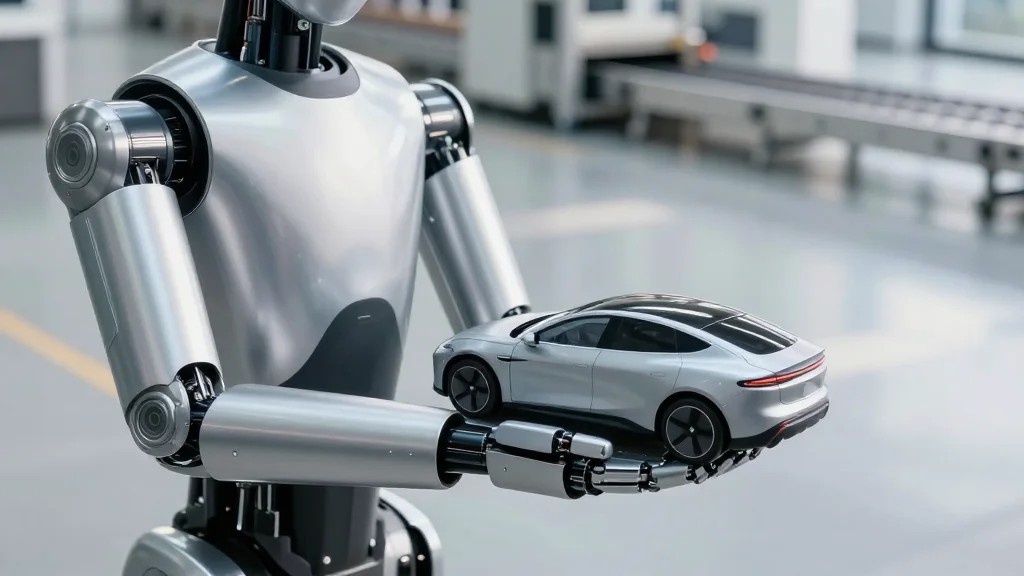
Who Is Tesla Selling 1 Million Humanoid Robots A Year To?
Key Takeaways
- •Tesla aims to produce 1 million Optimus units annually
- •First‑generation line will replace Model S/X production space
- •Robots priced around $30,000, targeting industrial buyers
- •Tesla plans to sell robots to factories before consumer rollout in 2027
- •Second‑generation line targets 10 million units per year
Pulse Analysis
Tesla’s latest quarterly filing marks a strategic shift from luxury electric sedans to mass‑produced humanoid robots. By converting the Fremont Model S/X line into a 1‑million‑unit Optimus factory, the company is leveraging existing assembly expertise and supply chains to accelerate robot output. The parallel development of a second‑generation line at Gigafactory Texas, aimed at 10 million units per year, underscores Tesla’s ambition to dominate a nascent market that blends advanced AI with physical automation. This move also aligns with Elon Musk’s broader vision of integrating AI across both digital and tangible domains.
The industrial demand for affordable, versatile automation remains a critical variable for Optimus’s success. At an estimated price of $30,000 per unit, the robot sits between low‑cost task‑specific machines and high‑end collaborative robots, offering a potential sweet spot for manufacturers seeking flexible labor augmentation. However, the current prototype’s limited capabilities raise questions about immediate adoption, especially when specialized robots already perform repetitive tasks more efficiently. Tesla will need to demonstrate tangible productivity gains and reliability to convince factories to allocate capital toward a humanoid platform that is still in early development.
Looking ahead, Optimus could become a significant revenue stream if Tesla secures bulk orders from logistics, warehousing, and assembly plants before the projected 2027 consumer launch. Successful scaling would not only diversify Tesla’s earnings beyond vehicle sales but also reinforce its AI leadership, feeding data back into its autonomous‑driving and digital‑workload initiatives. Investors will be watching order books, production ramp‑up timelines, and cost‑per‑unit trends closely, as these factors will determine whether the robot venture validates Musk’s long‑term bet on a robot‑centric economy.
Who Is Tesla Selling 1 Million Humanoid Robots A Year To?
Comments
Want to join the conversation?