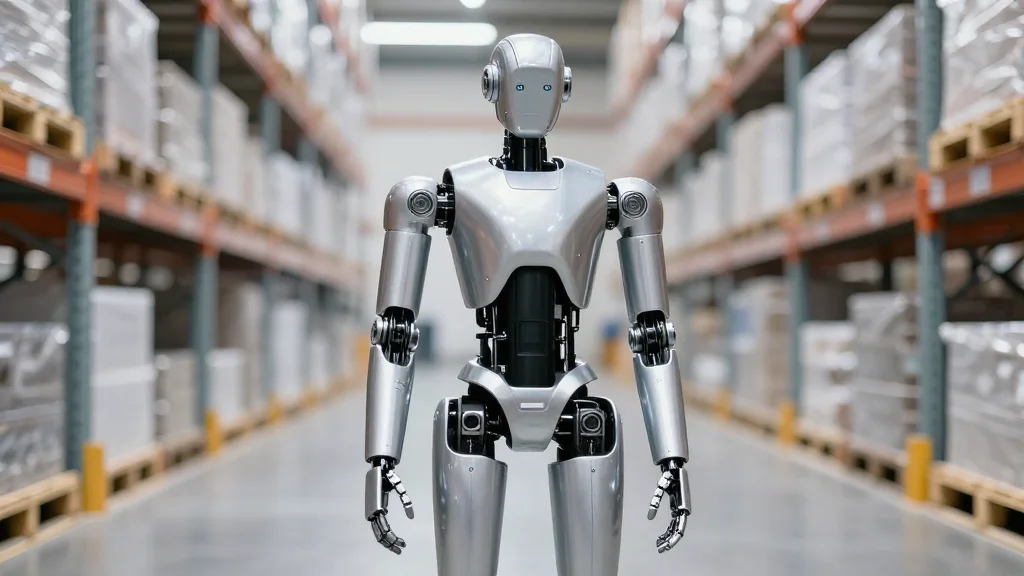
Why Humanoid Robots Still Face Big Hurdles in Warehouses
Companies Mentioned
Schaeffler
SHA

Gartner
Why It Matters
The hurdles shape capital allocation for retailers and manufacturers, influencing whether they pursue humanoid robots or stick with conventional automation.
Key Takeaways
- •Interact Analysis forecasts $15 B humanoid robot market by 2035.
- •High cost and limited battery life hinder large‑scale adoption.
- •Safety and productivity concerns keep deployments in pilot phase.
- •Humanoid plans 1,000‑2,000 robots for Schaeffler by 2032.
- •Flexibility advantage may drive niche use despite barriers.
Pulse Analysis
The allure of humanoid robots lies in their ability to operate in spaces designed for humans, offering a level of flexibility that traditional fixed‑point automation cannot match. Interact Analysis estimates a $15 billion market by 2035, reflecting growing interest from retailers and manufacturers seeking to retrofit existing warehouses rather than build new, robot‑centric facilities. This flexibility could unlock new use cases, from stair‑climbing inventory checks to handling irregularly shaped parcels, positioning humanoids as a strategic complement to conveyor belts and robotic arms.
Despite the upside, several practical obstacles keep the technology in a pilot‑only zone. Unit prices remain several times higher than conventional automated guided vehicles, and battery life typically caps continuous operation at under eight hours, demanding frequent charging or battery swaps. Safety standards for machines working side‑by‑side with employees add engineering complexity and regulatory scrutiny, while current dexterity and speed lag behind specialized equipment, raising doubts about productivity gains. These factors inflate total cost of ownership and extend payback periods, prompting many firms to limit deployments to small‑scale trials.
Looking ahead, the sector’s growth will likely be uneven, with early adopters targeting niche tasks where flexibility outweighs cost, such as irregular‑shaped item handling or temporary surge capacity. Advances in energy density, modular safety sensors, and AI‑driven motion planning could gradually lower barriers, enabling broader rollouts. Investors and supply‑chain leaders should monitor technology maturation and cost trajectories, balancing the promise of adaptable automation against the immediate financial and operational realities of today’s warehouse environments.
Why Humanoid Robots Still Face Big Hurdles in Warehouses
Comments
Want to join the conversation?
Loading comments...