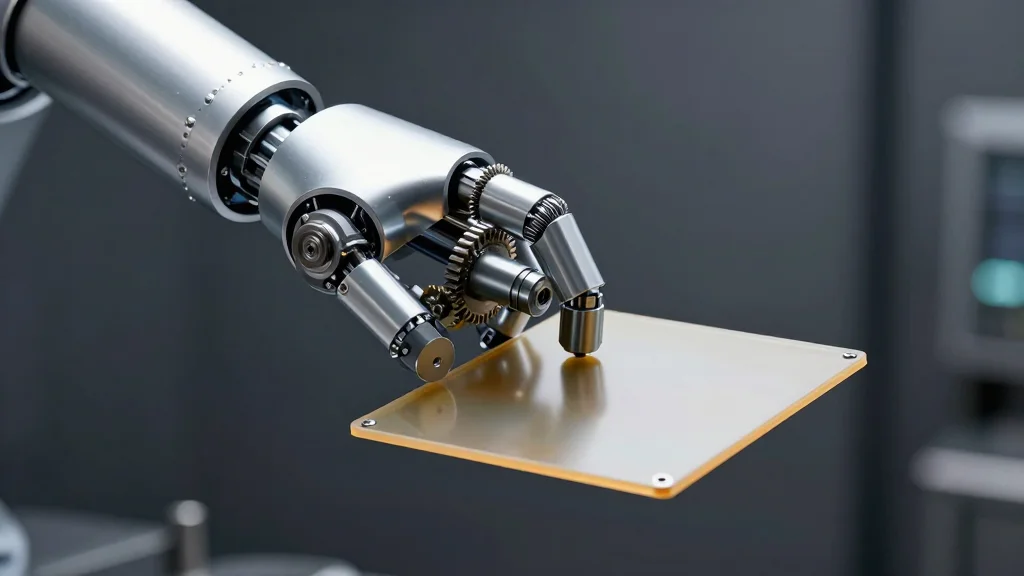
Why Robotics’ Next Leap Relies on Physical Engineering
Companies Mentioned
Why It Matters
Mechanical failures cost manufacturers billions in lost productivity, so closing the reliability gap directly impacts ROI and scalability of automation. Prioritizing hardware reliability reshapes investment strategies and talent pipelines across the robotics industry.
Key Takeaways
- •Mechanical wear, thermal drift, and fatigue cause most downtime.
- •Deterministic mechanisms lower AI complexity and improve repeatability.
- •Investing equally in hardware R&D closes the reliability gap.
- •Apparel handling breakthroughs stem from compliant gripping architecture.
- •Future roboticists must master both kinematics and neural networks.
Pulse Analysis
The current hype around artificial intelligence has driven robotics research toward ever‑larger neural networks and sophisticated perception pipelines. While these advances enable impressive feats in controlled labs, they mask a stark reliability gap on the factory floor. Companies like Amazon Robotics report that the majority of unexpected stoppages arise from physical issues—linkage deflection, transmission slack, and thermal expansion—rather than algorithmic shortcomings. As a result, billions of dollars in potential output are lost each year, prompting a reassessment of where engineering resources should be allocated.
Deterministic mechatronics offers a pragmatic path forward. By engineering mechanisms that behave predictably under load, developers can dramatically reduce the burden on AI systems. The Voyager 1 spacecraft exemplifies this philosophy: its longevity stems from robust mechanical design paired with modest software updates. In robotics, similar principles are evident in recent apparel‑handling breakthroughs, where compliant, constrained grippers turn the physics of fabric into an advantage, allowing simple vision models to achieve high accuracy. The synergy between a stable mechanical substrate and targeted AI yields faster, more reliable automation.
To capitalize on this shift, the industry must rebalance R&D spending, dedicating resources to transmissions, linkages, and end‑effectors on par with perception research. Educational programs should produce engineers fluent in both finite‑element analysis and deep‑learning frameworks, fostering a new generation capable of bridging the physical‑digital divide. As deterministic design becomes the norm, robots will transition from impressive demos to workhorses capable of millions of flawless cycles, unlocking the scale and economic impact that has long eluded the sector.
Why Robotics’ Next Leap Relies on Physical Engineering
Comments
Want to join the conversation?
Loading comments...